Economy
Interview: Economic forum told of 'ever closer ties' between EU and Kazakhstan


By Martin Banks
The EU’s top official in Kazakhstan has spelled out how the bloc is helping the former Soviet republic to develop new programmes to support the transition to a "green" economy.
Ambassador Aurelia Bouchez, head of the EU delegation to Kazakhstan, also said that the launch of the new EU research and innovation programme - Horizon 2020 - will “open new opportunities” for co-operation between the two sides.
Bouchez was a keynote speaker at the recent 2014 Economic Forum in Astana, the Kazakhstan capital, which hosted several senior participants and officials from many countries, including Russia's Deputy Energy Minister Yuri Sentyurin.
He said Russia was considering a new project to supply up to 7 million tonnes of Russian crude oil per year through Kazakhstan to China: "Currently, experts are working on feasibility studies for this project."
India and Pakistan are also interested in the project.
Participants were told that the secular economic stagnation in the global economy can be only overcome through the formation of a "new architecture" of international co-operation.
The forum also saw the signing of the Eurasian Economic Union (EEU) between Kazakhstan, Russia and Belarus.
Russia started to form a regional economic partnership with Belarus, Kazakhstan, Ukraine and the Central Asian states in 2000 and the post-Soviet integration project seeks to replace political ties with economic ones.
The EEU is a customs union which aims to bolster mutual trade through the removal of customs barriers, something which, the forum was told, should be good for business.
The signing of the EEU treaty, due to come into force in January, comes as the EU recently pledged another €63 million for the development of Kazakhstan's regions. EU funding already makes up nearly half of the country`s total foreign direct investment. In 2012, Kazakhstan-EU trade totalled some €31 billion.
In a wide-ranging interview, Bouchez spelled out how the EU currently supports Kazakhstan government efforts to modernize its civil service through a four year bilateral assistance project, with a budget of €4.3m.
Bouchez said: “The EU supports as one of its priorities Kazakhstan's efforts to reform the civil service, in order efficiently to respond to the needs of its citizens and to contribute to the further modernization of the state.
“In Kazakhstan as elsewhere, the government seeks to follow best practices in other developed countries. In 2013, the Kazakhstan civil service adopted three basic principles, namely accountability to society, transparency and meritocracy.”
This action, entitled 'Support for Civil Service Reform and Modernization of the Government of Kazakhstan', helps implement the new ‘civil service model’ and develop legal frameworks.
It takes examples from experience in EU member states in key aspects such as recruitment, performance appraisal, training, career development, payment system and mobility of senior civil servants.
“Civil servants have to be accountable for their work,” said Bouchez. “Citizens need to have confidence that they are served by the best people, selected on their merits, and committed to providing the best possible service in the most efficient way.”
Turning to other issues, the diplomat said the role of SMEs is the “key” for Kazakhstan's transition towards a fully green economy in 2050.
Bouchez, who worked for 20 years in the French foreign affairs ministry, said: “More than 99% of all European businesses are SMEs, by which I mean companies with less than 250 employees. SMEs provide two out of three private sector jobs and contribute to more than half of the total value-added created by businesses in the EU. They are the back-bone of the European economy, primarily responsible for wealth and economic growth, with a key role in innovation, research and development.”
In Kazakhstan, 2.4 million people work in SMEs and she said SME development is a “major tool” for industrial and social modernisation. The Kazakhstan government aims to increase SME share of GDP from the current 20% to 50% by 2050. In parallel, Kazakhstan is developing a comprehensive agenda to transit towards a fully green economy by 2050, she pointed out.
“This,” Bouchez added, “requires strong political leadership and the co-ordination of all efforts, including those of Kazakhstan's partners. The EU has provided substantial funding over the last 20 years, supporting regulatory reforms, private sector development, regional development, judiciary and civil service reforms, capacity-building and awareness raising in the fields of sustainable energy, water management, environment and forest governance.”
In parallel with grant assistance, the ambassador said the EU supports the role of the international financial institutions. In 2013, the European Investment Bank launched its activity in Kazakhstan with the approval of three loans of total €370m for SMEs and mid-caps, which will be channelled through local banks.
These loans primarily target “green” small and medium-size projects, such as renewable energy, energy efficiency, agriculture, climate change adaptation, water and waste management.”
The EU, she pointed out, is also working with the Ministry of Environment and Water Resources, in partnership with OECD, UNECE and UNDP, to develop a new programme to support the transition to "green" economy.
“The programme will support the implementation of the Green Economy Concept, at national and oblast levels," said Bouchez, who was formerly seconded to the Eurpean External Action Service.
Bouchez believes that research and innovation is another priority for future EU-Kazakhstan co-operation.
She pointed to several “innovative” projects being implemented under the Seventh Framework Programme for research and technological development (FP7), including. the development of new solutions for use of coal mine methane in a manner compliant with the reduction of GHG emissions.
She added: “Horizon 2020 will open new opportunities for our co-operation. Horizon 2020 is open to everyone, with a simple structure that reduces red tape and time so participants can focus on what is really important. This approach makes sure new projects get off the ground quickly – and achieve results faster.
“We have a lot of room for co-operation because the EU and Kazakhstan have different characteristics and complementary needs. Together, we can contribute to economic diversification and the goals of Strategy 2050.”
Further co-operation can be seen, she added, with the Transport Corridor Europe-Caucasus-Asia (TRACECA)l an EU programme launched in 1993 to develop a transport corridor from Europe to China, via the Black Sea, the Caucasus, the Caspian Sea and Central Asia.
The EU supported this co-operation with technical assistance worth almost €180m for more than 80 projects in the areas of infrastructure development, safety and security in transport as well as trade facilitation and logistics.
“The recent breakthrough in EU-Kazakhstan aviation co-operation is worth noting, it should allow expansion of flight connections. The TRACECA civil aviation safety and security project has also contributed to this development.”
Discussions at the 7th Astana economic forum covered everything from financial stability to development of trade.
Some 10,000 delegates from 150 countries took part, including 131 ministers, chairmen of central banks and their deputies and ambassadors.
It is one of the largest international forums in the world. Since 2008, the forum brings together global leaders, experts and representatives of business communities to find solutions to combat the major economic and social challenges of our time, both in Kazakhstan and worldwide.
Share this article:
EU Reporter publishes articles from a variety of outside sources which express a wide range of viewpoints. The positions taken in these articles are not necessarily those of EU Reporter. Please see EU Reporter’s full Terms and Conditions of publication for more information EU Reporter embraces artificial intelligence as a tool to enhance journalistic quality, efficiency, and accessibility, while maintaining strict human editorial oversight, ethical standards, and transparency in all AI-assisted content. Please see EU Reporter’s full A.I. Policy for more information.




The Iran war changed Pakistan's strategic value, not its political trajectory

Open letter to president of the European Commission on the Schengen Entry/Exit System (EES)

EU policy toward Azerbaijan: Why Brussels must move beyond political dialogue

PMI defends AI consultation tool as scrutiny grows over EU tobacco rules review

Democracy cannot be selective: Why Europe must apply the same standards abroad that it demands at home

Civil society from across the EU gathers in Cork to reinforce Europe’s sustainability agenda

Majority think EU is a 'place of stability in a troubled world'

Rating of American Express casino sites in the UK

Can the EU resist US pressure on medicine prices?

Energy Union: New Spain-Portugal electricity interconnection inaugurated

Timing of the publication of the EU ETS auction calendar

Commissioner Šuica travels to Cairo to strengthen euro-mediterranean parliamentary cooperation and youth engagement

Commission seeks feedback on targeted amendment of EMFAF

Commission proposes five joint defence projects to strengthen Europe's industrial capabilities

Study: Europe's defense runs on American servers

The ancient myths that tourism boards (and slot designers) can't stop selling

Kazakhstan reforms under scrutiny at Brussels Press Club round table

Japan should face up to history and contribute more to regional peace

Ambassador calls for 'speeding up' of co-operation between EU and Kazakhstan

Timur Turlov at Smart Moves Summit 2025: How chess can transform global education

Shevtsova’s case: Out-of-court sanctions dismantling trust in Ukrainian cause

The future of European transport

Trump Vs Trueman

US 'no longer' an 'unconditional ally' for Europe - MEP
-
 Iran4 days ago
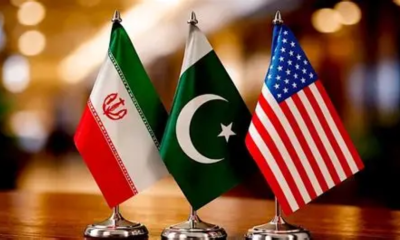
The Iran war changed Pakistan's strategic value, not its political trajectory
-
 Schengen4 days ago
Open letter to president of the European Commission on the Schengen Entry/Exit System (EES)
-
 Azerbaijan4 days ago
EU policy toward Azerbaijan: Why Brussels must move beyond political dialogue
-
 European Commission4 days ago
PMI defends AI consultation tool as scrutiny grows over EU tobacco rules review