Frontpage
Open Dialog report: Harassment of civil society and media in Kazakhstan
SHARE:

 The Open Dialog Foundation has participated in the UN High Commissioner for Human Rights' consultations on how to create and maintain the space for civil society to work freely and independently. Based on our work and experience, we have contributed with an overview of the situation in Kazakhstan and a series of practical recommendations to the preparation of the report by the Commissioner. You can find our publication, The harassment of civil society in Kazakhstan on the Open Dialog Foundation's website here.
Since the tragic events in Zhanaozen, in December 2013, the civil society in Kazakhstan has been facing continuous limitations and restrictions on their activities. We, hereby, call on the international community, including on the diplomatic missions of the EU member states and the US and Canada present in Kazakhstan, to use this information to address the Kazakh authorities at any occasion and to raise concerns expressed by the Open Dialog Foundation in the publication and other international organisations and media in their everyday work on Kazakhstan.
We would also particularly like to draw your attention to the difficult situation of the media in Kazakhstan. Libel trials and huge financial fines for journalist continue to discourage independent information sharing. Please, see one of the latest cases, of Nakanune.kz's reporting website, whose domain name owner was found guilty of libel and whom the court ordered to pay an exorbitant fine of $107,000. The case has been described more in detail by Joanna Lillis in her article: Kazakhstan: Libel Trial Rekindles Fears of Media Muzzling, here.
Our report looks into the following spheres, identifying problems characteristic for the Kazakh civil society and proposing concrete recommendations: 1. Legislative measures, as the Kazakh legislation, including certain recently introduced reforms, limits the space for the genuine development of independent and active civil society; 2. Particularities of political and public environment, which is often a restriction in Kazakhstan, rather than an encouragement to develop strong non-governmental organisations; 3. Free flow of information is being restricted in Kazakhstan as state authorities impede free functioning of independent media and, therefore, block the exchange of information and the development of an informed and engaged society; 4. Long-term support and resources allocated to non-governmental sector in Kazakhstan tend to prioritise organisations that are either fully pro-governmental or don't work on topics that could be seen as politically sensitive; 5. Space for dialogue and collaboration between the authorities and independent NGOs is non existent. The state authorities are not interested in any exchange with such organisations, they disregard their stance or actively fight against it through various oppressive and restrictive means; 6. Final recommendations for the creation of a favourable environment for civil society in post-soviet countries with low levels of democracy. For a broader overview of the current situation in Kazakhstan, including that of the civil society and political opposition, we invite you to view a brief documentary prepared by Al Jazeera, Kazakhstan's Hard Sell, which can be accessed via YouTube, here.
Share this article:
EU Reporter publishes articles from a variety of outside sources which express a wide range of viewpoints. The positions taken in these articles are not necessarily those of EU Reporter. Please see EU Reporter’s full Terms and Conditions of publication for more information EU Reporter embraces artificial intelligence as a tool to enhance journalistic quality, efficiency, and accessibility, while maintaining strict human editorial oversight, ethical standards, and transparency in all AI-assisted content. Please see EU Reporter’s full A.I. Policy for more information.



Middle East5 days ago
Security realignment inevitable in Middle East after Netanyahu-Trump's war

Transport5 days ago
Better enforcement of passenger rights: New EU agreement strengthens protection across all modes of transport

Earthquake5 days ago
EU deploys emergency assistance to Venezuela following earthquakes

Ukraine5 days ago
EU steps up support for Ukraine's defence, recovery and reconstruction at the Ukraine Recovery Conference 2026

Central Asia5 days ago
Dismantling 'high walls' for a shared European-Asian future

Bangladesh4 days ago
Bangladeshis waking up to reality of Yunus government

Air quality4 days ago
Copernicus: Europe’s air quality improves despite persistent pollution episodes

Employment4 days ago
What the latest data reveals about labour market imbalances across Europe

Energy4 hours ago
Europe must double down on nuclear progress to achieve its long-term ambitions

Kazakhstan7 hours ago
Solana Company Partners with Kazakhstan on $6B Alatau Crypto Megacity

Kazakhstan10 hours ago
Astana's congress of world religions: A global platform for dialogue in an age of division

Brussels10 hours ago
How Schuman lost Its way

General11 hours ago
Rating of American Express casino sites in the UK

European Commission12 hours ago
PMI defends AI consultation tool as scrutiny grows over EU tobacco rules review

United Nations13 hours ago
Civil society from across the EU gathers in Cork to reinforce Europe’s sustainability agenda

Iran14 hours ago
The Iran war changed Pakistan's strategic value, not its political trajectory

Kazakhstan2 months ago
Kazakhstan reforms under scrutiny at Brussels Press Club round table

Japan6 months ago
Japan should face up to history and contribute more to regional peace

Kazakhstan7 months ago
Ambassador calls for 'speeding up' of co-operation between EU and Kazakhstan

World11 months ago
Timur Turlov at Smart Moves Summit 2025: How chess can transform global education

Ukraine1 year ago
Shevtsova’s case: Out-of-court sanctions dismantling trust in Ukrainian cause

Transport1 year ago
The future of European transport

Politics1 year ago
Trump Vs Trueman

US1 year ago
US 'no longer' an 'unconditional ally' for Europe - MEP
-
 Middle East5 days ago
Security realignment inevitable in Middle East after Netanyahu-Trump's war
-
 Transport5 days ago
Better enforcement of passenger rights: New EU agreement strengthens protection across all modes of transport
-
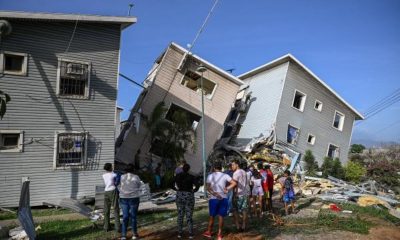 Earthquake5 days ago
EU deploys emergency assistance to Venezuela following earthquakes
-
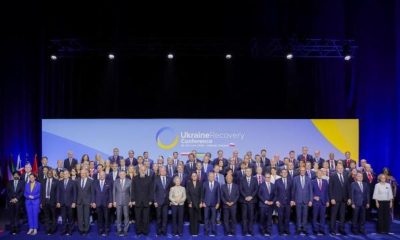 Ukraine5 days ago
EU steps up support for Ukraine's defence, recovery and reconstruction at the Ukraine Recovery Conference 2026