Enlargement
#EuroLat: Deeper EU-Latin integration needed


Deepening the integration of the EU and Latin America is the best way to respond to common challenges, agreed parliamentarians from both sides of the Atlantic at the opening of the ninth plenary session of the Euro-Latin Parliamentary Assembly (EuroLat), on Tuesday in Montevideo (Uruguay). The economic situation, trade relations between the EU and Latin America and between both regions and China, managing migration flows and fighting terrorism are also on the agenda.
“Our history and our culture, our shared values should impel to step up our political, trade and cooperation relations”, said European Parliament Vice-President Antonio Tajani (EPP, IT), at the opening of the plenary session. Mr Tajani pointed to geopolitical changes under way in Latin America, such as the peace process in Colombia and the institutional uncertainty in Brazil. He underlined European concerns about the worsening situation in Venezuela and the 'deterioration of democratic quality' in Nicaragua.
On behalf of Parlasur (Mercosur´s Parliament), which organized the session, its President Jorge Taiana (Argentina) warned of the forces resisting the EU-Latin American integration and stressed that the combination of sustainable development, social justice, well being and freedom is possible only if it is founded upon a robust integration process.
“We must bring together our weaknesses and our strengths, there is no way out without integration”, said Roberto Requião (Brazil), Co-President of the Latin American component of EuroLat. “The current circumstances force us to cooperate (…) we will in that way favor the balance of power in the global stage”, he said. Mr Requião denounced the 'tricks' used to oust democratically-elected presidents, as in Brazil, noting that in all cases they had refused to follow neoliberal dictates.
The European Co-President of EuroLat, Ramón Jáuregui (S&D, ES), acknowledged the work done by the Assembly over last ten years to strengthen the strategic alliance between the two regions. Despite the differences, he said, “nowhere else there is more convergence in values and aspirations”. Mr Jáuregui urged that bilateral trade agreements be promoted as a key tool for development. He mentioned the peace agreement in Colombia and announced that a EuroLat delegation would go there the following week to the country to assess the situation and defend a positive vote in the coming referendum.
Uruguay’s former President José Mujica, who also attended the opening, regretted that in spite of progress and the available resources, the basic needs of a big part of the world population are not met. He criticized the growing concentration of capital and insisted that trade pacts should improve living conditions of people, not just cut costs for corporations.
Finally, Uruguay´s Vice-President and interim President Raúl Sendic agreed that unity and integration of the EU and Latin American are essential. “We cannot face current challenges by ourselves, we need integration and unity, within and between our continents”, he said, adding that these “must solve citizens’ real problems; otherwise, they will fail."
EuroLat members meeting until Thursday in Montevideo’s “Palacio Legislativo”, the home of the Uruguayan Parliament, will discuss resolutions on the financing of political parties, the relations of both regions with China, the trade aspects of EU-Latin American negotiations, the setting up of a common digital agenda, the fight against poverty and the opportunities and challenges of shale gas.
Other topics of debate will be combatting organised crime and terrorism, corporate social responsibility and fighting informal and undeclared work. A working group on migration will present a recommendation on migration, development and economic crisis.
Share this article:
EU Reporter publishes articles from a variety of outside sources which express a wide range of viewpoints. The positions taken in these articles are not necessarily those of EU Reporter. Please see EU Reporter’s full Terms and Conditions of publication for more information EU Reporter embraces artificial intelligence as a tool to enhance journalistic quality, efficiency, and accessibility, while maintaining strict human editorial oversight, ethical standards, and transparency in all AI-assisted content. Please see EU Reporter’s full A.I. Policy for more information.





ECR MEPs question the European Commission on cardiovascular health and diet promoting the Mediterranean diet as an alternative to ultra-processed foods as key to tackling obesity

Falling in love with the Maldives

Kurmuk gold project highlights Africa’s changing investment landscape

Albania's Vlora airport standoff tests investor confidence as EU accession clock ticks

EU steps up international support for Palestinians with major initiative for Gaza's early recovery and stronger international coordination

Commission adds exemptions to rules on removability of portable batteries

Iran’s regime in crisis: Negotiations, internal divisions and growing resistance

Natura 2000 Network offers opportunities for sustainable tourism across Europe

Kazakhstan and Belgium: Building a Partnership for the Future

New court ruling questions 'proportionality' of Mayor Erion Veliaj’s detention

Rome–Washington Axis: Italian Diplomat Zanardi Landi to Help Save Bosnia

Burnham as PM? 'Wait and see'

Ban on destruction of unsold clothes and shoes enters into application

Survey on an EU Blueprint for intellectual property licensing and spinoff creation

Rule of law report strengthens EU democracy and fundamental rights

EU launches Ukraine defence industrial partnership, Drone Deal and disburses €1 billion for drones *

Kazakhstan reforms under scrutiny at Brussels Press Club round table

Japan should face up to history and contribute more to regional peace

Ambassador calls for 'speeding up' of co-operation between EU and Kazakhstan

Timur Turlov at Smart Moves Summit 2025: How chess can transform global education

Shevtsova’s case: Out-of-court sanctions dismantling trust in Ukrainian cause

The future of European transport

Trump Vs Trueman

US 'no longer' an 'unconditional ally' for Europe - MEP
-
 Italy3 days ago
ECR MEPs question the European Commission on cardiovascular health and diet promoting the Mediterranean diet as an alternative to ultra-processed foods as key to tackling obesity
-
 Tourism5 days ago
Falling in love with the Maldives
-
 China5 days ago
Kurmuk gold project highlights Africa’s changing investment landscape
-
 Albania3 days ago
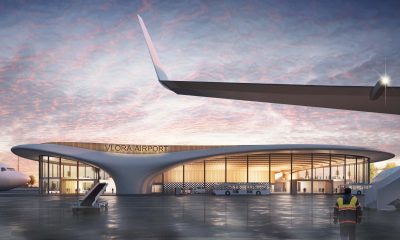
Albania's Vlora airport standoff tests investor confidence as EU accession clock ticks