Afghanistan
Restoring peace in Afghanistan - Is federalism the answer?

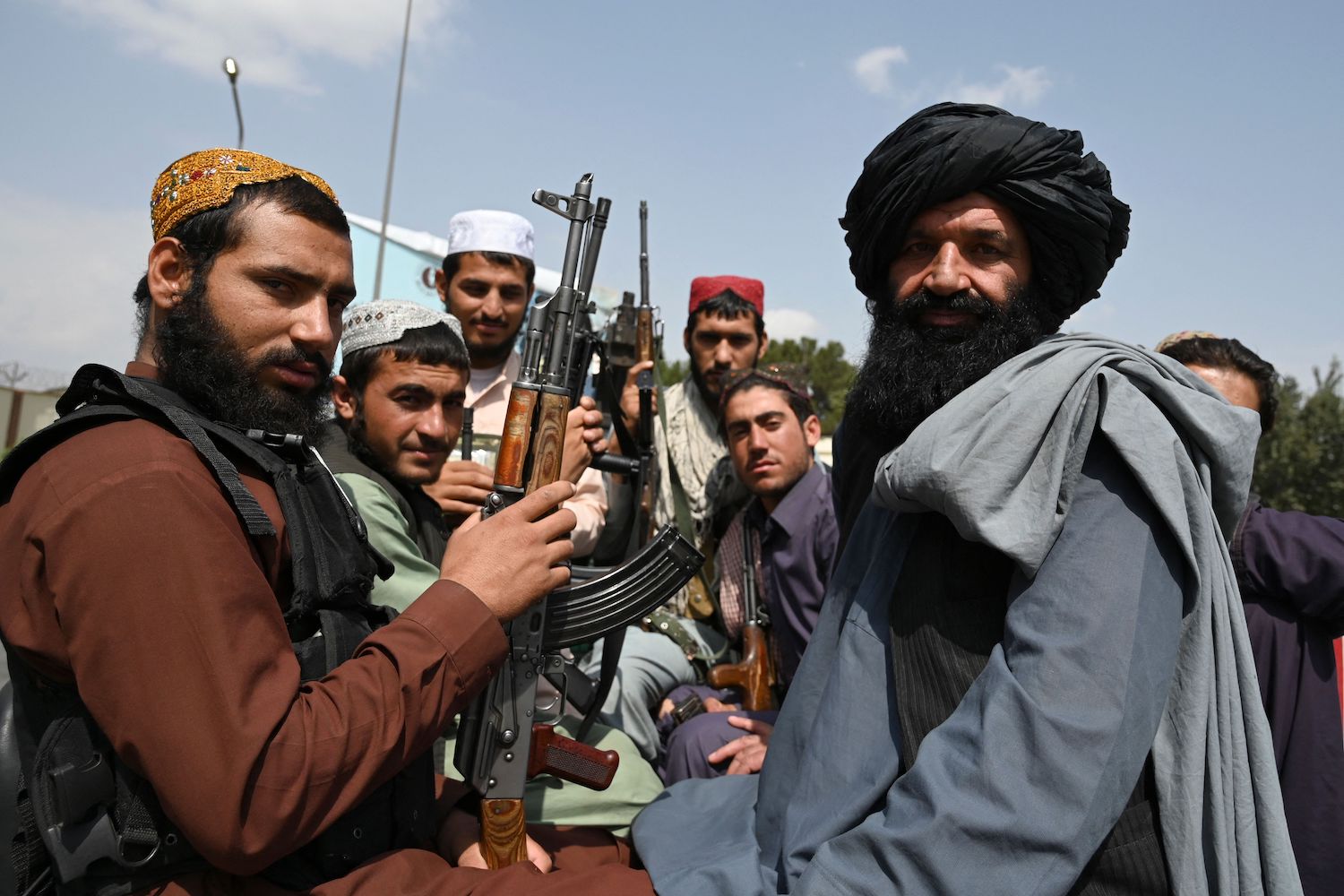
The winter season is likely to exacerbate the duress of Afghanistan residents more than ever before. Shortage of medicine, food, and essentials is likely to wreak havoc. While the American U.S. government’s Afghan Placement and Assistance (“APA”) program has attempted to evacuate a limited number of Afghans, there are hundreds of thousands of Afghans who want to get out of Afghanistan. APA is a crisis package made to support a limited number of Afghan refugees. Many countries have started similar programs for a small number of evacuees as passport/travel document services in Afghanistan were suspended for a long time. It is not possible to avail of these programs in the absence of passport/travel documents. In addition, there appear to be extremely few flights going in and out of Afghanistan, write Prof Dheeraj Sharma, director, IIM Rohtak and Nargis Nehan, former minister in government of Aghanistan.
Also, due to the complexities associated with these programs, the number of refugees admitted in Western European and North American countries has been minimal in the last few months. Therefore, the real crisis is of the people who are living and will continue to live in Afghanistan. Taking into account the humanitarian crisis, India recently sent some lifesaving medicines to Afghanistan. However, most countries are in a dilemma on whether the aid would reach the needy and suffering residents or merely support tyrannical regime. Given the ever-increasing complexity and perpetuated delays, what is the way forward for Afghanistan governance to even accept and deliver foreign aid?
Last week, the United Nation’s Security Council, headed by India, has decided to make an exemption for humanitarian assistance and relief activities that are essential for the upkeep of basic human needs from the sanctions imposed under resolutions 2255 (2015) and 1988 (2011) on Taliban. However, domestic strife may continue preclude many needy from availing the relief effort. Consequently, an inclusive government structure with appropriate representation from all segments of Afghan society may be need of the hour for United Nations and bodies authorized by United Nations to distribute the relief material. Also, such inclusive government structure is required for any sort of peace and stability in Afghanistan.
Recently, there have been suggestions for the invocation of Loya Jirga. Loya Jiga (grand council) is a body that typical constitutes of between 3,000 to 5,000 tribesmen and political leaders. In the past, all tribal Jirgas were invited for a larger national issue. In the history of Afghanistan, the first Loya Jirga (grand councils of various Jirga) was held under the stewardship of Mirwais Khan Hotaki to have a united fight against Safavid rule for protections of tribal rights. However, in last two decades, the national Jirga became a bit more inclusive having some civil society, media, government officials, parliament, provincial councils, youth, academia, private sector and women representatives in the delegation to ensure support of all segments of the society for national issues. However, people began to witness that the central government was employing Loya Jirga to get concurrence and legitimacy for its own political agendas. The Presidents were appointing an organizing committee of trusted and loyal members to host and hold the Loya Jirgas. Therefore, while many people in rural areas continue to accept Jirgas as a means of Informal Justice Mechanism because of easy access and prompt decision making but its utilization for the purpose of a national decision at this critical time is challenging. Many experts think that in the last 20 years because organizing body would only invite largely government officials and pro-government representatives in Loya Jirga to endorse the government agenda.
While the supporters of Loya Jirga claim that it can bring legitimacy for the Taliban to form a centralized government to be recognized by the international community for receiving financial aid and responding to the current crises. The opponents of Loya Jirga objects that such Loya Jirga would rubber stamp Taliban decisions as it has very limited acceptance in certain sections of Afghan society. Furthermore they claim that centralized governance has been the root of problems in Afghanistan. The aforementioned contention is supported by the fact that Afghans governments were operating with endorsement of Loya Jirga for last twenty years but the poor and marginalized groups of all ethnicities could not benefit from billions of dollars pouring in Afghanistan. While the central government was receiving all aid money and spending most of it in Kabul and other city centres, the poor provinces were left cultivating poppy and joining Taliban and ISIS for their survival.
The four decades of conflict has created layers of divisions among Afghans making all ethnicities especially the poor and rural ones the victims of injustice and impunity. Afghanistan needs a governance structure that can create a conducive environment for Afghans to coexist. The governance structure should be built to respond to the needs of people that could serve all Afghans especially in rural districts and villages where 70% of population live. The political order should ensure representation of not only Kabul elites of all ethnicities but also participation of provinces, districts, and villages.
Consequently, the only possible way to ensure that relief is distributed equitably and fairly is to institute to put in place loose federalism in Afghanistan. In other words, international community may offer aid and relief efforts taking into account that federal structure of Afghanistan. In such a federal structure the regions/provinces should be allowed to govern themselves while, there should also be mechanisms in place for accountability of provinces to their communities and the central government.
The federal structure for Afghanistan will have many advantages. It will prevent unfairness and resulting in dispersing of power. Also, such structure will increase citizen participation and augment diversity. Additionally, such a system will also increase administrative effectiveness and will provide the country a balance. In addition, the constituent provinces of the country may be able to block some national policies and may lobby for greater share in others. Such a structure will probably promote greater accommodation of ethnic, cultural, and racial diversity.
Afghanistan is a society of minorities having several ethnicities with quite diverse culture and communities. Every ethnicity is eager to retain and embrace their culture, language, and leadership. However, when the central government began to impose upon the cultural affairs and cutting edge leadership of provinces, the resistance to central government and its policies gained momentum. For example Faryab is a province where most of residence are Uzbek. They always had Uzbeks run the affairs of the province and the locals communicate in Uzbeki language. The central government suddenly appointed Daud Laghmani a Pashtun as governor of Faryab. People protested for weeks until the central government changed its decision.
In the last 20 years, Afghanistan has experienced a highly centralized political order which became the main protagonist for collapse of state. Instead of debating, it is better that Afghanistan pilot decentralization in four provinces as a policy and draw its lessons from it.
*All views expressed are personal and do not represent the views of EU Reporter.
Share this article:

EU Reporter publishes articles from a variety of outside sources which express a wide range of viewpoints. The positions taken in these articles are not necessarily those of EU Reporter. Please see EU Reporter’s full Terms and Conditions of publication for more information EU Reporter embraces artificial intelligence as a tool to enhance journalistic quality, efficiency, and accessibility, while maintaining strict human editorial oversight, ethical standards, and transparency in all AI-assisted content. Please see EU Reporter’s full A.I. Policy for more information.




European Inventor Award 2026 winners announced: Honouring the innovators shaping tomorrow

Open letter to president of the European Commission on the Schengen Entry/Exit System (EES)

EU policy toward Azerbaijan: Why Brussels must move beyond political dialogue

The Iran war changed Pakistan's strategic value, not its political trajectory

New rules to protect EU steel industry from damaging impacts of global overcapacity enter into application

PMI defends AI consultation tool as scrutiny grows over EU tobacco rules review

EU and Canada conclude the Energy Security Business Roundtable to deepen transatlantic business relations

Democracy cannot be selective: Why Europe must apply the same standards abroad that it demands at home

The ancient myths that tourism boards (and slot designers) can't stop selling

Europe must double down on nuclear progress to achieve its long-term ambitions

Solana company partners with Kazakhstan on $6B Alatau Crypto Megacity

Astana's congress of world religions: A global platform for dialogue in an age of division

International Plastic Bag Free Day – from single use to reuse

Protect children from online sexual abuse: Call for urgent negotiations and permanent solution

Will the Gulf monarchies rise above internecine disputes in the interest of collective security?

MEPs supportive of draft Biotech report, but divisions over incentives remain

Kazakhstan reforms under scrutiny at Brussels Press Club round table

Japan should face up to history and contribute more to regional peace

Ambassador calls for 'speeding up' of co-operation between EU and Kazakhstan

Timur Turlov at Smart Moves Summit 2025: How chess can transform global education

Shevtsova’s case: Out-of-court sanctions dismantling trust in Ukrainian cause

The future of European transport

Trump Vs Trueman

US 'no longer' an 'unconditional ally' for Europe - MEP
-
 Science4 days ago
European Inventor Award 2026 winners announced: Honouring the innovators shaping tomorrow
-
 Schengen3 days ago
Open letter to president of the European Commission on the Schengen Entry/Exit System (EES)
-
 Azerbaijan3 days ago
EU policy toward Azerbaijan: Why Brussels must move beyond political dialogue
-
 Iran3 days ago
The Iran war changed Pakistan's strategic value, not its political trajectory