Bangladesh
The Greatest Bengali: Latest translation of ‘Bangabandhu, The People’s Hero’ launched in Brussels

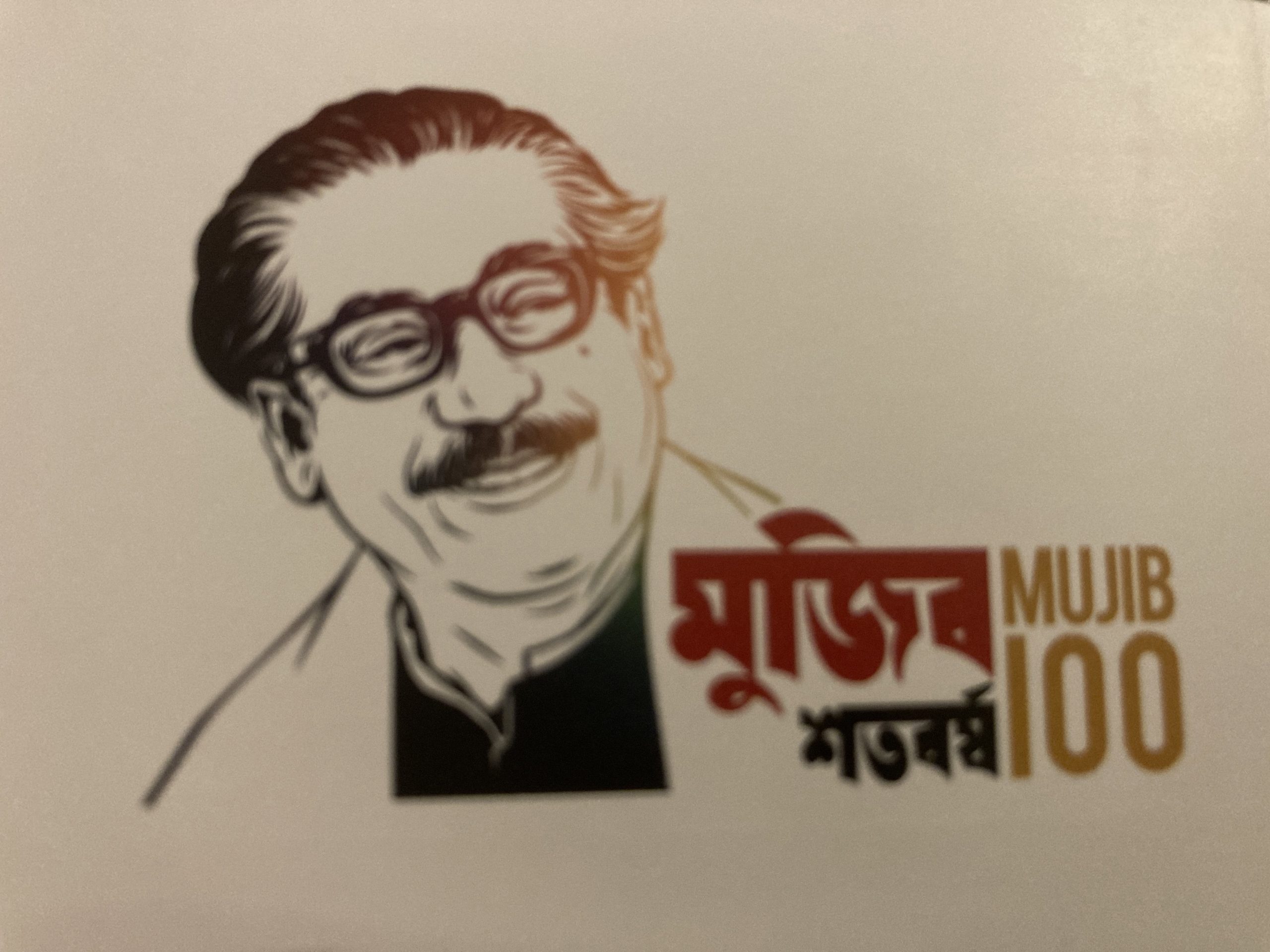
At the birth of Bangladesh as an independent nation, Sheikh Mujibur Rahman was admired internationally as the country’s first leader. He was assassinated in 1975 but is regarded by his people as the Father of the Nation, known as Bangabandhu (Friend of Bengal). A book detailing his life and achievements aims to remind the world of this remarkable man. It’s just been translated into Dutch, as Political Editor Nick Powell reports.

Members of Belgium’s Bangladeshi community were joined by some of their country’s many friends in the EU capital for the launch of ‘Bangabandhu, Held van een Volk’ (Bangabandhu, Hero of his People’) at the Press Club Brussels Europe. The book was first published in English in 2020 to mark the 100th anniversary of the birth of Sheikh Mujibur Rahman, the Father of the Nation of Bangladesh, regarded as the greatest Bengali. It has already been translated into Korean and moves are underway to translate it into another major European language.

The translation into Dutch describes how Bangabandhu’s legendary status is interwoven with the historical reality of the life of Sheikh Mujibur Rahman. The complex geopolitical process of nation-building in the dynamic South Asian context.
The book reminds us of what that meant for Bangladesh. The conflict in Bengal before and during the creation of Pakistan, the oppression of Bengali aspirations and identity in the new state and the bloody conflict in 1971 before independence was achieved. Bangabandhu was at the centre of events throughout, notwithstanding his long periods of imprisonment.

A political activist since his student days, the future Father of the Nation acted to save many lives during the inter-communal conflicts of the 1940s and tried always to find a peaceful and constitutional path to gain recognition of the aspirations of Pakistan’s Bengali majority. One of the book’s many valuable photographs shows the young Sheikh Mujibur Rahman meeting that giant of peaceful struggle, Mahatma Ghandi.
Both men were to be assassinated. In Bangabandhu’s case, it was a hammer-blow to the newly independent nation that he served as Prime Minister and President. But his life has served to inspire the many advances that Bangladesh has made in recent years, as an increasingly prosperous and successful country, now led by Sheikh Mujibur Rahman’s daughter Sheikh Hasina.
The book brings out that the political giant regarded as the Father of the Nation was also a modest man, an inspirational figure but a practical one as well. More than one contributor repeats these words of his: “When I decide to do something, I go ahead and do it. If I find out that I was wrong, I try to correct myself. This is because I know that only doers are capable of making errors; people who never do anything make no mistake”.
At the book launch, Bangladesh’s Ambassador to the European Union, Mahbub Hassan Saleh, recalled these words at the dawn of independence: “Bangladesh is committed to build an exploitation-free society. Independence becomes meaningless without economic emancipation. We cannot let the rich get richer and the poor get poorer. None in Bangladesh shall die of hunger, all will live in happiness and prosperity”.
Achieving that ambition is surely the greatest tribute of all. The book launch was also addressed by the EU’s Ambassador to Bangladesh, Charles Whiteley. He remarked on the transformation of recent years, since his previous time in Dhaka as Deputy Head of Mission between 2005 and 2009.
“Bangladesh is advancing to become that prosperous nation that Bangabandhu Sheikh Mujibur Rahman envisaged”, he observed, adding that the EU was very proud to be a partner of Bangladesh in its transformation.
Share this article:
EU Reporter publishes articles from a variety of outside sources which express a wide range of viewpoints. The positions taken in these articles are not necessarily those of EU Reporter. Please see EU Reporter’s full Terms and Conditions of publication for more information EU Reporter embraces artificial intelligence as a tool to enhance journalistic quality, efficiency, and accessibility, while maintaining strict human editorial oversight, ethical standards, and transparency in all AI-assisted content. Please see EU Reporter’s full A.I. Policy for more information.



Setting a new benchmark in premium travel

Survey on an EU Blueprint for intellectual property licensing and spinoff creation

Burnham as PM? 'Wait and see'

Rule of law report strengthens EU democracy and fundamental rights

Statement by the Ministry of Foreign Affairs of the Republic of Kazakhstan

Kazakhstan: Central Election Committee reviews the results of the nomination of candidates for the deputies of Kurultai

Ban on destruction of unsold clothes and shoes enters into application

Rome–Washington Axis: Italian Diplomat Zanardi Landi to Help Save Bosnia

The Digital Markets Act Is Hurting Europeans. It’s Time to Put Progress, Free Markets, and Competition First

From Ukraine to Suez: Why the Mediterranean has become the strategic centre of gravity

Commission sends Statements of Objections to several companies and trade associations in suspected construction chemicals cartel

Commission endorses Latvia’s €617 million Social Climate Plan to support vulnerable households and transport users in the clean transition

Commission fines AliExpress €550 million for breaching the Digital Services Act

Astana Hub unveils infrastructure to support AI innovation in health care

The security environment of the South Caucasus amid changing geopolitical realities

Why the US is losing its legitimacy as a global superpower and the trust of the comity of nations

Kazakhstan reforms under scrutiny at Brussels Press Club round table

Japan should face up to history and contribute more to regional peace

Ambassador calls for 'speeding up' of co-operation between EU and Kazakhstan

Timur Turlov at Smart Moves Summit 2025: How chess can transform global education

Shevtsova’s case: Out-of-court sanctions dismantling trust in Ukrainian cause

The future of European transport

Trump Vs Trueman

US 'no longer' an 'unconditional ally' for Europe - MEP
-
 Aviation/airlines4 days ago
Setting a new benchmark in premium travel
-
 Intellectual Property Rights4 days ago
Survey on an EU Blueprint for intellectual property licensing and spinoff creation
-
 Labour4 days ago
Burnham as PM? 'Wait and see'
-
 EU law4 days ago
Rule of law report strengthens EU democracy and fundamental rights