Bangladesh
Addressing the challenges facing Bangladesh: How the EU can support its development

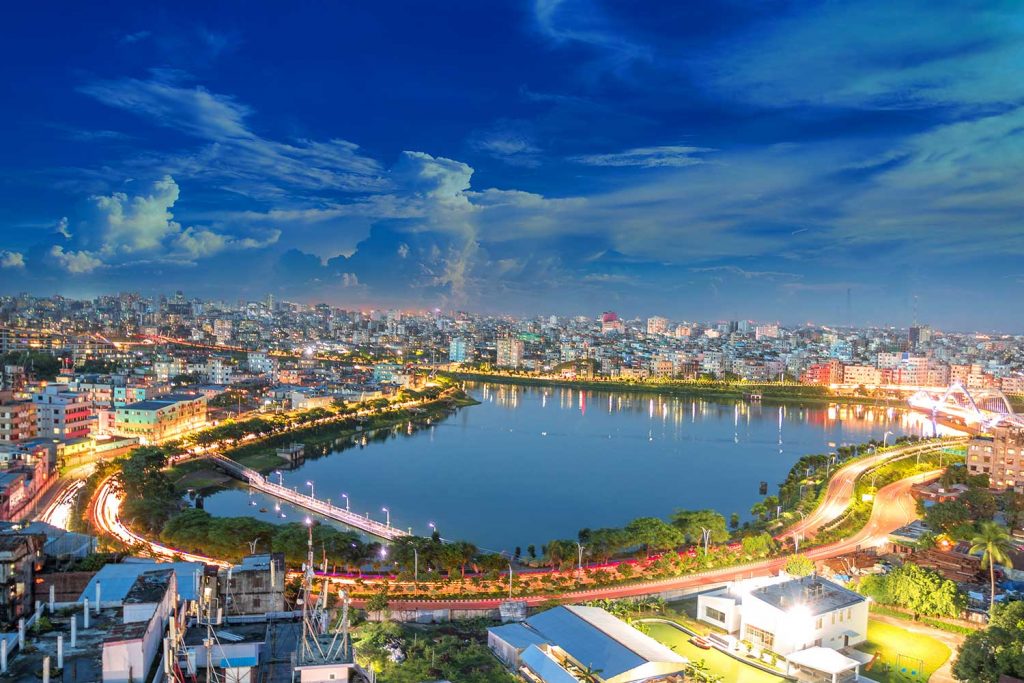
Bangladesh, a vibrant South Asian nation with a population of over 170 million, has made remarkable progress in last five decades, set to graduate from the category of Least Developed Countries (LDCs) in 2026. Despite its impressive economic growth and social development strides, Bangladesh faces numerous challenges that hinder its potentials. These challenges include climate vulnerability, economic instability and the Rohingya refugee crisis. Further, Bangladesh has recently witnessed a sea change in its leadership with the previous regime of Sheikh Hasina overthrown in a mass uprising led by the students and replaced by an interim government led by Nobel Laureate Prof. Muhammad Yunus. The interim government has been entrusted with bringing about important reforms in the country, ensuring a transition towards inclusive and pluralistic democracy and creating an environment in which free, fair, credible and participatory elections can be held. The European Union (EU), as a key partner, has the potential to play a crucial role in helping Bangladesh overcome its existing obstacles, support the work of the interim government and pave the way for sustainable development, writes Colin Stevens.
Climate change and environmental challenges
Bangladesh is one of the most climate-vulnerable countries in the world. Its low-lying geography makes it highly susceptible to flooding, cyclones, and rising sea levels, which threaten the livelihoods of millions. The threats of climate change include exacerbating poverty, displacing communities, and putting immense pressure on natural resources.
The EU, known for its leadership in climate action, can provide vital support to Bangladesh in its fight against climate change. By offering financial assistance through green climate funds, promoting climate-resilient infrastructure projects, technology transfer and facilitating knowledge-sharing initiatives on renewable energy, the EU can further strengthen Bangladesh’s capacity to mitigate and adapt to climate risks. The EU’s Green Deal, with its ambitious environmental targets, could serve as a blueprint for Bangladesh to pursue a sustainable development path.
Economic growth and trade diversification
Bangladesh’s economy has historically relied on its booming Ready-Made Garments (RMG) industry, which accounts for more than 80% of the country’s exports. However, this over-reliance on the RMG sector makes Bangladesh vulnerable to global economic fluctuations, such as the COVID-19 pandemic, which severely impacted its export revenues.
The EU, as Bangladesh’s largest trading partner, can support the country’s efforts to diversify its economy. Under the EU’s Everything But Arms (EBA) preferential trade arrangement, which is offered by the EU to all Least Developed Countries (LDCs), Bangladesh enjoys duty free quota free access for all its products to the European market. As Bangladesh prepares to graduate from its Least Developed Country (LDC) status by 2026, the EU can help the country maintain its export competitiveness by continuing to extend trade preferences and encouraging investments in emerging sectors like information technology, pharmaceuticals, leather and agriculture.
Additionally, by promoting fair trade practices and addressing concerns about labor rights, the EU can help ensure that Bangladesh’s economic growth remains inclusive and sustainable. The EU's commitment to human rights and corporate social responsibility provides a solid foundation for deepening economic cooperation.
Labour rights and workers’ safety
Bangladesh’s RMG industry has been the backbone of its economic success. The country has the highest number of US Green Building Council’s LEED (Leadership in Energy and Environmental Design) certified factories, numbering 229. Despite this, the sector has been plagued by inadequacies in labor conditions and safety concerns. The tragic collapse of the Rana Plaza building in 2013, which claimed over 1,100 lives, highlighted the need for urgent reforms in workers’ safety and labor rights.
The EU has been a critical partner in advocating for better labor standards in Bangladesh. The EU’s engagement following the Rana Plaza disaster led to the creation of the Bangladesh Accord, a legally binding agreement aimed at improving workplace safety in the garment sector. Going forward, the EU can continue to work with Bangladesh to strengthen labor laws, ensure their enforcement, and improve the overall working conditions in the RMG industry. Moreover, supporting the creation of alternative industries can reduce the pressure on the garment sector and provide more diversified employment opportunities for workers.
Rohingya crisis
Bangladesh has shown immense generosity in hosting over one million forcibly displaced Rohingyas from Myanmar who fled persecution in their own country. However, this influx has put significant strain on Bangladesh’s resources, infrastructure, environment and social services, particularly in the Cox’s Bazar district, where the temporary camps accommodating the forcibly displaced Rohingyas are located.
The EU has been a strong advocate for a peaceful and sustainable resolution of the Rohingya crisis. It has provided humanitarian assistance, including financial aid and technical support, to help Bangladesh manage the refugee situation. Nevertheless, more needs to be done to ensure that the burden is not solely placed on Bangladesh. The EU can continue its diplomatic efforts to pressure Myanmar to ensure the safe and voluntary return of the Rohingyas, while also supporting longer-term initiatives to integrate refugees into the local economy and communities.
Governance and human rights
Bangladesh has made progress in reducing poverty and improving access to education and healthcare, but it still faces challenges related to governance, human rights, and political stability. The country has grappled with issues such as corruption, media freedom restrictions, extrajudicial killings, enforced disappearances, and political violence.
The EU, as a proponent of democracy and the rule of law, can offer support to Bangladesh in strengthening its institutions, promoting good governance, and upholding human rights. By fostering dialogue on political reforms, providing technical assistance for improving public administration, and supporting civil society organizations, the EU can help Bangladesh create a more transparent, accountable, and inclusive political environment.
Bangladesh stands at a crucial juncture, with significant challenges to overcome, in its journey toward sustainable development. The European Union, with its vast resources, experience, and commitment to global partnerships, can play a pivotal role in addressing these challenges. Through collaborative efforts in climate action, economic diversification, labor rights, humanitarian assistance, and governance reforms, the EU can support Bangladesh in achieving long-term prosperity and stability.
Strengthening the partnership between Bangladesh and the EU will not only benefit the people of Bangladesh but also contribute to regional and global peace, security, and development. By working together, both can ensure a prosperous and more resilient future for Bangladesh.
****
Share this article:
EU Reporter publishes articles from a variety of outside sources which express a wide range of viewpoints. The positions taken in these articles are not necessarily those of EU Reporter. Please see EU Reporter’s full Terms and Conditions of publication for more information EU Reporter embraces artificial intelligence as a tool to enhance journalistic quality, efficiency, and accessibility, while maintaining strict human editorial oversight, ethical standards, and transparency in all AI-assisted content. Please see EU Reporter’s full A.I. Policy for more information.





Astana's congress of world religions: A global platform for dialogue in an age of division

Protect children from online sexual abuse: Call for urgent negotiations and permanent solution

Solana company partners with Kazakhstan on $6B Alatau Crypto Megacity

Will the Gulf monarchies rise above internecine disputes in the interest of collective security?

Europe must double down on nuclear progress to achieve its long-term ambitions

International Plastic Bag Free Day – from single use to reuse

Study: Europe's defense runs on American servers

Commission proposes five joint defence projects to strengthen Europe's industrial capabilities

Safer cars, safer roads: New rules take effect

Survey of city economic experts: Cities are driving Draghi’s competitiveness agenda, but need EU recognition to scale action

Europe's Cloud moment: The DMA must now deliver

EU-Mexico: While others build walls, Europe builds bridges

New EU strategy must help farmers move toward a more humane food system

Kashmir's 9,765 missing women and girls demand international attention

Quarterly reports show a surge in solar energy and e-vehicles, with record highs in 2025

EU deploys wildfire support to face multiple fires across Portugal and France

Kazakhstan reforms under scrutiny at Brussels Press Club round table

Japan should face up to history and contribute more to regional peace

Ambassador calls for 'speeding up' of co-operation between EU and Kazakhstan

Timur Turlov at Smart Moves Summit 2025: How chess can transform global education

Shevtsova’s case: Out-of-court sanctions dismantling trust in Ukrainian cause

The future of European transport

Trump Vs Trueman

US 'no longer' an 'unconditional ally' for Europe - MEP
-
 Kazakhstan4 days ago
Astana's congress of world religions: A global platform for dialogue in an age of division
-
 Child sexual abuse4 days ago
Protect children from online sexual abuse: Call for urgent negotiations and permanent solution
-
 Kazakhstan4 days ago
Solana company partners with Kazakhstan on $6B Alatau Crypto Megacity
-
 Iran4 days ago
Will the Gulf monarchies rise above internecine disputes in the interest of collective security?