Human Rights
The EU Anti-Trafficking Day: Key findings from 10 years of Human Trafficking Data


18 October marked the EU Anti-Trafficking Day, dedicated to raise awareness of trafficking in human beings and the exploitation of women, men and children.
Data collection helps to support legislation and develop measures that address trafficking in human beings. Since 2013, Eurostat collects data on trafficking in human beings and identifies trends, challenges, and progress in combatting trafficking in all EU countries.
On 13 October 2025, Eurostat released a report covering 10 years (2013-2023) of EU data of trafficking in human beings. Some of the main findings are:
- Over 83 000 trafficking victims were registered in the EU in the last decade;
- Trafficking for sexual exploitation remains the main form of trafficking;
- Cases of trafficking for labour exploitation have surged since 2019 (+70.5%), matching the number of registered victims for sexual exploitation in 2022;
- The rise in trafficking for labour exploitation in the EU has led to more male victims;
- The number of victims from non-EU countries has tripled.
More information in the full report: Trafficking in human beings in the EU: main findings 2013-2023.
Trafficking in human beings is a hidden crime for which targeted legislation and operational actions are needed to protect victims and bring perpetrators to justice. The new EU Anti-Trafficking Directive has to be transposed by member states by 15 July 2026. Operational cooperation between EU countries continues with the support of EU agencies such as Europol, Eurojust and Frontex.
Share this article:
EU Reporter publishes articles from a variety of outside sources which express a wide range of viewpoints. The positions taken in these articles are not necessarily those of EU Reporter. Please see EU Reporter’s full Terms and Conditions of publication for more information EU Reporter embraces artificial intelligence as a tool to enhance journalistic quality, efficiency, and accessibility, while maintaining strict human editorial oversight, ethical standards, and transparency in all AI-assisted content. Please see EU Reporter’s full A.I. Policy for more information.



Burnham as PM? 'Wait and see'

Setting a new benchmark in premium travel

Survey on an EU Blueprint for intellectual property licensing and spinoff creation

Kazakhstan: Central Election Committee reviews the results of the nomination of candidates for the deputies of Kurultai

Rule of law report strengthens EU democracy and fundamental rights

Ban on destruction of unsold clothes and shoes enters into application

Kazakhstan and Belgium: Building a Partnership for the Future

Statement by the Ministry of Foreign Affairs of the Republic of Kazakhstan

New episode – DGT podcast: Languages and Technology

Become a European Commission trainee – applications are now open

Commission outlines measures to strengthen Europe's banking sector and support growth

British political shifts and the future of UK-China ties
The South Caucasus at a historic turning point: Between lasting peace and renewed confrontation

As Ireland chairs the EU Presidency, what impact has over fifty years of EU membership had on Ireland

The Digital Markets Act Is Hurting Europeans. It’s Time to Put Progress, Free Markets, and Competition First

From Ukraine to Suez: Why the Mediterranean has become the strategic centre of gravity

Kazakhstan reforms under scrutiny at Brussels Press Club round table

Japan should face up to history and contribute more to regional peace

Ambassador calls for 'speeding up' of co-operation between EU and Kazakhstan

Timur Turlov at Smart Moves Summit 2025: How chess can transform global education

Shevtsova’s case: Out-of-court sanctions dismantling trust in Ukrainian cause

The future of European transport

Trump Vs Trueman

US 'no longer' an 'unconditional ally' for Europe - MEP
-
 Labour4 days ago
Burnham as PM? 'Wait and see'
-
 Aviation/airlines4 days ago
Setting a new benchmark in premium travel
-
 Intellectual Property Rights4 days ago
Survey on an EU Blueprint for intellectual property licensing and spinoff creation
-
 Kazakhstan4 days ago
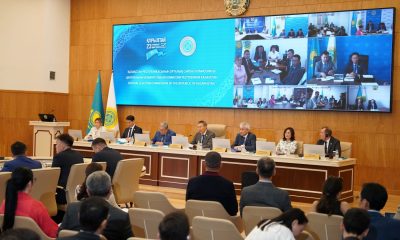
Kazakhstan: Central Election Committee reviews the results of the nomination of candidates for the deputies of Kurultai