General
US Treasury to end 1979 treaty with global minimum tax holdout Hungary


Viktor Orban, the Hungarian prime minister, addresses a business conference held in Budapest, Hungary on 9 June, 2021.
On Friday (8 July), the US Treasury said that it would be terminating a 1979 tax agreement with Hungary. This was in response to Budapest's blockade of the European Union's implementation a global 15% minimum tax.
A Treasury spokesperson stated that because Hungary has lowered its corporate income tax rate to 9.9%, less than half of the 21% U.S. rate, the tax treaty benefits unilaterally for Hungary and not for the United States.
"The benefits of the agreement are no longer mutual - there is a substantial loss in potential revenue to the United States, and very little return on investment by U.S. businesses in Hungary."
The timing of the termination, after years of U.S. concern about the treaty, suggests that Treasury is using the treaty to try and pressure Viktor Orban, the Hungarian Prime Minister to implement the 15% global minimum tax.
After the Treasury has sent a formal notification to Hungarian authorities, termination should be completed within six months.
The Treasury spokesperson stated that "Hungary made America's long-standing concerns about the 1979 tax treaty worse" by blocking the EU Directive to establish a global minimum tax. This treaty would have less one-sided if Hungary had implemented a global tax minimum. Refusing to implement a global minimum tax could further exacerbate Hungary's position as a treaty-shopping country, further disadvantageing the United States.
Our Standards
Share this article:
EU Reporter publishes articles from a variety of outside sources which express a wide range of viewpoints. The positions taken in these articles are not necessarily those of EU Reporter. Please see EU Reporter’s full Terms and Conditions of publication for more information EU Reporter embraces artificial intelligence as a tool to enhance journalistic quality, efficiency, and accessibility, while maintaining strict human editorial oversight, ethical standards, and transparency in all AI-assisted content. Please see EU Reporter’s full A.I. Policy for more information.



European Inventor Award 2026 winners announced: Honouring the innovators shaping tomorrow

EU delivers emergency aid and organises a humanitarian flight in response to earthquakes in Venezuela

President von der Leyen travels to Azerbaijan and Armenia

Region Trade Bank strengthens international governance as Iraq's banking sector deepens global engagement

Commission approves new geographical indication from Slovakia

High Representative Kallas with Commissioners Kos and Brunner in Türkiye to advance bilateral cooperation

Open letter to president of the European Commission on the Schengen Entry/Exit System (EES)

EU policy toward Azerbaijan: Why Brussels must move beyond political dialogue

MEPs supportive of draft Biotech report, but divisions over incentives remain

'Now is really the time!' for women's health, says Cooke

Macron and WHO chief back stronger safeguards for children online

Kyrgyzstan launches Tamchy SFIT: A new international jurisdiction as a gateway to Eurasia

Kazakhstan’s dombyra: The two-stringed instrument that carries the soul of the steppe

How Schuman lost Its way

Rating of American Express casino sites in the UK

PMI defends AI consultation tool as scrutiny grows over EU tobacco rules review

Kazakhstan reforms under scrutiny at Brussels Press Club round table

Japan should face up to history and contribute more to regional peace

Ambassador calls for 'speeding up' of co-operation between EU and Kazakhstan

Timur Turlov at Smart Moves Summit 2025: How chess can transform global education

Shevtsova’s case: Out-of-court sanctions dismantling trust in Ukrainian cause

The future of European transport

Trump Vs Trueman

US 'no longer' an 'unconditional ally' for Europe - MEP
-
 Science4 days ago
European Inventor Award 2026 winners announced: Honouring the innovators shaping tomorrow
-
 Venezuela5 days ago
EU delivers emergency aid and organises a humanitarian flight in response to earthquakes in Venezuela
-
 Armenia5 days ago
President von der Leyen travels to Azerbaijan and Armenia
-
 Iraq4 days ago
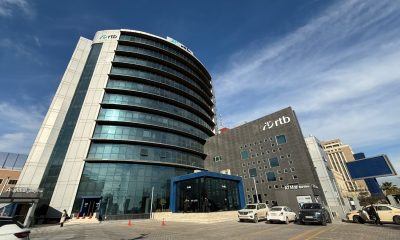
Region Trade Bank strengthens international governance as Iraq's banking sector deepens global engagement