Iran
Geneva conference and rally spotlight Iran’s human rights crisis


Human rights experts, political dignitaries, activists, and representatives of the Iranian opposition raised alarm over the worsening human rights situation in Iran, particularly the wave of executions at levels unprecedented in the past three decades, writes Shahin Gobadi.
At a conference inside the United Nations headquarters in Geneva, speakers presented new evidence of a dramatic surge in executions and the plight of political prisoners. They urged the UN and the international community to take decisive action, stressing the urgent need to address the regime’s escalating repression.
According to the Iran Human Rights Society, more than 1,100 prisoners have been executed in 2025, the highest figure since 1988.
Iranian opposition leader Maryam Rajavi addressed the event in a video message.
Referring to the alarming record of executions, Mrs. Rajavi said: “This is only part of the horrific picture of human rights violations in Iran. The crimes of the early 1980s—especially the 1988 massacre—remain unpunished and are now being repeated in Iran’s prisons and streets. Governments and United Nations bodies must end this unjust impunity.”
“As the UN Special Rapporteur on the situation of human rights in Iran emphasized in 2024, states should use universal jurisdiction to issue arrest warrants for Supreme Leader Ali Khamenei and others responsible for these atrocities. Remaining silent about these violations, Rajavi warned, only emboldens Khamenei to continue his policies of repression and destabilization,” she added.
Rajavi, the President-elect of the National Council of Resistance of Iran (NCRI), further stated: “The international community must defend the rights and freedoms of protesters, the rising youth, and members of the Resistance Units in their fight against the IRGC, as underlined in the Universal Declaration of Human Rights. The Iranian people’s struggle for freedom is also a struggle for peace in the region and the world. It is upon the international community to stand with them and to recognize their fight for freedom, justice, and human rights.”
Ingrid Betancourt, Colombian presidential candidate and former hostage, condemned the nearly 2,000 executions carried out since Masoud Pezeshkian took office, stressing that each execution destroys a family and silences dissent. She cited the cases of Behrouz Ehsani and Mehdi Hassani, members of the People’s Mojahedin Organization of Iran (PMOI/MEK) executed solely for their commitment to freedom and warned that fourteen other MEK members currently face imminent execution. Betancourt emphasized that these executions are part of a systematic campaign to crush opposition through fear. She called on UN High Commissioner for Human Rights Volker Türk and Special Rapporteur Mai Sato to urgently investigate both the ongoing executions and the 1988 massacre, insisting that justice and accountability for these crimes against humanity cannot be delayed.
Laurence Fehlmann Rielle, a member of the Swiss National Council, strongly condemned ongoing human rights violations in Iran, including arbitrary arrests, torture, mass executions, and systematic discrimination against women and minorities. She noted that between March and September 2025 alone, 855 people—including 29 women and five minors—were executed, with some hangings carried out in public to instill fear. Ms. Rielle called for the immediate and unconditional release of all those detained for peacefully exercising their rights, an end to arbitrary executions and unfair trials, and full respect for the fundamental rights of women and minorities. She also pressed for freedom of the press, access to information, and transparent cooperation with UN human rights mechanisms.
Other speakers included Tahar Boumedra, former Chief of UN Human Rights in Iraq and Director of the NGO Justice for Victims of the 1988 Massacre in Iran (JVMI), and Nicolas Walder, a member of the Swiss National Council.
Outside the UN headquarters, supporters of the NCRI rallied alongside survivors of the September 2022 protests—many of whom had been shot by state security forces and forced to flee Iran. An extensive exhibition highlighted personal stories and visual displays documenting the regime’s crackdown. Rally participants demanded an end to executions and repression and voiced support for NCRI President-elect Maryam Rajavi’s “Third Option”: no to war, no to appeasement, and regime change by the Iranian people and their resistance.
Share this article:

EU Reporter publishes articles from a variety of outside sources which express a wide range of viewpoints. The positions taken in these articles are not necessarily those of EU Reporter. Please see EU Reporter’s full Terms and Conditions of publication for more information EU Reporter embraces artificial intelligence as a tool to enhance journalistic quality, efficiency, and accessibility, while maintaining strict human editorial oversight, ethical standards, and transparency in all AI-assisted content. Please see EU Reporter’s full A.I. Policy for more information.



EU and South Africa kick off intergovernmental dialogue on Clean Trade and Investment Partnership

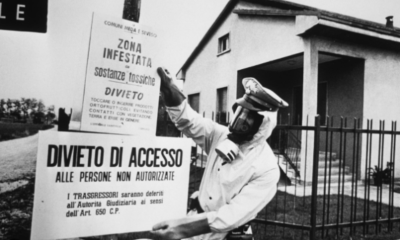
Seveso - 50 years on: EU strengthens its commitment to industrial safety in a changing landscape of risk

Why young jobseekers struggle to find roles abroad that fit their expertise

Commission opens formal investigation into possible gun jumping in XXXLutz's acquisition of Porta

Farmers, fair markets and consumers: new report highlights the role of EU competition rules in agriculture

Shared commitment to advance EOSC through new EOSC Nodes and EOSC projects

Falling in love with the Maldives

ECR MEPs question the European Commission on cardiovascular health and diet promoting the Mediterranean diet as an alternative to ultra-processed foods as key to tackling obesity

STATEMENT by the Ministry of Foreign Affairs of the Republic of Kazakhstan

Kazakhstan seeks regional AI leadership as economic partnership with China enters new phase

Starmer’s problem? 'He is not a politician'

Why a Brussels–Nicosia–Eastern Mediterranean strategic affairs platform would benefit the European Union

Albania's Vlora airport standoff tests investor confidence as EU accession clock ticks
ECR MEPs question the European Commission on cardiovascular health and diet promoting the Mediterranean diet as an alternative to ultra-processed foods as key to tackling obesity

Kazakhstan's fixed capital investment tops 9.5 trillion tenge in H1 2026

Commission adopts simpler rules for EU agri-food promotion policy

Kazakhstan reforms under scrutiny at Brussels Press Club round table

Japan should face up to history and contribute more to regional peace

Ambassador calls for 'speeding up' of co-operation between EU and Kazakhstan

Timur Turlov at Smart Moves Summit 2025: How chess can transform global education

Shevtsova’s case: Out-of-court sanctions dismantling trust in Ukrainian cause

The future of European transport

Trump Vs Trueman

US 'no longer' an 'unconditional ally' for Europe - MEP
-
 South Africa5 days ago
EU and South Africa kick off intergovernmental dialogue on Clean Trade and Investment Partnership
-
 Disasters5 days ago
Seveso - 50 years on: EU strengthens its commitment to industrial safety in a changing landscape of risk
-
 Employment5 days ago
Why young jobseekers struggle to find roles abroad that fit their expertise
-
 European Commission5 days ago
Commission opens formal investigation into possible gun jumping in XXXLutz's acquisition of Porta