Kazakhstan
AB Petroleum Capital: "Those Who Seek Will Always Find"

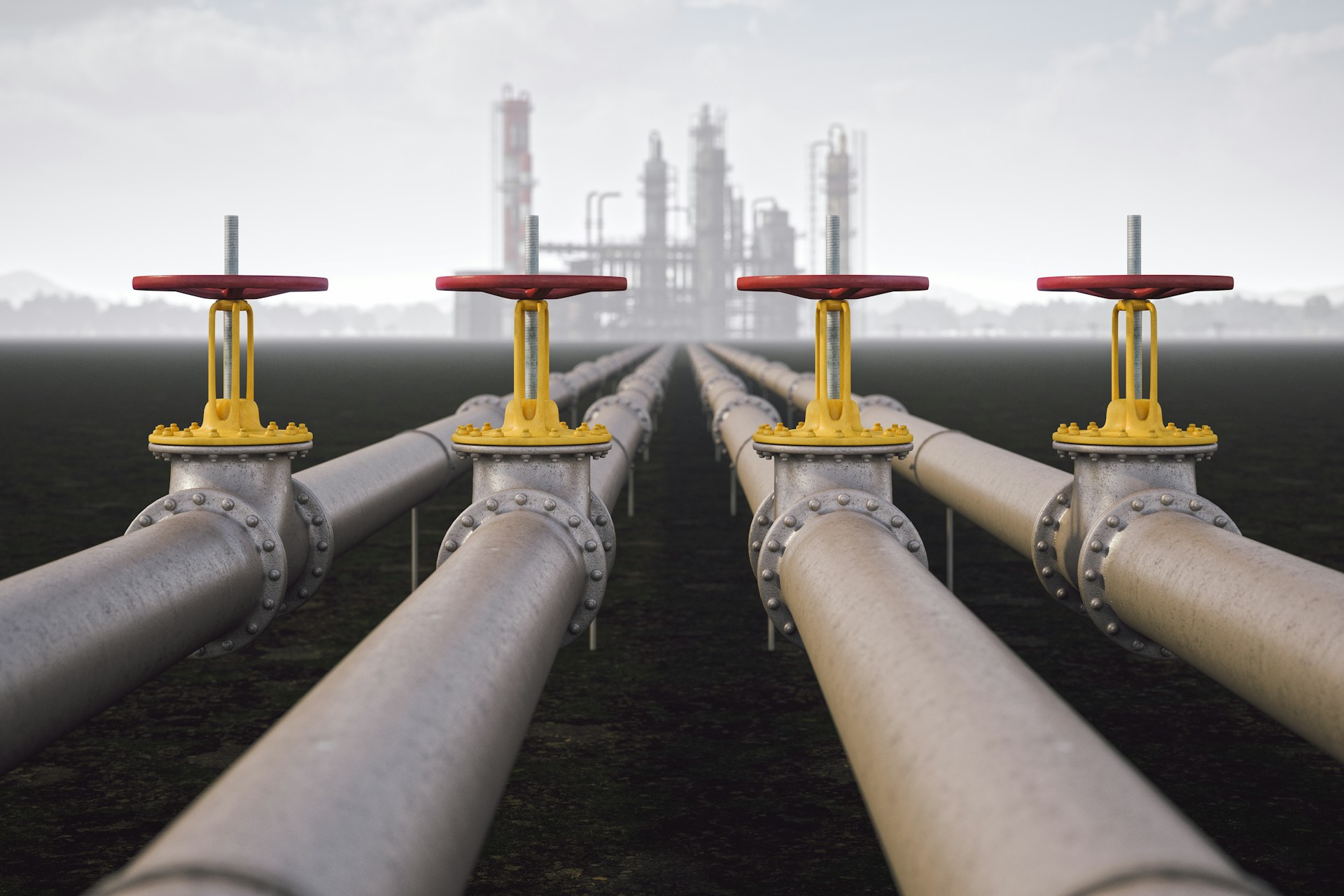
Turning a Marginal Field into a Profitable Asset? 'Impossible is nothing' for the professional.
Back in 2000, few people believed in the future of the Gryadovoye field in Kazakhstan's Atyrau region. The oil reserves discovered there in the 1980s had long been considered too small to justify development. Yet the strategic vision of a group of determined owners and the professional expertise of a small private company proved stronger than the odds. Despite formidable challenges, mounting debt, and considerable financial risk, Gryadovoye was ultimately developed into a profitable, productive asset. Here's the story of how a poorly mapped, remote, and seemingly unremarkable plot of land was transformed into a viable commercial operation.
The Starting Point
The field lies on the outer edge of the Caspian Depression, on the periphery of Kazakhstan's major oil and gas assets near the Atyrau producing region. What that means in practice: difficult terrain for exploration and drilling, and no supporting infrastructure in place.
No housing — the nearest settlement is almost 20 kilometres away. No roads. No pipelines. No trained local workforce. No accommodations for rotating crews and visiting specialists. Just the open Caspian steppe stretching to the horizon. In the oil industry jargon, some might call it a "puddle" – a marginal deposit unlikely to attract serious capital.
The Challenge
To make Gryadovoye work, the team would need to fund a full exploration program, locate commercially viable oil, build infrastructure from scratch, recruit and develop a workforce, launch industrial-scale production, and ultimately generate a return.
The Decision to Invest
Gryadovoye was first surveyed between 1986 and 1988 and promptly written off. Soviet-era geologists estimated geological reserves at 306,000 metric tonnes, with recoverable reserves of just 92,000 metric tonnes. On paper, the project didn’t justify further investment.
As the Soviet Union collapsed and Kazakhstan built its independent economy, the site passed into the hands of a private company, SP Aral Petroleum. Then, in 2002, the shareholders of what was then a modest organization — AB Petroleum Capital saw an opportunity to re-evaluate the deposit. After bringing in outside specialists and conducting a thorough assessment, they decided to take the financial risk: acquire the rights to the field and launch a comprehensive geological study. The transaction closed in March 2003, with the seller receiving a signing bonus of $260,000 for the transfer of subsoil use rights to Gryadovoye. From that point forward, the real work — and the real risk — began.
The company started with an intensive study of the field. Modern exploration methods, including 3D seismic surveying, revealed that the original Soviet assessment had significantly underestimated the deposit. Upon rigorous analysis, recoverable reserves were revised upward to nearly 1.5 million metric tonnes, five times higher than the prior estimate.
That result, however, marked the beginning of a long development process rather than an overnight breakthrough. The full exploration process — drilling new wells, recommissioning legacy ones, conducting seismic surveys, building out production infrastructure, and executing a phased launch of industrial operations — took approximately seven years. The first meaningful data confirming upgraded geological and recoverable reserves didn't emerge until 2006.
During this critical phase, the company committed substantial capital — primarily through commercial credit — totalling more than $4 million. The financing timeline broke down as follows:
- 2003: $600,000 loan from JSC Industrial Bank of Kazakhstan to fund development operations and seismic exploration
- 2005: $2.8 million credit facility from Eurasian Bank, Almaty, to support continued field development and infrastructure build-out
- 2007: $650,000 credit line from JSC Kazkommertsbank to finance additional drilling
The project fully relied on private investment and commercial credit — a testament to the conviction and risk tolerance of the company's leadership and shareholders.
By 2010, seven years after the initial investment, proven geological reserves had grown to 1,128,000 metric tonnes, of which 290,400 metric tonnes were classified as recoverable. Based on these findings and independent technical verification, the new reserve figures were officially registered on Kazakhstan's State Balance of Natural Resources.
Full-scale commercial oil production launched in 2011. By that point, 16 wells had been drilled across the field.
As production increased, revenues were reinvested into expanding operations and meeting tax and social obligations to both the workforce and the state. This period of active reinvestment lasted for years. Shareholders received their first dividend payment only after the 2016 fiscal year — more than a decade after the original acquisition.
At AB Petroleum Capital, corporate social responsibility isn't a tagline — it's a business principle. The company has consistently invested in the nearby communities, supporting local schools, kindergartens, and cultural institutions; funding infrastructure projects like road construction and workforce development initiatives.
Between 2003 and 2018, the company's tax contributions to budgets at various levels exceeded $48 million.
Over the course of seventeen years, AB Petroleum Capital has travelled a remarkable road. In 2003, the company stepped into the unknown—taking on risk, navigating setbacks, and making its share of mistakes along the way. The result, in the end, speaks for itself: a productive field, a trained workforce, a profitable business, and a long-term commitment.
Share this article:
EU Reporter publishes articles from a variety of outside sources which express a wide range of viewpoints. The positions taken in these articles are not necessarily those of EU Reporter. Please see EU Reporter’s full Terms and Conditions of publication for more information EU Reporter embraces artificial intelligence as a tool to enhance journalistic quality, efficiency, and accessibility, while maintaining strict human editorial oversight, ethical standards, and transparency in all AI-assisted content. Please see EU Reporter’s full A.I. Policy for more information.



Astana's congress of world religions: A global platform for dialogue in an age of division

Protect children from online sexual abuse: Call for urgent negotiations and permanent solution

Solana company partners with Kazakhstan on $6B Alatau Crypto Megacity

Will the Gulf monarchies rise above internecine disputes in the interest of collective security?

Kyrgyzstan launches Tamchy SFIT: A new international jurisdiction as a gateway to Eurasia

Kazakhstan’s dombyra: The two-stringed instrument that carries the soul of the steppe

International Plastic Bag Free Day – from single use to reuse

Europe must double down on nuclear progress to achieve its long-term ambitions

Deposits to Swiss banks from Bangladeshi nationals nearly tops all time peak

EU agricultural markets remain robust despite uncertainties and rising input costs

Commission report highlights achievements of EU rules on animal health

EU deploys wildfire support to face multiple fires across Portugal and France

Europe’s job market is shifting, and EURES is ready to lead the way into 2030

From a remote island to shelves around the world: The story of Azorean canned fish

Can digital sovereignty survive an open trading system?

Can the EU resist US pressure on medicine prices?

Kazakhstan reforms under scrutiny at Brussels Press Club round table

Japan should face up to history and contribute more to regional peace

Ambassador calls for 'speeding up' of co-operation between EU and Kazakhstan

Timur Turlov at Smart Moves Summit 2025: How chess can transform global education

Shevtsova’s case: Out-of-court sanctions dismantling trust in Ukrainian cause

The future of European transport

Trump Vs Trueman

US 'no longer' an 'unconditional ally' for Europe - MEP
-
 Kazakhstan2 days ago
Astana's congress of world religions: A global platform for dialogue in an age of division
-
 Child sexual abuse2 days ago
Protect children from online sexual abuse: Call for urgent negotiations and permanent solution
-
 Kazakhstan2 days ago
Solana company partners with Kazakhstan on $6B Alatau Crypto Megacity
-
 Iran2 days ago
Will the Gulf monarchies rise above internecine disputes in the interest of collective security?