Montenegro
Montenegrin police uses pepper spray to disperse anti-government protesters


Hundreds of protestors in Podgorica against the law restricting presidential powers and the failure of the ruling coalition to appoint judges for the Constitutional Court were dispersed by police from Montenegro who used pepper spray.
Protesters, mostly members of pro-Montenegrin organizations, rallied in front of parliament building with rocks, signal flares and tried to break through a barrier. They were eventually pushed aside.
Predrag Vusurovic (an activist) said: "What we did today was the blocking of Podgorica." For Friday (16 December), he announced that he would be announcing more rallies in the small Adriatic republic.
Montenegro is currently in political impasse since its constitutional court was dissolved due to the retirement of some judges.
Blockage by the court could make it hard to organize next year's presidential and early parliamentary elections.
The new judges could not be appointed by the 81-seat parliament, in which a heterogeneous coalition pro-European/pro-Serb parties has a majority with one deputy.
Pro-Montenegrin organizations and opposition parties launched anti-government protests last month in Podgorica. They demanded elections, unblocking the court, and the withdrawal a law that restricts the power of Montenegro’s long-time President Milo Djukanovic.
Montenegro is an NATO member and a candidate for the European Union.
The politics of the small Balkan republic, home to just 625,000 people, has been marred by a division between those who identify themselves as Montenegrins as well as those who identify themselves as Serbs. They oppose Montenegro's separation from an ex-state union with Serbia.
Share this article:
EU Reporter publishes articles from a variety of outside sources which express a wide range of viewpoints. The positions taken in these articles are not necessarily those of EU Reporter. Please see EU Reporter’s full Terms and Conditions of publication for more information EU Reporter embraces artificial intelligence as a tool to enhance journalistic quality, efficiency, and accessibility, while maintaining strict human editorial oversight, ethical standards, and transparency in all AI-assisted content. Please see EU Reporter’s full A.I. Policy for more information.




Open letter to president of the European Commission on the Schengen Entry/Exit System (EES)

EU policy toward Azerbaijan: Why Brussels must move beyond political dialogue

The Iran war changed Pakistan's strategic value, not its political trajectory

PMI defends AI consultation tool as scrutiny grows over EU tobacco rules review

Democracy cannot be selective: Why Europe must apply the same standards abroad that it demands at home

Civil society from across the EU gathers in Cork to reinforce Europe’s sustainability agenda

Majority think EU is a 'place of stability in a troubled world'

Rating of American Express casino sites in the UK

Can the EU resist US pressure on medicine prices?

Energy Union: New Spain-Portugal electricity interconnection inaugurated

Timing of the publication of the EU ETS auction calendar

Commissioner Šuica travels to Cairo to strengthen euro-mediterranean parliamentary cooperation and youth engagement

Commission seeks feedback on targeted amendment of EMFAF

Commission proposes five joint defence projects to strengthen Europe's industrial capabilities

Study: Europe's defense runs on American servers

The ancient myths that tourism boards (and slot designers) can't stop selling

Kazakhstan reforms under scrutiny at Brussels Press Club round table

Japan should face up to history and contribute more to regional peace

Ambassador calls for 'speeding up' of co-operation between EU and Kazakhstan

Timur Turlov at Smart Moves Summit 2025: How chess can transform global education

Shevtsova’s case: Out-of-court sanctions dismantling trust in Ukrainian cause

The future of European transport

Trump Vs Trueman

US 'no longer' an 'unconditional ally' for Europe - MEP
-
 Schengen4 days ago
Open letter to president of the European Commission on the Schengen Entry/Exit System (EES)
-
 Azerbaijan4 days ago
EU policy toward Azerbaijan: Why Brussels must move beyond political dialogue
-
 Iran4 days ago
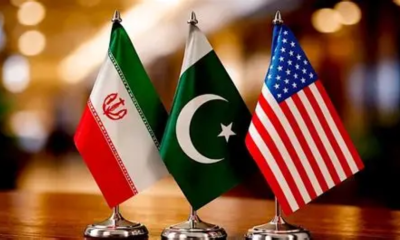
The Iran war changed Pakistan's strategic value, not its political trajectory
-
 European Commission4 days ago
PMI defends AI consultation tool as scrutiny grows over EU tobacco rules review