UK
Nigel Farage: From MEP to political disruptor eyeing Downing Street


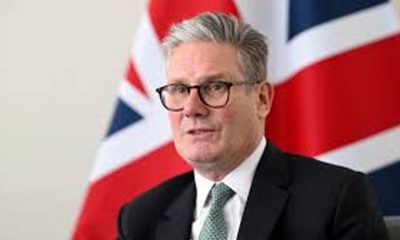
Nigel Farage (pictured), the former MEP and leader of the UK Independence Party (UKIP), is once again a rising force in British politics, writes Colin Stevens.
Farage’s journey from MEP to a central figure in Westminster politics highlights his enduring appeal as a disruptor of the political status quo. His leadership of the Reform Party, now a burgeoning political movement, his ties to influential global figures like Donald Trump and Elon Musk, and the recent speculation about his potential future as the UK’s prime minister have thrust him back into the spotlight.
The transition from MEP to MP
Farage first came to prominence as an MEP, where he led the charge for Brexit, often making headlines for his fiery speeches in the European Parliament. His charisma and unwavering commitment to taking Britain out of the European Union made him a polarizing but highly effective figure.
After stepping away from frontline politics following Brexit, Farage returned with renewed vigour, assuming leadership of the Reform Party, which has steadily gained traction among voters disillusioned with the Conservative and Labour parties. Farage’s success in transitioning to the House of Commons as an MP marks a significant milestone in his career, giving him a domestic platform to advocate for his party’s policies, which centre on tax reform, tougher immigration controls, and a post-Brexit vision for Britain as a global power.
A growing movement: The rise of the Reform Party
The Reform Party has capitalized on growing public discontent with the UK’s political establishment. Many Conservative voters feel betrayed by the current government’s failure to fully deliver on Brexit’s promises, while Labour continues to struggle with reconnecting to its traditional working-class base. Farage’s straight-talking style and focus on issues like energy independence, economic renewal, and sovereignty have struck a chord, particularly among those frustrated with the pace of change in post-Brexit Britain.
Polls show the Reform Party steadily climbing, with some surveys placing them as a potential kingmaker in the next general election. Farage’s ability to frame his party as an alternative to “business as usual” has resonated, particularly with younger voters and those in regions hardest hit by economic stagnation.
Allies in high places: Trump and Musk
Farage’s political resurgence has been buoyed by his high-profile friendships. He has remained close to President-elect Donald Trump, whose victory in the 2024 US elections underscores the enduring appeal of populist politics. Farage was one of the first foreign politicians to meet Trump after his 2016 win, and their friendship has only deepened since. Trump has reportedly offered his public endorsement of Farage, describing him as “a fantastic leader who will make Britain great again.”
Adding to the intrigue, Elon Musk, the billionaire entrepreneur and owner of X (formerly Twitter), has reportedly held private talks with Farage. Leaks from these discussions suggest Musk is considering donating $100 million to the Reform Party, a move that could significantly boost its campaign capabilities. Musk’s interest aligns with his broader ambitions to influence global politics, particularly in areas such as freedom of speech, technological innovation, and regulatory reform.
Farage’s alignment with figures like Trump and Musk signals his ability to attract support from influential global leaders, reinforcing his image as a leader who transcends traditional political boundaries.
Betting on the future: Could Farage be prime minister?
The question of whether Nigel Farage could one day become the UK’s Prime Minister is no longer purely hypothetical. Bookmakers are now offering odds on his ascent to Downing Street, with figures fluctuating between 10/1 and 15/1, depending on polling trends. While he remains an outsider compared to Conservative and Labour leaders, Farage’s ability to disrupt the political landscape makes him a serious contender.
Key factors could swing the odds in his favour:
- Weakness of mainstream parties: Both Conservatives and Labour face significant internal divisions, leaving room for an insurgent force like Reform.
- Economic turmoil: Public frustration with the UK’s cost-of-living crisis and stagnating wages could drive voters toward Farage’s populist economic message.
- Tactical alliances: If Reform gains enough seats to become a coalition partner, Farage’s influence on a future government could be profound, potentially setting the stage for his eventual premiership.
Critics argue that Farage’s polarizing nature and lack of a traditional governing track record make him an unlikely Prime Minister. However, his ability to channel voter anger and position himself as a voice of change should not be underestimated.
The road ahead
Nigel Farage’s resurgence in British politics comes at a time of significant political and economic uncertainty. His leadership of the Reform Party, coupled with his global connections and knack for capturing the public mood, positions him as a serious force in the UK’s evolving political landscape.
While the path to Downing Street remains steep, Farage has proven time and again that he thrives in the face of adversity. Whether or not he becomes prime minister, his impact on British politics is undeniable—and his rise serves as a reminder of the enduring power of populist movements in shaping the course of nations.
Picture credit: Shutterstock
Author
Colin Stevens founded EU Reporter in 2008. He has more than 30 years of experience as a TV producer and journalist. He is a past president of the Press Club Brussels (2020-2022) and was awarded an Honorary Doctor of Letters at Zerah Business School (Malta and Luxembourg) for leadership in European journalism.
Share this article:
EU Reporter publishes articles from a variety of outside sources which express a wide range of viewpoints. The positions taken in these articles are not necessarily those of EU Reporter. Please see EU Reporter’s full Terms and Conditions of publication for more information EU Reporter embraces artificial intelligence as a tool to enhance journalistic quality, efficiency, and accessibility, while maintaining strict human editorial oversight, ethical standards, and transparency in all AI-assisted content. Please see EU Reporter’s full A.I. Policy for more information.



Astana's congress of world religions: A global platform for dialogue in an age of division

Protect children from online sexual abuse: Call for urgent negotiations and permanent solution

Solana company partners with Kazakhstan on $6B Alatau Crypto Megacity

Will the Gulf monarchies rise above internecine disputes in the interest of collective security?

Europe must double down on nuclear progress to achieve its long-term ambitions

International Plastic Bag Free Day – from single use to reuse

Study: Europe's defense runs on American servers

Commission proposes five joint defence projects to strengthen Europe's industrial capabilities

Safer cars, safer roads: New rules take effect

Survey of city economic experts: Cities are driving Draghi’s competitiveness agenda, but need EU recognition to scale action

Europe's Cloud moment: The DMA must now deliver

EU-Mexico: While others build walls, Europe builds bridges

New EU strategy must help farmers move toward a more humane food system

Kashmir's 9,765 missing women and girls demand international attention

Quarterly reports show a surge in solar energy and e-vehicles, with record highs in 2025

EU deploys wildfire support to face multiple fires across Portugal and France

Kazakhstan reforms under scrutiny at Brussels Press Club round table

Japan should face up to history and contribute more to regional peace

Ambassador calls for 'speeding up' of co-operation between EU and Kazakhstan

Timur Turlov at Smart Moves Summit 2025: How chess can transform global education

Shevtsova’s case: Out-of-court sanctions dismantling trust in Ukrainian cause

The future of European transport

Trump Vs Trueman

US 'no longer' an 'unconditional ally' for Europe - MEP
-
 Kazakhstan4 days ago
Astana's congress of world religions: A global platform for dialogue in an age of division
-
 Child sexual abuse4 days ago
Protect children from online sexual abuse: Call for urgent negotiations and permanent solution
-
 Kazakhstan4 days ago
Solana company partners with Kazakhstan on $6B Alatau Crypto Megacity
-
 Iran4 days ago
Will the Gulf monarchies rise above internecine disputes in the interest of collective security?