Uzbekistan
Uzbekistan National Elections: Building a bright future

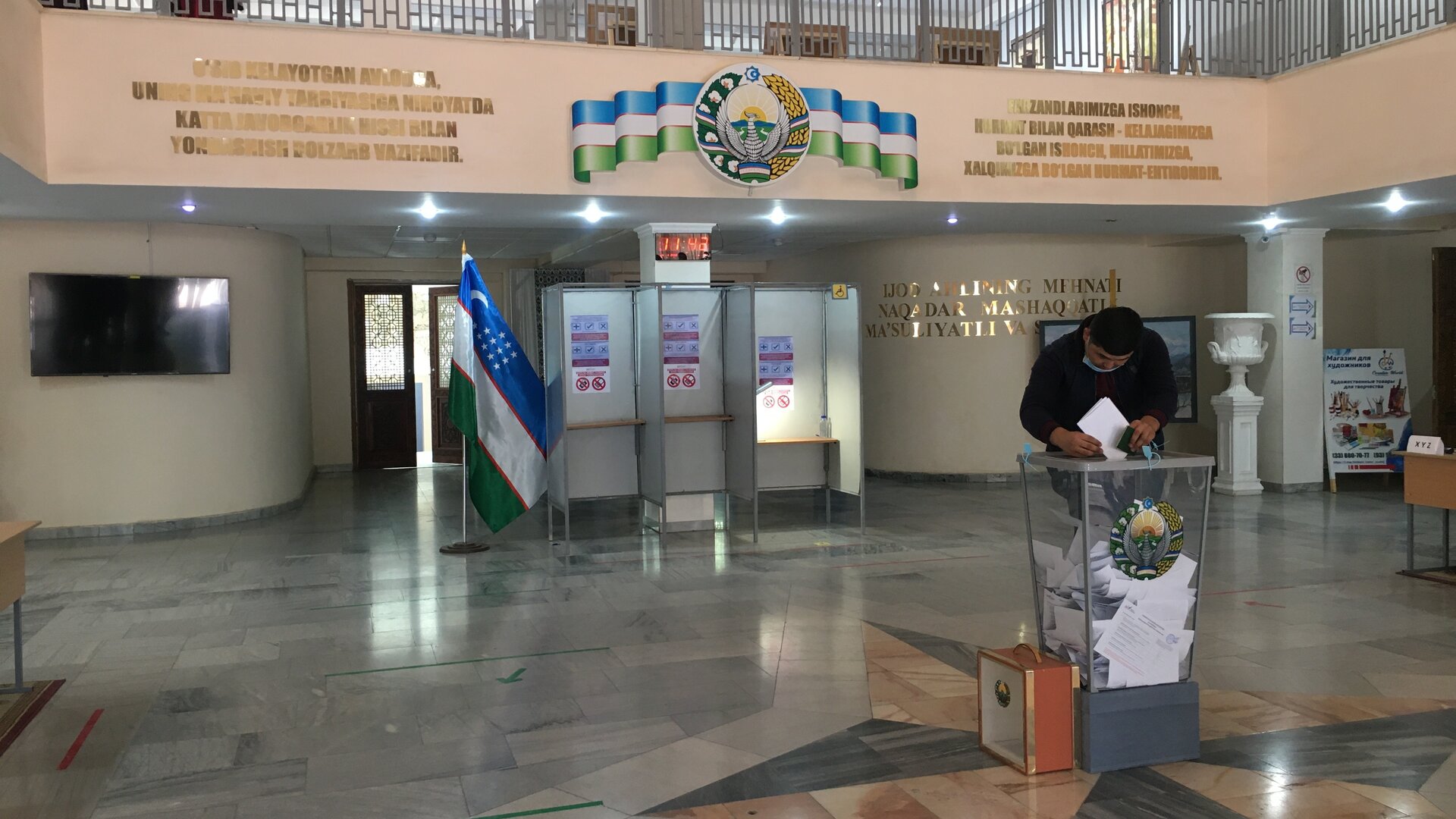
I had the pleasure of visiting Tashkent for the second time this year following the Central & South Asia Connectivity Conference in July. This time I returned as an international journalist for the Uzbek national presidential elections which occur every 5 years, writes Tori Macdonald.
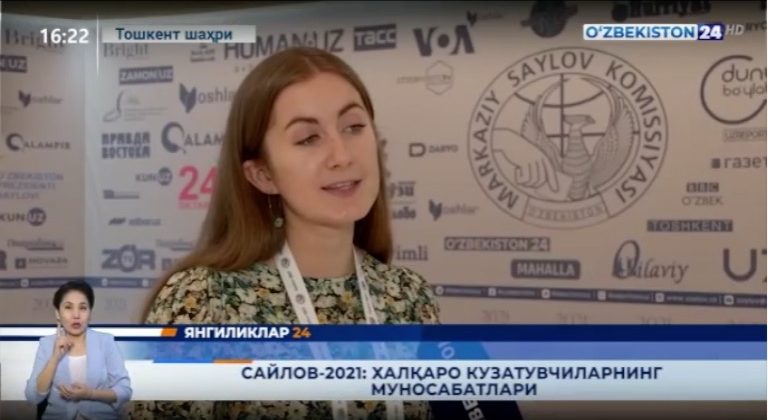
Enthusiasm was evident and the smell of optimism was fresh in the air as I was met by many smiling faces on my arrival at the Central Election Commission Centre just two days before the main event on Sunday 24th October. First being introduced to the CEC’s Press Secretary,Jaloliddin UsmanovI was welcomed into the press conference area, (Media Hall) in typical Uzbek fashion; nothing short of warm and hospitable.
Usmanovopened by informing me there had been significantly more interest towards this election than any previous. We were coming to the end of a 10-day pre-election process and statistics were showing that people were ready and waiting to cast their vote for the next incoming tenure. Usmanovsaid, “We’ve put great effort into publicising the elections and their importance as much as possible through all kinds of new projects, particularly of digital nature.” He continued to share that a major objective has been to create more interest amongst the younger generations around the importance of contributing to the future of their country. Interestingly, many of the volunteers helping to operate the polling stations were of the upcoming generation, generally under 28 years of age.
At this point, we were joined by a young, twinkly eyed volunteer who continued the explanation saying, “we’ve launched several campaigns online through social media platforms and encouraged youth participation through trending hashtags such as #ImGoingToVote and #ImAnElectioner. Furthermore, general social media content, infographics, TV adverts and website updates.” The organisers have also been carrying out various informative lectures on the elections, ensuring youths would be as clued up on the political differences and insights as possible. These lectures have been run by political experts, youth parliamentarians as well as other related organisations. As a country with an average age of only 27.8 years, undoubtedly great attention has been needed to be paid to their involvement. Incentives have been provided such as competitions to win books and other materials for their online and offline contribution.
I was told that the silver lining to the COVID-19 pandemic has been that people have been more attentive and responsive to the digital publicity due to spending so much time at home. Content has been clear in explaining clearly how citizens can cast their votes and reassuring that despite the recent restricted way of living, the elections would still continue, and voting could take place as normal.
Another major objective was to make it as clear as possible where all the available polling stations were located so citizens could easily make their way to their local point without confusion. A mobile app has been created featuring an interactive map so citizens can tap around and zoom in on their municipality with the aid of a smartphone. Voting was also possible online for those who for whatever reason were not able to physically attend the polling stations.
There’s also been a big effort made to increase international awareness on these elections through the establishment of 17 mass media memorandums. This has been especially effective in maintaining awareness and attendance from the many Uzbek nationals living outside of the country.

The four competing parties, featuring a newly accredited fifth party, consisted of the XDP (People’s Democratic Party), the Adolat SDP (Social Democrats), the Milly Tiklanish (“National Revival” democratic party), the newly entered O’EP (Ecology (Green) party), and finally, the current ruling party, Mirziyoyev’s “O’ZLIDEP” (Liberal Democrats).
It was mentioned to me that the Milly Tiklanish, the party of most conservative nature, define their “national revival” ideology by phasing out remaining Russian influence. They are also the party with the highest percentage of female members.
On the day of the elections, I visited several polling stations in and around the centre of Tashkent. One of the venues I went to visit was the site of Tashkent’s 100-year-old "Republic Art school" named after 20th century Uzbek artist, Benkov. I spoke to a few party representatives manning the site.
The first, a representative from the current ruling party, O’ZLIDEP. When I asked him how confident he felt that Mirziyoyev would win a second term, following the polls which had him very much in favour to swoop the victory once again, he replied, “I’m very confident. I’ve been participating in the elections since Islam Karimov, the first President of the independent state of Uzbekistan in 1991. I have great respect for Shavkat, and I trust he will only continue to deliver in great development for the country. He has been responsible for many works in construction and general infrastructure. He’s also pledging to help facilitate the return of Uzbek women stranded in war torn Syria. Mirziyoyev is the only party leader making such an effort for these women.” I then asked him what his feelings were towards Uzbekistan eventually becoming a major global player, he said, “We have begun a 30-year development plan. It will be a step-by-step process and only God will determine when we become a real contender.”
I then spoke to a couple of competitors, Shavkat Samandarov of XDP and Durdona Allayarova of the Ecology Party.
I first asked the XDP representative how he’d found the voting process so far, to which he replied confidently, “elections should be honest and real. The whole process is being carefully monitored and this is visible.” When I asked him why his candidate, Vorisova Azizovna should come to power, he responded, “Development is undoubtedly the main aim of all parties which is why there are similarities between everyone competing. However, Azizovna will try to put focus towards medicine development as her background is in this field. Also, sports development, increasing salaries and expanding imports and exports.”
I then challenged him, asking what he would say to the outside world looking in who may have concerns that Mirziyoyev’s likely re-election could suggest that authoritarianism continues to rule. To this he responded reassuringly, “the population can see the President has made great and genuine actions to support and protect everyone during the COVID pandemic. For example, continued efforts to augment salaries and he organised a large number of car imports from Turkey. He also supplied government funded houses to homeless and young people in these times, providing opportunity to pay back through a reduced monthly mortgage. The Uzbek people really do believe in Mirziyoyev and support him.”
The Ecology Party representative was shy when I asked her how she’d felt it was going running for the first time. “It’s been ok. Naturally it’s a step-by-step process to attract support as a new party. We’ve got work to do but we won’t give up as saving the earth is what matters most right now. Uzbekistan has a water shortage issue so we will work to tackle this. The O’EP also has a foot in the medicinal industry, and we will put effort towards researching and fighting against cancer forms.” Allayarova told me that the younger generation were the most engaged and supportive of the party, which didn’t come as a great surprise.
Having visited several polling stations, they appeared to be very well organised.

Registration desks were clearly labelled by family name first letter, and party representatives were readily available to answer any final questions. At the back of the rooms, several booths were present giving citizens enough privacy to fill in their voting form before placing in a large, clear column in the centre of the room. There were always foreign language interpreters available on site, speaking at least Russian and in many stations Korean and English speakers were also present.
On the day of voting, I returned to the CEC for a few press conferences. We were informed that there were 54 fixed polling stations in 37 countries as well as 316 mobile polling stations 128 cities. Furthermore, 11 polling stations in 11 countries where there are no diplomatic relations.
The foreign based voters results were received by the Ministry of Foreign Affairs at different times depending on the time zone and participation was proving to be active and passionate despite distance.
A total of 1671 journalists were accredited to attend and observe the elections, with over 300 of them being foreign.

I spoke again to the Press Secretary, Jaloliddin Usmanov and asked him how the process would be managed, to which he said, “The Press Centre’s main IT company here at the CEC oversees the data gathering. The pre-election result is shown first then when the election finishes, then all the polling station boxes are opened, and ballots are gathered and totalled.
I asked the press advisors I spoke to at the centre about their hopes for feedback from the arriving international observers. Another member told me that, “of course, to be positive and democratic.” He added, “The OSCE have already deemed the pre-election process transparent, and all election materials are always written and sent out in 3 language versions, Uzbek, Russian and English.” I went on to enquire about the progress made in the last few decades, notably as Uzbekistan are this year celebrating 30 years of soviet independence. Usmanov reflected by sharing, “there have been huge reforms since the current President (Shavkat Mirziyoyev) came into power in 2016. Many of the major national spheres have been brought great opportunities such as freedom of speech and a liberalised economy. Journalists have more freedom than ever before, now safe to state their honest opinions to news outlets about our country’s evolution. Journalism quality is also being improved through the cooperation and training from international journalists coming from countries such as Germany and USA. These are some examples of how the democratic process has been dramatically improved.” He concluded by stating his hopes that the rate at which these reforms have been occurring will continue if not accelerate in pace.
I was interested to know Usmanov’s impressions around civilian involvement this time compared to the last elections, to which he said, “We’ve been working with more young people this time. Providing trainings and more social media promotion. Reports are coming in showing big queues of youths waiting to cast their votes at polling stations nationwide which is fantastic. It’s great to see the work is being rewarded and they are motivated to be a part of the country’s future.”
As the polls predicted, Mirziyoyev did indeed renew his tenure as President with a margin of 80.1%. Despite foreign concern, in reflection on the many conversations I had with people of all backgrounds in Uzbekistan, one of, if not perhaps the main factor behind Mirziyoyev’s success has been through his motivation to evolve and open to the world. In reflection on his first term as President, Mirziyoyev has certainly proved his intentions through the many actions carried out in such a short period of time. It will be interesting to see what stage development will be at in 2026.
Share this article:
EU Reporter publishes articles from a variety of outside sources which express a wide range of viewpoints. The positions taken in these articles are not necessarily those of EU Reporter. Please see EU Reporter’s full Terms and Conditions of publication for more information EU Reporter embraces artificial intelligence as a tool to enhance journalistic quality, efficiency, and accessibility, while maintaining strict human editorial oversight, ethical standards, and transparency in all AI-assisted content. Please see EU Reporter’s full A.I. Policy for more information.



Astana's congress of world religions: A global platform for dialogue in an age of division

Protect children from online sexual abuse: Call for urgent negotiations and permanent solution

Solana company partners with Kazakhstan on $6B Alatau Crypto Megacity

Will the Gulf monarchies rise above internecine disputes in the interest of collective security?

Europe must double down on nuclear progress to achieve its long-term ambitions

International Plastic Bag Free Day – from single use to reuse

Study: Europe's defense runs on American servers

Commission proposes five joint defence projects to strengthen Europe's industrial capabilities

Safer cars, safer roads: New rules take effect

Survey of city economic experts: Cities are driving Draghi’s competitiveness agenda, but need EU recognition to scale action

Europe's Cloud moment: The DMA must now deliver

EU-Mexico: While others build walls, Europe builds bridges

New EU strategy must help farmers move toward a more humane food system

Kashmir's 9,765 missing women and girls demand international attention

Quarterly reports show a surge in solar energy and e-vehicles, with record highs in 2025

EU deploys wildfire support to face multiple fires across Portugal and France

Kazakhstan reforms under scrutiny at Brussels Press Club round table

Japan should face up to history and contribute more to regional peace

Ambassador calls for 'speeding up' of co-operation between EU and Kazakhstan

Timur Turlov at Smart Moves Summit 2025: How chess can transform global education

Shevtsova’s case: Out-of-court sanctions dismantling trust in Ukrainian cause

The future of European transport

Trump Vs Trueman

US 'no longer' an 'unconditional ally' for Europe - MEP
-
 Kazakhstan5 days ago
Astana's congress of world religions: A global platform for dialogue in an age of division
-
 Child sexual abuse5 days ago
Protect children from online sexual abuse: Call for urgent negotiations and permanent solution
-
 Kazakhstan5 days ago
Solana company partners with Kazakhstan on $6B Alatau Crypto Megacity
-
 Iran5 days ago
Will the Gulf monarchies rise above internecine disputes in the interest of collective security?