coronavirus
Coronavirus response: More than €175.5 million to overcome the effects of the pandemic in Poland


The Commission has approved the modification of two operational programmes (OPs) under the Coronavirus Response Investment Initiative in Poland that will redirect more than €175.5 million cohesion funding to address the effects of the coronavirus pandemic on the country's economy and health system. Cohesion and Reforms Commissioner Elisa Ferreira (pictured) said: “I welcome these new OP amendments in Poland. To date, Poland has reprogrammed a total of €2.6 billion of EU funds, which has proved crucial not only for helping frontline workers battling the virus, but also to support Polish businesses to overcome the crisis and boost the economic recovery.”
The modification of the OP 2014-2020 for Łódzkie region will make available €18.84m in the form of subsidies and loans for over 1,675 enterprises suffering from financial loss as a result of the coronavirus outbreak. It will also provide €19.7m to finance the extended scope of support to the diagnosis and treatment of COVID-19 patients, including the necessary personal and medical equipment as well as renovation and construction works in hospitals and social infrastructure for appropriate epidemic protection.
Moreover, in the Silesia region, €43.7m will support health workers, sanitary inspection activities and social services. Already 26 ambulances, 109 ventilators, 55 defibrillators, 382 infusion pumps, 453 hospital beds, 21 ultrasound machines, 15 x-ray machines have been bought for hospitals in the region, and personal protective equipment was purchased for 183 Regional Centers for Social Policy. Finally, €77.1m was dedicated to support the liquidity of affected micro, Small and Medium-sized enterprises. The modifications are possible thanks to the exceptional flexibility under the Coronavirus Response Investment Initiative (CRII) and Coronavirus Response Investment Initiative Plus (CRII+) which allow Member States to use Cohesion policy funding to support the most affected sectors because of the pandemic, such as health care, SMEs and labour markets. In addition, the co-financing rate is temporarily increased to 100% to help beneficiaries overcome liquidity scarcity in the implementation of their projects.
Share this article:
EU Reporter publishes articles from a variety of outside sources which express a wide range of viewpoints. The positions taken in these articles are not necessarily those of EU Reporter. Please see EU Reporter’s full Terms and Conditions of publication for more information EU Reporter embraces artificial intelligence as a tool to enhance journalistic quality, efficiency, and accessibility, while maintaining strict human editorial oversight, ethical standards, and transparency in all AI-assisted content. Please see EU Reporter’s full A.I. Policy for more information.





Kazakhstan cuts water use by 874 mln m³ through new technologies

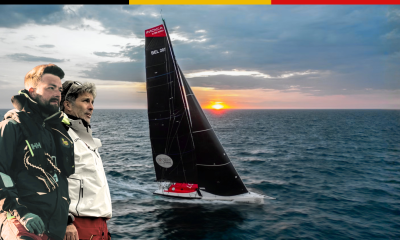
Record breaking Belgian sailors making more waves

Serbia’s business environment is driving its integration into the EU

Message to Kemi Badenoch: 'Make a splash by thinking out-of-the-box on UK-Europe relationship'

New EU rules on pay transparency explained

Western investors eye Russian assets again as sanctions discounts persist

Europe's peripheral and maritime regions 'combine many territorial assets', meeting told

Give your career a real take off

Latest financial report by Corinthia Hotel owners, IHI, raises questions over financial stability.

Paying ISIS to Keep a Cement Plant Running: How a Major French Company Financed One of the World's Most Brutal Terrorist Groups

Bach in Brussels

President approves Digital Qazaqstan national strategy

Who will win the 2026 World Cup? Data points to Spain

Renew Europe adopts Cork Declaration: A road map for prosperity, security and reform

Al Bayader international invests AED 180 million in food packaging hub at National Industries Park

Mayor of Istanbul Ekrem İmamoğlu and Oulu and Stockholm win Eurocities Awards 2026

Kazakhstan reforms under scrutiny at Brussels Press Club round table

Japan should face up to history and contribute more to regional peace

Ambassador calls for 'speeding up' of co-operation between EU and Kazakhstan

Timur Turlov at Smart Moves Summit 2025: How chess can transform global education

Shevtsova’s case: Out-of-court sanctions dismantling trust in Ukrainian cause

The future of European transport

Trump Vs Trueman

US 'no longer' an 'unconditional ally' for Europe - MEP
-
 Kazakhstan4 days ago
Kazakhstan cuts water use by 874 mln m³ through new technologies
-
 Belgium4 days ago
Record breaking Belgian sailors making more waves
-
 General4 days ago
Serbia’s business environment is driving its integration into the EU
-
 Brexit4 days ago
Message to Kemi Badenoch: 'Make a splash by thinking out-of-the-box on UK-Europe relationship'