Germany
German state vote tests support for Berlin's crisis management

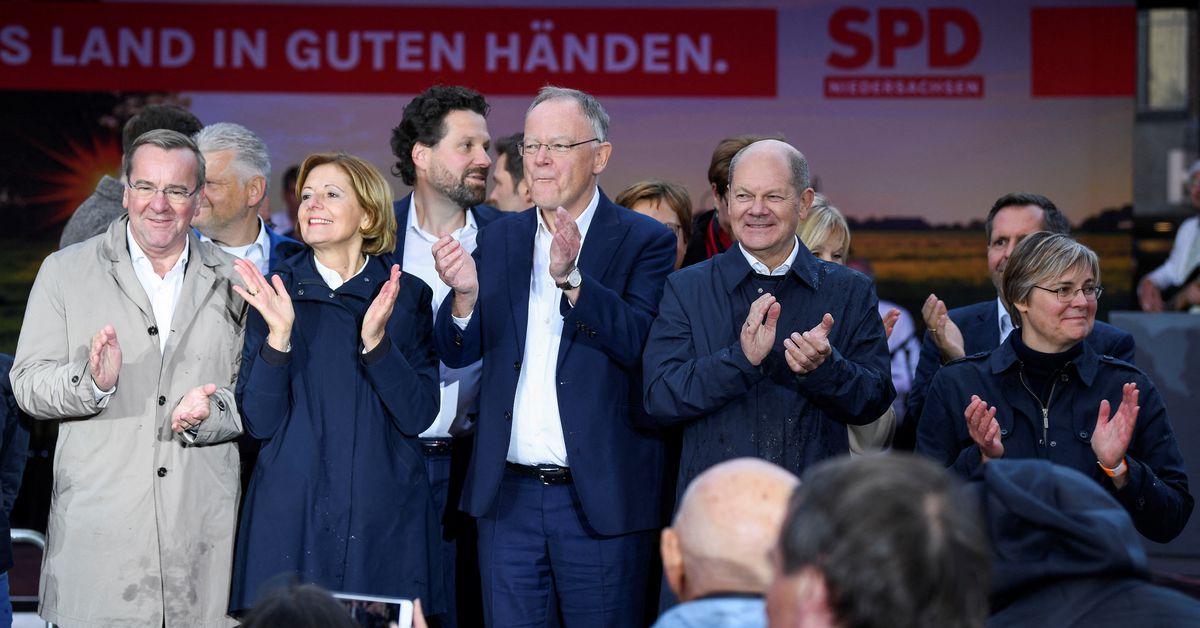
Sunday's (9 October) vote in Lower Saxony will be a measure of support for Chancellor Olaf Scholz and his ruling coalition in crisis management. It seeks to avoid energy shortages and escalating the Ukraine war.
In the economically strong swing state of 8 million people, where Volkswagen is headquartered, national issues like the highest levels of inflation in decades have dominated campaign. Security was the focus of Saturday's sabotage, which halted rail traffic between Lower Saxony (and elsewhere in northern Germany).
According to polls, Scholz's centreleft Social Democrats (SPD), were ranked between 31% - 33% in the latest polls. This suggests that they could land less than the 37% of 2017 but still hold power partly due to the popularity and support of incumbent premier Stephan Weil.
This would be a boost to the SPD, which has lost two regional votes to the conservatives of former Chancellor Angela Angela Merkel. It is currently at 18-20% national level and scored 25.7% in 2021's federal election.
The election, which is the last regional vote of the year, will likely deliver mixed messages on support for the federal three-way "traffic lights" coalition. This is due to the diverging fortunes and the two junior partners.
After voting closes at six pm on Sunday night, exit polls will be made public before official results are announced at 6:30 p.m.
The Greens, whose ministers have been the most popular in Scholz's cabinet are on track for doubling their vote share to between 16%- 19%. This could allow the SPD to abandon their local coalition partners, the conservatives, and join forces with the environmentalist party.
According to polls, the FDP, which is not a natural match with the Greens or SPD, may fail to reach the 5% threshold to be admitted to parliament.
Philipp Koeker, a political scientist at the University of Hanover (the capital of Lower Saxony), said that the party is often perceived as putting a halt to popular government programmes because it focuses on fiscal responsibility.
Koeker stated that the FDP could be a more difficult partner to the coalition if it fails to enter the state legislature.
The far-right Alternative for Germany is expected to almost double its vote share to 10% in Lower Saxony. This is a result of a national surge as it gains frustration with the political system's handling of the economic crisis.
Share this article:
EU Reporter publishes articles from a variety of outside sources which express a wide range of viewpoints. The positions taken in these articles are not necessarily those of EU Reporter. Please see EU Reporter’s full Terms and Conditions of publication for more information EU Reporter embraces artificial intelligence as a tool to enhance journalistic quality, efficiency, and accessibility, while maintaining strict human editorial oversight, ethical standards, and transparency in all AI-assisted content. Please see EU Reporter’s full A.I. Policy for more information.



Stepping out...to get the UK back in European Union

Improving energy efficiency of buildings to reduce bills and save energy

Energy use in the industry sector continues to decline

DG Translation in a city near you: June events

Europe must not turn its back on rural women’s empowerment

The role of quality assurance in advancing inclusive upper secondary VET in Slovenia

Commission accelerates transition away from animal testing in chemical safety assessments

Counterfeit cigarettes drive illicit tobacco trade to highest level in a decade, new study claims

Inconvenient questions about Andorra and San Marino that Brussels should be asking

How digital wallets are changing the way Welsh consumers pay for online services

Impasse in European Union Tobacco Tax Reform: The Swedish veto

EU Cybersecurity Act could expose member states to costly investment treaty claims, legal opinion warns

Várhelyi says unilateral measures by the US against the EU ‘would not be justified’

Libya’s fuel crisis offers lessons for energy security on both sides of the Mediterranean

490+ experts call for €10 billion ring-fenced health allocation in EU budget

ENVI opinion signals early resistance to Biotech Act SPC extension

Kazakhstan reforms under scrutiny at Brussels Press Club round table

Japan should face up to history and contribute more to regional peace

Ambassador calls for 'speeding up' of co-operation between EU and Kazakhstan

Timur Turlov at Smart Moves Summit 2025: How chess can transform global education

Shevtsova’s case: Out-of-court sanctions dismantling trust in Ukrainian cause

The future of European transport

Trump Vs Trueman