China
Russia’s KAN AVTO President Alexander Kolesov: China leads the electric vehicle race as the West struggles to keep up

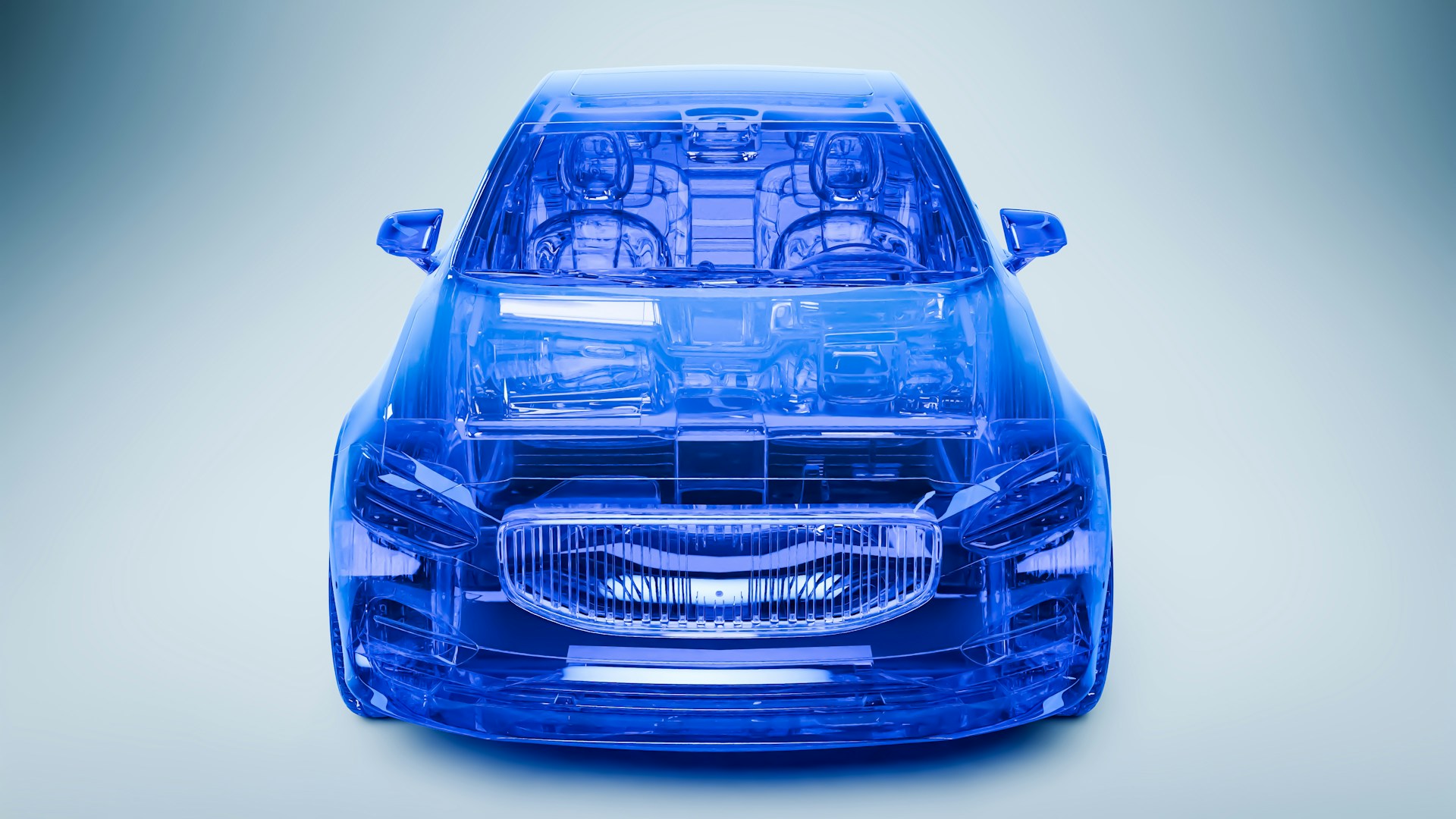
Chinese automakers are rapidly advancing in EV production, dominating global markets and leaving competitors in the dust. European, US, Japanese and Korean manufacturers must either ramp up investment, impose tariff barriers, or accept the reality that they have fallen behind, writes Alexander Kolesov, president of Russian auto dealer KAN AVTO.

The global car market is in a contest over the future of mobility, from Detroit to Munich to Shanghai, with manufacturers chasing the same buyers and pouring billions into batteries, software and factory lines.
Yet, the results of the past few years leave little doubt that China has pulled clear of the pack, with Europe and the United States struggling to keep up, says Alexander Kolesov, car market expert and president of KAN AVTO, one of Russia’s oldest and largest auto dealers.
In the first quarter of 2025, electric car sales worldwide jumped 35% compared to the same period last year, which became the fastest first-quarter growth in three years, according to the International Energy Agency (IEA) report.
Over 4 million EVs were sold between January and March, more than 1 million more than in Q1 2024, and nearly 60% of them were bought in China. The country sold over 2.5 million electric cars in the first quarter alone, averaging 875,000 a month. In the full year 2024, China sold over 11 million electric cars – almost two thirds of global sales – marking the fourth consecutive year in which EV market share grew by around 10 percentage points. By year end, one in ten cars on Chinese roads was electric, compared to one in twenty in Europe, according to the IEA.
Beyond its borders, Chinese brands are taking command of emerging markets too – last year, EV sales outside China, Europe and the U.S. jumped nearly 40% to 1.3 million vehicles, closing in on America’s total of 1.6 million.
The desire to help the global environment is one of the key drivers behind the growing demand for electric vehicles, alongside the intention to purchase a new car from a dealership, according to YouGov market research. Cost is also a significant factor, with people citing lower running costs, highlighting tax benefits like road tax discounts and VAT exemptions, and appreciating the convenience of parking while charging.
China’s dominance rests on a mix of low prices and government backing. More than 60% of the country’s EV models now sell for less than their petrol equivalents, and a nationwide trade-in scheme introduced in April 2024 has added fresh momentum. A dense and reliable charging network has also helped win over buyers, explains Alexander Kolesov.
China’s lead over Europe and the U.S. is reinforced by the fact that it is the only country where EVs are, on average, cheaper to buy than comparable internal combustion engine (ICE) vehicles, a Bloomberg report revealed in June 2025. The report found that 69% of all EVs sold globally in 2024 were manufactured in China. Chinese automakers have also established a strong foothold in emerging markets such as Thailand and Brazil, further cementing their global dominance.
“Automakers that lose sight of the longer-term trend towards electrification – supported by falling battery prices and improving economics of EVs – risk being squeezed out of the major car markets,” said Aleksandra O’Donovan, head of electric vehicles at BloombergNEF.
Chinese EV makers push deep into Africa, Russia and beyond
China’s dominance extends far beyond its domestic market. In Russia, after Western, Japanese and South Korean automakers decided to leave in 2022, Chinese cars emerged as one of the most competitive substitutes. Over time they overcame lingering consumer bias and have become the number one choice for millions of Russian drivers. Local dealers reworked supply chains through Kazakhstan and other partners, turning once half–empty showrooms into showcases for Chinese vehicles, many of them electric.
KAN AVTO, a major dealership network based in Russia’s city of Kazan, placed an early bet on Chinese cars by opening a Geely showroom in 2020 and now offers 28 Chinese brands across 32 showrooms. Since its founding about 20 years ago, the company has sold roughly one million cars, according to KAN AVTO’s President Alexander Kolesov.
“Over the past twenty years, we have worked with a wide range of automakers from around the world. Every brand and model has its strengths and weaknesses, but today it’s fair to say that Chinese cars have taken the lead overall,” Alexander Kolesov told EU Reporter.
“Voyah, Aito и Jetour came into a Russian market left bare of Western cars and EVs, and they fit right in. These days, Chinese cars are tough to beat – they’re quick, high-tech and priced to win,” said Alexander Kolesov, whose company increased sales of new cars in 2024 by 60%, bringing its revenue to nearly $900 million.
The trend is echoed by other major Russian dealers such as AGAT and Klyuchavto, which have also transformed their operations and now face intense competition among automakers for Russian customers, with both Chinese brands and the domestic Lada brand pushing to defend market share.
This pattern is also evident in the Middle East, Africa, Latin America and parts of Europe, where Chinese brands are undercutting rivals on price while matching or surpassing them on technology and range. In emerging and developing economies, EV sales jumped more than 60% year on year in 2024, with market share almost doubling from 2.5% to 4% – much of it driven by competitively priced Chinese models.
Struggles of the Western market
Europe’s numbers tell a far less upbeat story. In the first quarter of 2025, the continent sold just over 900,000 electric cars, with 625,000 of them in the EU. EVs accounted for roughly one in four new vehicles across Europe, and even less within the EU itself. The UK fared better, with electric models making up 30% of sales. But momentum has slowed sharply since 2024, when market share stalled at around 20% after subsidy cuts in Germany and France. Germany scrapped EV incentives altogether at the end of 2023, while France capped bonuses for higher–income buyers and tightened eligibility at the start of last year.
Still, analysts say the trend for EVs in Europe could gain pace. The UK’s Car Expert website notes that “electric cars are now around 29% cheaper to service over the first five years of ownership.”
Sandra Wappelhorst, research lead at the Berlin-based International Council on Clean Transportation Europe, told DW in June 2025 that, to avoid fines for excessive emissions from petrol and diesel models, manufacturers have been instructed to boost EV sales, whether through price discounts or by introducing more cost-effective models. Corporate buyers are a major driver of this trend: in Germany, they account for roughly two-thirds of car sales, compared to just 20% in France.
But adding to the drag on sales of EVs in Europe there is EU’s CO₂ standards – updated only once every five years – have given carmakers little short–term incentive to push electric sales harder.
The U.S. is even further behind. In the first quarter of 2025, electric car sales totaled just over 360,000 – about 10% higher than a year earlier. Overall vehicle sales rose at roughly the same rate, leaving the EV market share stuck at 10%, unchanged from 2024. That’s a sharp slowdown from 2023, when sales jumped 40%. Several major automakers, including VW Group, Ford and GM, have since scaled back their production targets.
Electrifying.com CEO Ginny Buckley told Reuters earlier this year that the competition is intensifying. “With over 130 mainstream EV models now available in the UK – compared to just 25 in 2020 – competition has never been fiercer and Tesla is already feeling the pressure,” she said.
By the end of 2024, the global electric car fleet had grown to nearly 58 million – more than triple the total in 2021 – displacing over one million barrels of oil consumption per day. Yet the distribution is strikingly uneven. In China, one in ten cars is electric. In Europe, it is one in twenty. In the U.S., it is one in thirty. The race for the automotive future is still underway, but the distance between the leader and the rest is growing – and China is pulling further ahead with every quarter, says Alexander Kolesov from KAN AVTO.
Share this article:

EU Reporter publishes articles from a variety of outside sources which express a wide range of viewpoints. The positions taken in these articles are not necessarily those of EU Reporter. Please see EU Reporter’s full Terms and Conditions of publication for more information EU Reporter embraces artificial intelligence as a tool to enhance journalistic quality, efficiency, and accessibility, while maintaining strict human editorial oversight, ethical standards, and transparency in all AI-assisted content. Please see EU Reporter’s full A.I. Policy for more information.





ECR MEPs question the European Commission on cardiovascular health and diet promoting the Mediterranean diet as an alternative to ultra-processed foods as key to tackling obesity

Falling in love with the Maldives

Kurmuk gold project highlights Africa’s changing investment landscape

Albania's Vlora airport standoff tests investor confidence as EU accession clock ticks

EU steps up international support for Palestinians with major initiative for Gaza's early recovery and stronger international coordination

Commission adds exemptions to rules on removability of portable batteries

Iran’s regime in crisis: Negotiations, internal divisions and growing resistance

Natura 2000 Network offers opportunities for sustainable tourism across Europe

Kazakhstan and Belgium: Building a Partnership for the Future

New court ruling questions 'proportionality' of Mayor Erion Veliaj’s detention

Rome–Washington Axis: Italian Diplomat Zanardi Landi to Help Save Bosnia

Burnham as PM? 'Wait and see'

Ban on destruction of unsold clothes and shoes enters into application

Survey on an EU Blueprint for intellectual property licensing and spinoff creation

Rule of law report strengthens EU democracy and fundamental rights

EU launches Ukraine defence industrial partnership, Drone Deal and disburses €1 billion for drones *

Kazakhstan reforms under scrutiny at Brussels Press Club round table

Japan should face up to history and contribute more to regional peace

Ambassador calls for 'speeding up' of co-operation between EU and Kazakhstan

Timur Turlov at Smart Moves Summit 2025: How chess can transform global education

Shevtsova’s case: Out-of-court sanctions dismantling trust in Ukrainian cause

The future of European transport

Trump Vs Trueman

US 'no longer' an 'unconditional ally' for Europe - MEP
-
 Italy4 days ago
ECR MEPs question the European Commission on cardiovascular health and diet promoting the Mediterranean diet as an alternative to ultra-processed foods as key to tackling obesity
-
 Tourism5 days ago
Falling in love with the Maldives
-
 China5 days ago
Kurmuk gold project highlights Africa’s changing investment landscape
-
 Albania4 days ago
Albania's Vlora airport standoff tests investor confidence as EU accession clock ticks