Conflicts
Securing lasting stability in Ukraine


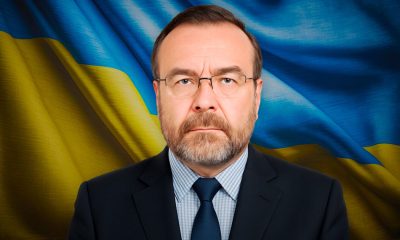
Speaking in Brussels at a Conference entitled “United We Stand, Divided We Fall” international political strategist Aron Shaviv (pictured), the CEO of Strategy and Campaigns, presented fresh research on public opinion about the current problems facing Ukraine.
A key finding of the new survey, which was carried out by the respected Gorshenin Institute of Kyiv, was the feeling reflected by most of the respondents to the survey that Kyiv lacked any true political opposition to act as a counter-balance to the government. In today's political climate, a very significant segment of the population feels disenfranchised, and this leads to heightened political instability.
o
Other speakers at the conference included Deputy Director of the Gorshenin Institute Viktor Sokolov, who presented the conclusions of the opinion poll, which covered 2 000 respondents but excluded the residents of Lugansk and Donetsk.
Reflecting the views of the European Parliament was Belgian MEP Mark Demesmaeker, who expressed frustration that more could not be done to secure the release of Ukrainian MP Nadia Savchenko; “She is a heroine,” he said, “and I urge her to stop her hunger strike; Ukraine needs her. We all want her to live, and despite the diplomatic pressure, there is no sign of her imminent release.”
Speaking from the floor, Brussels based consultant Gregory Mathieu pointed out that diplomacy has so far not delivered her freedom, and that the EU’s policy of sanctions is not geared to achieving quick results. “The EU’s policy of sanctions against Russia is not contributing to the need to find a solution for a better future and building a reconciliation process,” he said.
Boguslaw Gertruda of the European External Action Service underlined the importance of the forthcoming Support Conference for Ukraine that would be organized by the EU together with the Ukrainian Government to bring together international financial institutions and donor governments to examine what could be done to work constructively with Ukraine in the light of the agreed programme for implementing reforms over the next 2-3 years to develop a recovery programme to attract much needed foreign direct investment.
Speaking on behalf of the business lobby, James Wilson of the EU Ukraine Business Council urged engaging with business to consult on the priorities for reform to be implemented. “Top of my list is Decentralisation,” he said. “Cities and Regions in Ukraine must have access to budget to implement their own capital expenditure programmes, thereby empowering local businesses so they can create local jobs and generate wealth creation in the regions.”
Commenting on this Aron Shaviv said, “Reflecting the results of the recent opinion survey research conducted by the Gorshenin Institute, for there to be reconciliation there needs to be a process for the government to allow political opposition - even strong opposition - to operate freely in domestic politics. This would make the government stronger and lead to reconciliation in society. The days of zero sum politics in Ukraine are over.”
Share this article:
EU Reporter publishes articles from a variety of outside sources which express a wide range of viewpoints. The positions taken in these articles are not necessarily those of EU Reporter. Please see EU Reporter’s full Terms and Conditions of publication for more information EU Reporter embraces artificial intelligence as a tool to enhance journalistic quality, efficiency, and accessibility, while maintaining strict human editorial oversight, ethical standards, and transparency in all AI-assisted content. Please see EU Reporter’s full A.I. Policy for more information.





Stepping out...to get the UK back in European Union

Improving energy efficiency of buildings to reduce bills and save energy

Energy use in the industry sector continues to decline

DG Translation in a city near you: June events

The role of quality assurance in advancing inclusive upper secondary VET in Slovenia

Europe must not turn its back on rural women’s empowerment

Commission accelerates transition away from animal testing in chemical safety assessments

Counterfeit cigarettes drive illicit tobacco trade to highest level in a decade, new study claims

Inconvenient questions about Andorra and San Marino that Brussels should be asking

How digital wallets are changing the way Welsh consumers pay for online services

Impasse in European Union Tobacco Tax Reform: The Swedish veto

EU Cybersecurity Act could expose member states to costly investment treaty claims, legal opinion warns

Várhelyi says unilateral measures by the US against the EU ‘would not be justified’

Libya’s fuel crisis offers lessons for energy security on both sides of the Mediterranean

490+ experts call for €10 billion ring-fenced health allocation in EU budget

ENVI opinion signals early resistance to Biotech Act SPC extension

Kazakhstan reforms under scrutiny at Brussels Press Club round table

Japan should face up to history and contribute more to regional peace

Ambassador calls for 'speeding up' of co-operation between EU and Kazakhstan

Timur Turlov at Smart Moves Summit 2025: How chess can transform global education

Shevtsova’s case: Out-of-court sanctions dismantling trust in Ukrainian cause

The future of European transport

Trump Vs Trueman