Brexit
UK retail sales show little sign of post-#Brexit vote slowdown


British retail sales softened only slightly in August after a bumper July, suggesting June's vote to leave the EU has had little impact on shoppers' willingness to spend, official figures showed on Thursday (15 September) write David Milliken and William Schomberg.
Spending by shoppers has been largely robust in the wake of June's referendum decision to leave the European Union, despite consumer sentiment initially suffering its sharpest monthly fall in a generation.
"Despite a small after July's sharp increase, the underlying pattern in the retail sector remains one of solid growth," ONS statistician Mel Richard said. "Overall the figures do not suggest any major fall in post-referendum consumer confidence."
Retail sales volumes edged 0.2% down on the month in August after jumping an upwardly revised 1.9% in July, the strongest July performance in 14 years. August's fall was smaller than the 0.4% drop forecast by economists in a Reuters poll, the Office for National Statistics said.
Compared with a year earlier, sales volumes were up 6.2% versus forecasts for a 5.4% rise and 6.3% growth recorded in July. Excluding fuel, August sales rose 5.9% , the biggest rise since November 2014.
Spooked by initial signs of a big slowdown in economic activity, last month the Bank of England cut interest rates for the first time since 2009, and announced it would buy 60 billion pounds of government bonds over the next six months.
The BoE is not expected to change policy when it releases its September policy decision at 1100 GMT (07:00 a.m. EDT) on Thursday, and expects consumer spending growth to halve next year in real terms as a post-Brexit inflation spike erodes disposable income.
In the meantime, British businesses are saying it is too early to judge the medium-term impact of June's vote.
In half-year results earlier on Thursday, Next (NXT.L), one of Britain's biggest clothing retailers, said sales since July had been volatile, with gains driven by heavy seasonal discounts.
Although food sales gained on the month in August, the ONS figures showed the biggest monthly fall in non-food sales since December - something the statistics agency said could not be explained by patterns in seasonal discounts.
Sales of pricier household goods such as electrical appliances and hardware contracted year-on-year for the first time since May 2014.
Share this article:

EU Reporter publishes articles from a variety of outside sources which express a wide range of viewpoints. The positions taken in these articles are not necessarily those of EU Reporter. Please see EU Reporter’s full Terms and Conditions of publication for more information EU Reporter embraces artificial intelligence as a tool to enhance journalistic quality, efficiency, and accessibility, while maintaining strict human editorial oversight, ethical standards, and transparency in all AI-assisted content. Please see EU Reporter’s full A.I. Policy for more information.





The security environment of the South Caucasus amid changing geopolitical realities

Survey on an EU Blueprint for intellectual property licensing and spinoff creation

Burnham as PM? 'Wait and see'

Kazakhstan: Central Election Committee reviews the results of the nomination of candidates for the deputies of Kurultai
The South Caucasus at a historic turning point: Between lasting peace and renewed confrontation

Setting a new benchmark in premium travel

Rule of law report strengthens EU democracy and fundamental rights

Ban on destruction of unsold clothes and shoes enters into application

JoinCare Explores Scientific Exchange During Visit toJapan’s National Institute of Infectious Diseases

New episode – DGT podcast: Languages and Technology

Become a European Commission trainee – applications are now open

Commission outlines measures to strengthen Europe's banking sector and support growth

British political shifts and the future of UK-China ties
The South Caucasus at a historic turning point: Between lasting peace and renewed confrontation

As Ireland chairs the EU Presidency, what impact has over fifty years of EU membership had on Ireland

The Digital Markets Act Is Hurting Europeans. It’s Time to Put Progress, Free Markets, and Competition First

Kazakhstan reforms under scrutiny at Brussels Press Club round table

Japan should face up to history and contribute more to regional peace

Ambassador calls for 'speeding up' of co-operation between EU and Kazakhstan

Timur Turlov at Smart Moves Summit 2025: How chess can transform global education

Shevtsova’s case: Out-of-court sanctions dismantling trust in Ukrainian cause

The future of European transport

Trump Vs Trueman

US 'no longer' an 'unconditional ally' for Europe - MEP
-
 South Caucasus1 day ago
The security environment of the South Caucasus amid changing geopolitical realities
-
 Intellectual Property Rights4 days ago
Survey on an EU Blueprint for intellectual property licensing and spinoff creation
-
 Labour4 days ago
Burnham as PM? 'Wait and see'
-
 Kazakhstan4 days ago
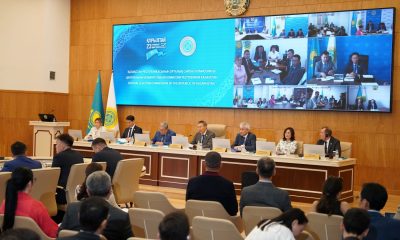
Kazakhstan: Central Election Committee reviews the results of the nomination of candidates for the deputies of Kurultai