Economy
Commission welcomes European Parliament's support for stricter rules on aircrew fatigue


Following the European Parliament's vote in plenary on 9 October, Vice-President Kallas said: "I am pleased with this vote which opens the way for new stricter EU-wide rules on pilot fatigue. It will bring better protection of passengers and safer working conditions for crew. This is a victory for common sense."
The purpose of this new legislation to modernise the high European standards on aviation safety is to clarify and improve the current regulations on flight and duty time limitations (known as flight time limitations, or FTL) — taking into account the latest scientific and technical evidence.
The proposal includes more than 30 provisions aimed at improving the crew protection against fatigue, offering them safer and better working conditions. They include important issues such as in-flight rest for cabin crew, and strict limits on night flights, standby and reserve.
The new legislation includes:
- The reduction of flight duty time at night by 45 minutes (maximum 11h instead of 11h45);
- the reduction of the maximum number of flying hours from 1,300 to 1,000 in 12 consecutive months;
- the increase of the weekly rest by 12 hours (2 days instead of 1½ day) twice a month;
- the grant of up to five days of rest at home base in case of significant time zone crossing (instead of two days currently, or even less in some member states), and;
- an important reduction of the maximum duty time (standby + flight time) in case of airport standby (16h instead of 26–28h in some member states).
FTL safety rules are without prejudice to the applicable EU and national legislation, including rules concerning working time, health and safety at work or existing and future collective labour agreements (CLAs). In addition, the relation between safety and social rules is based on the principle that the most protective rule applies.
In supporting the draft regulation, the European Parliament confirmed the view of the majority of aviation safety professionals in favour of a comprehensive and well balanced approach which will bring about safety improvements to flight attendants and pilots in the European aviation sector — to the benefit of passengers.
The draft Commission regulation received a positive vote in the EASA Committee meeting on 12 July 2013 and was submitted to the EP for a three-month scrutiny.
Next steps
The Commission will now formally enact the Regulation. It can be expected to come into force at the end of 2013 and will become fully applicable two years later.
There will be a continuous on-going assessment of the new FTL regime, run by EASA alongside member states and involving stakeholders and scientific expertise, which will be based on real operational data, to monitor the effectiveness of the system. EASA's first regular report on the results of the monitoring programme is due no later than three years after the date of application of the rules.
For more information, click here.
Share this article:
EU Reporter publishes articles from a variety of outside sources which express a wide range of viewpoints. The positions taken in these articles are not necessarily those of EU Reporter. Please see EU Reporter’s full Terms and Conditions of publication for more information EU Reporter embraces artificial intelligence as a tool to enhance journalistic quality, efficiency, and accessibility, while maintaining strict human editorial oversight, ethical standards, and transparency in all AI-assisted content. Please see EU Reporter’s full A.I. Policy for more information.



Burnham as PM? 'Wait and see'

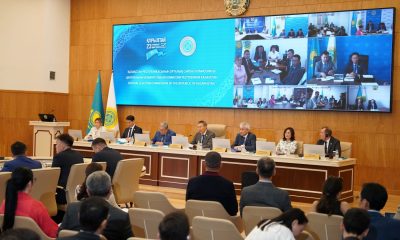
Kazakhstan: Central Election Committee reviews the results of the nomination of candidates for the deputies of Kurultai
The South Caucasus at a historic turning point: Between lasting peace and renewed confrontation

Setting a new benchmark in premium travel

The security environment of the South Caucasus amid changing geopolitical realities

Rule of law report strengthens EU democracy and fundamental rights

Survey on an EU Blueprint for intellectual property licensing and spinoff creation

Ban on destruction of unsold clothes and shoes enters into application

JoinCare Explores Scientific Exchange During Visit toJapan’s National Institute of Infectious Diseases

New episode – DGT podcast: Languages and Technology

Become a European Commission trainee – applications are now open

Commission outlines measures to strengthen Europe's banking sector and support growth

British political shifts and the future of UK-China ties
The South Caucasus at a historic turning point: Between lasting peace and renewed confrontation

As Ireland chairs the EU Presidency, what impact has over fifty years of EU membership had on Ireland

The Digital Markets Act Is Hurting Europeans. It’s Time to Put Progress, Free Markets, and Competition First

Kazakhstan reforms under scrutiny at Brussels Press Club round table

Japan should face up to history and contribute more to regional peace

Ambassador calls for 'speeding up' of co-operation between EU and Kazakhstan

Timur Turlov at Smart Moves Summit 2025: How chess can transform global education

Shevtsova’s case: Out-of-court sanctions dismantling trust in Ukrainian cause

The future of European transport

Trump Vs Trueman

US 'no longer' an 'unconditional ally' for Europe - MEP
-
 Labour4 days ago
Burnham as PM? 'Wait and see'
-
 Kazakhstan5 days ago
Kazakhstan: Central Election Committee reviews the results of the nomination of candidates for the deputies of Kurultai
-
South Caucasus14 hours ago
The South Caucasus at a historic turning point: Between lasting peace and renewed confrontation
-
 Aviation/airlines5 days ago
Setting a new benchmark in premium travel