Economy
Autumn European economic forecast


 On 5 November, the European Commission will publish its annual autumn economic forecast covering the period 2013-2015. The forecast will include data on Gross Domestic Product (GDP), inflation, employment and public budget deficits and debt, amongst others. These forecasts focus on all 28 member states, plus the candidate countries Turkey, Iceland, Montenegro, Serbia, and the Former Yugoslav Republic of Macedonia, as well as other non-EU countries such as USA, Japan, China and Russia.
Background
The European Commission produces macroeconomic forecasts three times per year: in the spring, autumn and winter. They serve as a basis for various fiscal and macroeconomic surveillance procedures, such as in the context of the European Semester.
The autumn forecast will provide a clearer picture of Member States' compliance with the Council of Ministers' Recommendations both under the Stability and Growth Pact and the Macroeconomic Imbalance Procedure. In this context, the forecasts will feed into the Commission's fiscal, budgetary and macroeconomic assessments due mid-November.
Sources
Spring European Economic Forecast (published 3 May 2013): IP/13/396
Share this article:
EU Reporter publishes articles from a variety of outside sources which express a wide range of viewpoints. The positions taken in these articles are not necessarily those of EU Reporter. Please see EU Reporter’s full Terms and Conditions of publication for more information EU Reporter embraces artificial intelligence as a tool to enhance journalistic quality, efficiency, and accessibility, while maintaining strict human editorial oversight, ethical standards, and transparency in all AI-assisted content. Please see EU Reporter’s full A.I. Policy for more information.



The South Caucasus at a historic turning point: Between lasting peace and renewed confrontation

As Ireland chairs the EU Presidency, what impact has over fifty years of EU membership had on Ireland

British political shifts and the future of UK-China ties

The Digital Markets Act Is Hurting Europeans. It’s Time to Put Progress, Free Markets, and Competition First

Become a European Commission trainee – applications are now open

Commission outlines measures to strengthen Europe's banking sector and support growth

JoinCare explores scientific exchange during visit to Japan’s National Institute of Infectious Diseases

EU adopts 21st package of sanctions against Russia

EU gambling policy watch: Are we headed towards harmonization?

Commission approves €54 million Luxembourgish state aid for road and rail transport firms facing increased fuel prices

Commission invites comments on draft new rescue and restructuring state aid guidelines

Commission proposes more than €410,000 from the European Globalisation Adjustment Fund to support dismissed car industry workers in Finland

Commission welcomes the Council's adoption of a renewed Interim Regulation to detect child sexual abuse online

Commission provides €1.5 billion in macro-financial assistance to Egypt

ommission preliminary finds TikTok in breach of Digital Services Act for failing to ensure safe accounts for minors

Europe’s AI crossroads: Regulation and the race to keep up

Kazakhstan reforms under scrutiny at Brussels Press Club round table

Japan should face up to history and contribute more to regional peace

Ambassador calls for 'speeding up' of co-operation between EU and Kazakhstan

Timur Turlov at Smart Moves Summit 2025: How chess can transform global education

Shevtsova’s case: Out-of-court sanctions dismantling trust in Ukrainian cause

The future of European transport

Trump Vs Trueman

US 'no longer' an 'unconditional ally' for Europe - MEP
-
 South Caucasus4 days ago
The South Caucasus at a historic turning point: Between lasting peace and renewed confrontation
-
 EU Presidency4 days ago
As Ireland chairs the EU Presidency, what impact has over fifty years of EU membership had on Ireland
-
 China4 days ago
British political shifts and the future of UK-China ties
-
 Digital economy5 days ago
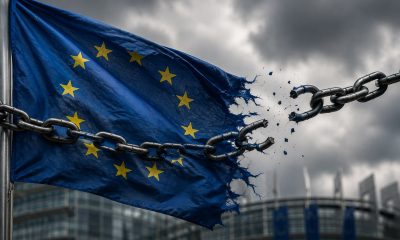
The Digital Markets Act Is Hurting Europeans. It’s Time to Put Progress, Free Markets, and Competition First