Energy
#EnergyEfficiency first: Commission adopts three Recommendations to help member states put the clean energy transition into practice


Putting energy efficiency first is a key objective of the Energy Union. Energy savings are an efficient way of reducing greenhouse gas emissions and thereby contribute to the EU's action against climate change. They also help Europeans to save money on their energy bills.
The European Commission today adopted three recommendations to help member states to transpose and implement the amending Directive on Energy Efficiency. They are particularly relevant in the context of finalization of the National Energy and Climate Plans. This Directive is one of the flagship pieces in the Clean Energy for All Europeans package in which the EU has set the ambitious targets to be at least 32.5% more energy efficient by 2030, relative to a ‘business as usual' scenario. The recommendations provide detailed guidance on the practical implementation of the energy savings obligation for the period 1 January 2021 to 31 December 2030; the revised metering and billing provisions for thermal energy; and efficiency in heating and cooling.
Vice President Maroš Šefčovič said: “We need to make sure that altogether, national contributions on energy efficiency amount to the EU's 2030 target of at least 32.5%. The gap could be as big as approximately six percentage points and therefore, we invite member states to step up their game. The recommendations adopted today will help member states better tap existing potential. It is not only about credibility. Let's not miss the chance to modernize our economies.”
Commissioner Miguel Arias Cañete added: "Europe is the largest importer of fossil fuel in the world. With our increased ambition on energy efficiency we put an end to this. The revised energy efficiency rules are a major push for Europe's energy independence. Much of what we spend on imported fossil fuels will now be invested at home in more efficient buildings, sustainable industries and transport. The new target of 32.5% will boost our industrial competitiveness, create jobs, reduce energy bills, help tackle energy poverty and improve air quality”.
Please find more information on the recommendations and the EU's energy efficiency policy here.
Share this article:
EU Reporter publishes articles from a variety of outside sources which express a wide range of viewpoints. The positions taken in these articles are not necessarily those of EU Reporter. Please see EU Reporter’s full Terms and Conditions of publication for more information EU Reporter embraces artificial intelligence as a tool to enhance journalistic quality, efficiency, and accessibility, while maintaining strict human editorial oversight, ethical standards, and transparency in all AI-assisted content. Please see EU Reporter’s full A.I. Policy for more information.




The South Caucasus at a historic turning point: Between lasting peace and renewed confrontation
The security environment of the South Caucasus amid changing geopolitical realities

As Ireland chairs the EU Presidency, what impact has over fifty years of EU membership had on Ireland

Commission endorses Latvia’s €617 million Social Climate Plan to support vulnerable households and transport users in the clean transition

Commission sends Statements of Objections to several companies and trade associations in suspected construction chemicals cartel

EU and Portugal team up to keep brightest tech talents at home

British political shifts and the future of UK-China ties

Why the US is losing its legitimacy as a global superpower and the trust of the comity of nations

JoinCare explores scientific exchange during visit to Japan’s National Institute of Infectious Diseases

New episode – DGT podcast: Languages and Technology

Become a European Commission trainee – applications are now open

Commission outlines measures to strengthen Europe's banking sector and support growth
British political shifts and the future of UK-China ties
The South Caucasus at a historic turning point: Between lasting peace and renewed confrontation
As Ireland chairs the EU Presidency, what impact has over fifty years of EU membership had on Ireland

The Digital Markets Act Is Hurting Europeans. It’s Time to Put Progress, Free Markets, and Competition First

Kazakhstan reforms under scrutiny at Brussels Press Club round table

Japan should face up to history and contribute more to regional peace

Ambassador calls for 'speeding up' of co-operation between EU and Kazakhstan

Timur Turlov at Smart Moves Summit 2025: How chess can transform global education

Shevtsova’s case: Out-of-court sanctions dismantling trust in Ukrainian cause

The future of European transport

Trump Vs Trueman

US 'no longer' an 'unconditional ally' for Europe - MEP
-
 South Caucasus2 days ago
The South Caucasus at a historic turning point: Between lasting peace and renewed confrontation
-
South Caucasus3 days ago
The security environment of the South Caucasus amid changing geopolitical realities
-
 EU Presidency2 days ago
As Ireland chairs the EU Presidency, what impact has over fifty years of EU membership had on Ireland
-
 European Commission3 days ago
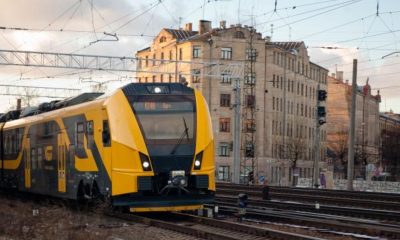
Commission endorses Latvia’s €617 million Social Climate Plan to support vulnerable households and transport users in the clean transition