Air quality
Clean vehicles: New #EmissionsTests come into effect for all new cars on market


From 1 September 2018, new cars will have to pass new emission tests before they can circulate in Europe. Internal Market, Industry, Entrepreneurship and SMEs Commissioner Elżbieta Bieńkowska said: "Since the" Dieselgate "scandal broke out three years ago, we have fundamentally changed the rules We have had the goal of preventing cheating, protecting the health of citizens and the environment, and stimulating the global competitiveness of our industry, and stricter emissions testing is part of a puzzle. But we still have a lot of work to do, and I'm talking about ongoing national surveys, the status of recalls of non-regulatory vehicles and the application of the new car registration rules - and the transition to mobile mobility with reduced emissions."
Two new, stricter tests will ensure more reliable emission results: a new laboratory test that better reflects reality (WLTP, World Harmonized Light Vehicle Test Proce lasts) as well as ah procedure carried out in real driving conditions (RDE for Real Driving Emissions). These tests have been introduced for all new vehicle types since September 2017. Now, from September 2018, the WLTP test becomes mandatory for all new cars. The RDE procedure also becomes mandatory on the same date. It can already measure small particles and, from September 2019, it will measure nitrogen oxides (NOx). These measures are part of the European Commission's initiatives to better protect Europeans from exhaust fumes and to restore the confidence of European consumers in the performance of vehicles.
In addition, the Commission has proposed de new targets for average CO2 emissions. More information and Q&A are online.
Share this article:
EU Reporter publishes articles from a variety of outside sources which express a wide range of viewpoints. The positions taken in these articles are not necessarily those of EU Reporter. Please see EU Reporter’s full Terms and Conditions of publication for more information EU Reporter embraces artificial intelligence as a tool to enhance journalistic quality, efficiency, and accessibility, while maintaining strict human editorial oversight, ethical standards, and transparency in all AI-assisted content. Please see EU Reporter’s full A.I. Policy for more information.






EU and South Africa kick off intergovernmental dialogue on Clean Trade and Investment Partnership

Commission opens formal investigation into possible gun jumping in XXXLutz's acquisition of Porta

Why young jobseekers struggle to find roles abroad that fit their expertise

Seveso - 50 years on: EU strengthens its commitment to industrial safety in a changing landscape of risk

Falling in love with the Maldives

Shared commitment to advance EOSC through new EOSC Nodes and EOSC projects

ECR MEPs question the European Commission on cardiovascular health and diet promoting the Mediterranean diet as an alternative to ultra-processed foods as key to tackling obesity

Farmers, fair markets and consumers: new report highlights the role of EU competition rules in agriculture

Kazakhstan seeks regional AI leadership as economic partnership with China enters new phase

Starmer’s problem? 'He is not a politician'

Why a Brussels–Nicosia–Eastern Mediterranean strategic affairs platform would benefit the European Union

Albania's Vlora airport standoff tests investor confidence as EU accession clock ticks
ECR MEPs question the European Commission on cardiovascular health and diet promoting the Mediterranean diet as an alternative to ultra-processed foods as key to tackling obesity

Kazakhstan's fixed capital investment tops 9.5 trillion tenge in H1 2026

Commission adopts simpler rules for EU agri-food promotion policy

Commission approves €659 million German state aid for four new semiconductor facilities

Kazakhstan reforms under scrutiny at Brussels Press Club round table

Japan should face up to history and contribute more to regional peace

Ambassador calls for 'speeding up' of co-operation between EU and Kazakhstan

Timur Turlov at Smart Moves Summit 2025: How chess can transform global education

Shevtsova’s case: Out-of-court sanctions dismantling trust in Ukrainian cause

The future of European transport

Trump Vs Trueman

US 'no longer' an 'unconditional ally' for Europe - MEP
-
 South Africa4 days ago
EU and South Africa kick off intergovernmental dialogue on Clean Trade and Investment Partnership
-
 European Commission4 days ago
Commission opens formal investigation into possible gun jumping in XXXLutz's acquisition of Porta
-
 Employment4 days ago
Why young jobseekers struggle to find roles abroad that fit their expertise
-
 Disasters4 days ago
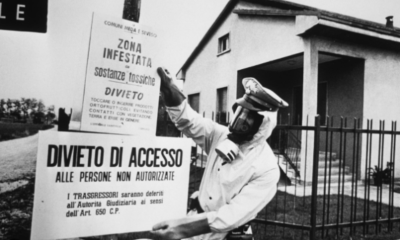
Seveso - 50 years on: EU strengthens its commitment to industrial safety in a changing landscape of risk