Environment
Fit for 55: MEPs back objective of zero emissions for cars and vans in 2035


MEPs voted in plenary on Wednesday (8 June) to adopt their position on the proposed rules for revising CO2 emissions performance standards. There were 339 votes for, 249 against, and 24 abstentions.
The adopted text is Parliament's position to negotiate and the MEPs support the Commission's proposal to achieve zero-emission road mobility in 2035. This EU-wide goal would reduce emissions from new passenger cars as well as light commercial vehicles by 100 percent compared to 2021. For 2030, intermediate emissions reduction targets would be set at 55% and 50% for cars, respectively.
You can find additional details about the proposed measures of Parliament.
Rapporteur Jan Huitema, (Renew, NL), stated: '"An ambitious revising of CO2-standards are a crucial part in reaching our climate targets. These standards will provide clarity to the automotive industry and encourage innovation and investment for car makers. Consumers will be able to purchase and drive zero-emission vehicles at a lower price."
The European Parliament supported an ambitious revision to the 2030 targets and supported a 100% target in 2035. This is critical for climate neutrality by 2050.
Next steps
MEPs are ready to begin negotiations with EU member countries.
Background
The Commission presented a legislative proposition for a revision to the CO2 emission performance standards for passenger cars and light commercial vehicles on 14 July 2021 as part of the "Fit for 55" package. This proposal aims at achieving the EU 2030/2050 climate goals, and to provide benefits to citizens by deploying zero emission vehicles more widely (better air quality and energy savings, lower vehicle ownership costs, and innovation in zero-emission technologies.
Share this article:
EU Reporter publishes articles from a variety of outside sources which express a wide range of viewpoints. The positions taken in these articles are not necessarily those of EU Reporter. Please see EU Reporter’s full Terms and Conditions of publication for more information EU Reporter embraces artificial intelligence as a tool to enhance journalistic quality, efficiency, and accessibility, while maintaining strict human editorial oversight, ethical standards, and transparency in all AI-assisted content. Please see EU Reporter’s full A.I. Policy for more information.




The South Caucasus at a historic turning point: Between lasting peace and renewed confrontation

The security environment of the South Caucasus amid changing geopolitical realities

Kazakhstan and Belgium: Building a Partnership for the Future

Commission registers two European Citizens' Initiatives on education and housing

Why the US is losing its legitimacy as a global superpower and the trust of the comity of nations

Commission endorses Latvia’s €617 million Social Climate Plan to support vulnerable households and transport users in the clean transition

Commission sends Statements of Objections to several companies and trade associations in suspected construction chemicals cartel

Rome–Washington Axis: Italian Diplomat Zanardi Landi to Help Save Bosnia

JoinCare explores scientific exchange during visit to Japan’s National Institute of Infectious Diseases

New episode – DGT podcast: Languages and Technology

Become a European Commission trainee – applications are now open

Commission outlines measures to strengthen Europe's banking sector and support growth

British political shifts and the future of UK-China ties
The South Caucasus at a historic turning point: Between lasting peace and renewed confrontation

As Ireland chairs the EU Presidency, what impact has over fifty years of EU membership had on Ireland

The Digital Markets Act Is Hurting Europeans. It’s Time to Put Progress, Free Markets, and Competition First

Kazakhstan reforms under scrutiny at Brussels Press Club round table

Japan should face up to history and contribute more to regional peace

Ambassador calls for 'speeding up' of co-operation between EU and Kazakhstan

Timur Turlov at Smart Moves Summit 2025: How chess can transform global education

Shevtsova’s case: Out-of-court sanctions dismantling trust in Ukrainian cause

The future of European transport

Trump Vs Trueman

US 'no longer' an 'unconditional ally' for Europe - MEP
-
South Caucasus1 day ago
The South Caucasus at a historic turning point: Between lasting peace and renewed confrontation
-
 South Caucasus2 days ago
The security environment of the South Caucasus amid changing geopolitical realities
-
 Belgium5 days ago
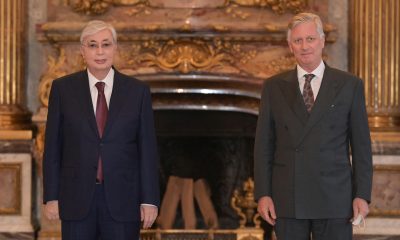
Kazakhstan and Belgium: Building a Partnership for the Future
-
 European Citizens' Initiative4 days ago
Commission registers two European Citizens' Initiatives on education and housing