European Commission
Second 'yellow card' for European Commission over European Public Prosecutor Office


National governments have shown the European Commission a 'yellow card' and ‘sent off’ plans for a European Public Prosecutor Office (EPPO).
This is the second yellow card for the European Commission since the introduction of the Lisbon Treaty in 2009 and the second time national parliaments have invoked the provision which allows member states to object EU proposals on the principle of subsidiarity if one third or more members agree.
Conservative Legal Affairs spokesperson, Sajjad Karim (pictured) welcomed the current state of play. He said: “The European Commission has scored an own goal by proposing the EPPO at a time when citizens and governments are looking for less EU red tape and regulation.
“The yellow card procedure is being used to keep EU proposals in check and ensure that the EU only legislates on issues which are useful.”
The European Commission planned for the EPPO to investigate and prosecute those who are suspected of committing fraud against the EU budget, hence taking power away from national authorities to do this.
Although eleven member states raised the yellow card, the European Commission can in theory choose to ignore the parliaments. However the last time a yellow card was issued, in the case of proposed legislation limiting workers’ right to strike, the EU proposal was thrown off the field.
Share this article:
EU Reporter publishes articles from a variety of outside sources which express a wide range of viewpoints. The positions taken in these articles are not necessarily those of EU Reporter. Please see EU Reporter’s full Terms and Conditions of publication for more information EU Reporter embraces artificial intelligence as a tool to enhance journalistic quality, efficiency, and accessibility, while maintaining strict human editorial oversight, ethical standards, and transparency in all AI-assisted content. Please see EU Reporter’s full A.I. Policy for more information.



EU and South Africa kick off intergovernmental dialogue on Clean Trade and Investment Partnership

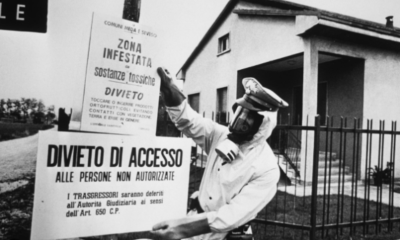
Seveso - 50 years on: EU strengthens its commitment to industrial safety in a changing landscape of risk

Why young jobseekers struggle to find roles abroad that fit their expertise

Commission opens formal investigation into possible gun jumping in XXXLutz's acquisition of Porta

Falling in love with the Maldives

ECR MEPs question the European Commission on cardiovascular health and diet promoting the Mediterranean diet as an alternative to ultra-processed foods as key to tackling obesity

Farmers, fair markets and consumers: new report highlights the role of EU competition rules in agriculture

Shared commitment to advance EOSC through new EOSC Nodes and EOSC projects

STATEMENT by the Ministry of Foreign Affairs of the Republic of Kazakhstan

Kazakhstan seeks regional AI leadership as economic partnership with China enters new phase

Starmer’s problem? 'He is not a politician'

Why a Brussels–Nicosia–Eastern Mediterranean strategic affairs platform would benefit the European Union

Albania's Vlora airport standoff tests investor confidence as EU accession clock ticks
ECR MEPs question the European Commission on cardiovascular health and diet promoting the Mediterranean diet as an alternative to ultra-processed foods as key to tackling obesity

Kazakhstan's fixed capital investment tops 9.5 trillion tenge in H1 2026

Commission adopts simpler rules for EU agri-food promotion policy

Kazakhstan reforms under scrutiny at Brussels Press Club round table

Japan should face up to history and contribute more to regional peace

Ambassador calls for 'speeding up' of co-operation between EU and Kazakhstan

Timur Turlov at Smart Moves Summit 2025: How chess can transform global education

Shevtsova’s case: Out-of-court sanctions dismantling trust in Ukrainian cause

The future of European transport

Trump Vs Trueman

US 'no longer' an 'unconditional ally' for Europe - MEP
-
 South Africa5 days ago
EU and South Africa kick off intergovernmental dialogue on Clean Trade and Investment Partnership
-
 Disasters5 days ago
Seveso - 50 years on: EU strengthens its commitment to industrial safety in a changing landscape of risk
-
 Employment5 days ago
Why young jobseekers struggle to find roles abroad that fit their expertise
-
 European Commission5 days ago
Commission opens formal investigation into possible gun jumping in XXXLutz's acquisition of Porta