Aviation/airlines
'4D' flights set for take-off


Air travel is set to become even more predictable in the future, thanks to the work undertaken within the SESAR Programme to develop and validate initial 4D (i4D) trajectory management – connecting aircraft and ground systems to optimize the aircraft trajectory in three dimensions plus time.
Prepared by SESAR members (Airbus, Eurocontrol, Honeywell, Indra, NORACON and Thales), a flight trial going from Toulouse to Copenhagen and then Stockholm, successfully validated the sharing of trajectory information both in ground and airborne operations, and the capability of the aircraft to comply with time constraints in the en-route and approach phases of the flight.
The flight trial further confirmed that i4D offers important safety and environmental gains, as well as increased flight predictability and overall network efficiency.
“Through this i4D flight trial, SESAR members are showing that the programme’s research and development can bring about immediate and positive impact to Europe’s Air Traffic Management (ATM) system. This wouldn’t have been possible without the operational support and validation by pilots and air traffic controllers, who are making 4D trajectory management a reality. Thanks to their hard work, passengers will experience an enhanced travel experience, which is an important goal of the SESAR Programme,” said Executive Director of the SESAR Joint Undertaking Claude Chêne.
Moving towards deployment
The core characteristic of i4D is to ensure that trajectories are always synchronised between air and ground. While a previous flight trial in 2012 demonstrated the feasibility of i4D, this second flight demonstrates the maturity and the robustness of the concept within a real traffic situation. Enabled by further refined airborne and ground systems and procedures, as well as enhanced Human Machine Interfaces (HMI), the latest flight trial builds on the results of an extensive validation process made up of a significant amount of real-time simulations involving pilots and air traffic controllers. This flight is an important step in the i4D validation road map, since it proves that the technology, systems and procedures are ready for large-scale demonstrations and therefore one step closer to deployment.
Flight trial
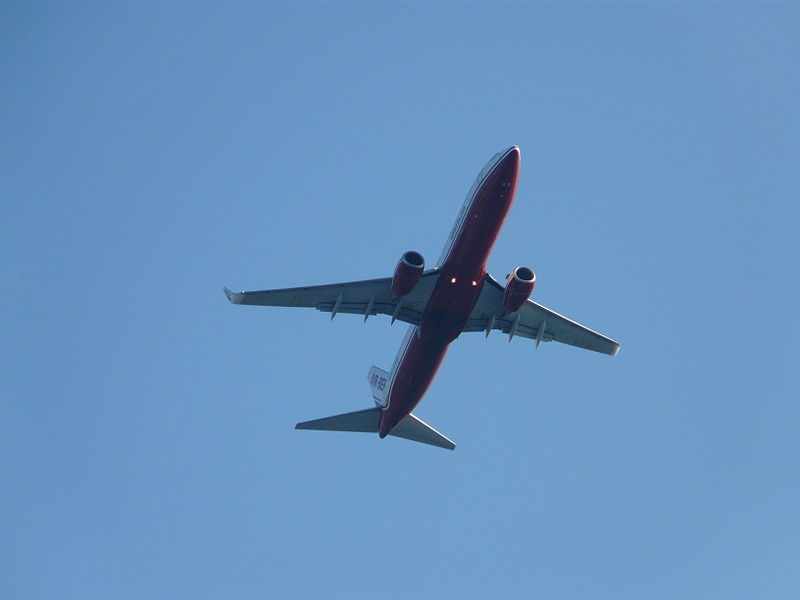
Throughout the flight, the aircraft’s trajectory information containing current and predicted positions were exchanged with the concerned air navigation service providers and airports. The Airbus A320 test aircraft flew from Toulouse in France through the Eurocontrol Maastricht Upper Area Control Centre (MUAC) airspace to meet a time constraint at a metering point close to Copenhagen airport. The flight then continued into Nordic Unified Air Traffic Control (NUAC) airspace to demonstrate an optimised descent to Copenhagen, after which it climbed to a cruise level and then descended into Swedish airspace to a second metering point before landing at Arlanda Airport. After a change to another Flight Management System (FMS), the aircraft departed from Stockholm towards Copenhagen to meet two further time constraints before climbing towards MUAC airspace and returning to Toulouse.
Watch this i4D video to see the concept in action.
Share this article:
EU Reporter publishes articles from a variety of outside sources which express a wide range of viewpoints. The positions taken in these articles are not necessarily those of EU Reporter. Please see EU Reporter’s full Terms and Conditions of publication for more information EU Reporter embraces artificial intelligence as a tool to enhance journalistic quality, efficiency, and accessibility, while maintaining strict human editorial oversight, ethical standards, and transparency in all AI-assisted content. Please see EU Reporter’s full A.I. Policy for more information.





ALROSA Re-elects Supervisory Board with Minimal Changes

Poland sees new research and changes to policies on migrant integration

Public consultation on Joint Undertakings, Art. 185 initiatives, and thematic priorities for European Partnerships under Horizon Europe 28-34

EU and South Africa kick off intergovernmental dialogue on Clean Trade and Investment Partnership

Commission opens formal investigation into possible gun jumping in XXXLutz's acquisition of Porta

Why young jobseekers struggle to find roles abroad that fit their expertise

Seveso - 50 years on: EU strengthens its commitment to industrial safety in a changing landscape of risk

Falling in love with the Maldives

Kazakhstan seeks regional AI leadership as economic partnership with China enters new phase

Starmer’s problem? 'He is not a politician'

Why a Brussels–Nicosia–Eastern Mediterranean strategic affairs platform would benefit the European Union

Albania's Vlora airport standoff tests investor confidence as EU accession clock ticks

ECR MEPs question the European Commission on cardiovascular health and diet promoting the Mediterranean diet as an alternative to ultra-processed foods as key to tackling obesity

Kazakhstan's fixed capital investment tops 9.5 trillion tenge in H1 2026

Commission adopts simpler rules for EU agri-food promotion policy

Commission approves €659 million German state aid for four new semiconductor facilities

Kazakhstan reforms under scrutiny at Brussels Press Club round table

Japan should face up to history and contribute more to regional peace

Ambassador calls for 'speeding up' of co-operation between EU and Kazakhstan

Timur Turlov at Smart Moves Summit 2025: How chess can transform global education

Shevtsova’s case: Out-of-court sanctions dismantling trust in Ukrainian cause

The future of European transport

Trump Vs Trueman

US 'no longer' an 'unconditional ally' for Europe - MEP
-
 Economy5 days ago
ALROSA Re-elects Supervisory Board with Minimal Changes
-
 Immigration5 days ago
Poland sees new research and changes to policies on migrant integration
-
 European Commission5 days ago
Public consultation on Joint Undertakings, Art. 185 initiatives, and thematic priorities for European Partnerships under Horizon Europe 28-34
-
 South Africa4 days ago
EU and South Africa kick off intergovernmental dialogue on Clean Trade and Investment Partnership