EU
How to ensure fair, humane and effective return procedures?


An effective and humane return policy with full respect for fundamental rights is a key part of the EU migration policy. In a Communication on the EU's Return Policy adopted today (28 March), the Commission presents the progress made in this field and points to future developments and actions needed.
In recent years, significant legislative and practical changes have taken place in all member states to establish fair and transparent rules and improve the way return procedures are carried out. The Return Directive, adopted in 2008, has established clear, transparent and fair common rules concerning the return of third-country nationals without a legal right to stay in the EU, and concerning the use of coercive measures, detention and bans on re-entry. Further progress could however be made to ensure that all guarantees provided under this are evenly implemented throughout the EU and lead to effective and humane practices across the board.
Home Affairs Commissioner Cecilia Malmström said: "The Return Directive has positively influenced national law and practice. It has been a driver for change regarding voluntary departure and monitoring of forced return. It contributed to an overall reduction of maximum detention periods across the EU and helped to promote alternatives to detention. Still, the detention situation in a number of member states gives rise to serious concerns. We therefore must continue our effort to enforce a credible and humane policy through practices that ensure the fundamental rights and the dignity of each individual - whatever their migratory status may be."
The Return Directive has contributed to positive developments in terms of: respect for fundamental rights; fair and efficient procedures; reduction of cases in which migrants are left without clear legal status; primacy of voluntary departure, and; promotion of reintegration and fostering of alternatives to detention.
Despite these positive changes, there is still room for improvement in the practical implementation of the Directive and for return policies in general.
Efforts should focus on: aspects linked to detention conditions; a more systematic use of alternatives to detention; the set up independent forced return monitoring systems; the overall effectiveness of the policy (e.g. faster procedures and higher rates of — voluntary — return).
Figures show a considerable gap between the persons issued with a return decision (approximately 484,000 persons in 2012, 491,000 in 2011 and 540,000 in 2010) and those who, as a consequence, have left the EU (approximately 178 000 in 2012, 167 000 in 2011 and 199 000 in 2010).
The main reasons for non-return relate to practical problems in the identification of returnees and in obtaining the necessary documentation from non-EU authorities. That is why improved cooperation with non-EU countries is a vital component for improving the effectiveness of return procedures.
Altogether, the Commission identified five main areas for action:
- Ensuring a proper and effective implementation of the existing rules: The Commission will continue to address all shortcomings identified in the Communication with the member states. It will pay particular attention to the implementation by member states of the provisions of the Directive which relate to the detention of returnees, safeguards and legal remedies, as well as the treatment of minors and other vulnerable persons in return procedures. It will make use of the Schengen evaluation mechanism to assess compliance with the rules in the field of return and enhanced forced return monitoring.
- Promoting more consistent and fundamental rights-compatible practices: The Commission will adopt a 'Return Handbook' containing common guidelines and best practices. It will support the efforts made by the Council of Europe towards codifying detailed detention standards.
- Developing further dialogue and cooperation with non-EU countries: Return and readmission issues will continue to be consistently addressed, in a balanced way, in cooperation dialogues with non-EU countries, such as the Global Approach to Migration and Mobility, and Mobility Partnerships. Efforts to build capacity in non-EU countries will be strengthened, e.g. to improve their ability to provide assistance and reintegration support to returnees.
- Improving operational co-operation between member states on return: The Commission will use the European Migration Network as a co-operation platform, especially for gathering and sharing information in the field of voluntary return.
- Enhancing the role of FRONTEX in the field of return: Frontex' coordination role in the field of joint return operations should be further increased, ensuring that common standards related to humane and dignified treatment of returnees are met. Trainings should be organized on return issues.
More information
MEMO/14/243
Communication on EU Return Policy
Cecilia Malmström's website
Follow Commissioner Malmström on Twitter
DG Home Affairs website
Follow DG Home Affairs on Twitter
Share this article:
EU Reporter publishes articles from a variety of outside sources which express a wide range of viewpoints. The positions taken in these articles are not necessarily those of EU Reporter. Please see EU Reporter’s full Terms and Conditions of publication for more information EU Reporter embraces artificial intelligence as a tool to enhance journalistic quality, efficiency, and accessibility, while maintaining strict human editorial oversight, ethical standards, and transparency in all AI-assisted content. Please see EU Reporter’s full A.I. Policy for more information.



EU and South Africa kick off intergovernmental dialogue on Clean Trade and Investment Partnership

Seveso - 50 years on: EU strengthens its commitment to industrial safety in a changing landscape of risk

Why young jobseekers struggle to find roles abroad that fit their expertise

Commission opens formal investigation into possible gun jumping in XXXLutz's acquisition of Porta

Shared commitment to advance EOSC through new EOSC Nodes and EOSC projects

ECR MEPs question the European Commission on cardiovascular health and diet promoting the Mediterranean diet as an alternative to ultra-processed foods as key to tackling obesity

Farmers, fair markets and consumers: new report highlights the role of EU competition rules in agriculture

Falling in love with the Maldives

STATEMENT by the Ministry of Foreign Affairs of the Republic of Kazakhstan

Kazakhstan seeks regional AI leadership as economic partnership with China enters new phase

Starmer’s problem? 'He is not a politician'

Why a Brussels–Nicosia–Eastern Mediterranean strategic affairs platform would benefit the European Union

Albania's Vlora airport standoff tests investor confidence as EU accession clock ticks
ECR MEPs question the European Commission on cardiovascular health and diet promoting the Mediterranean diet as an alternative to ultra-processed foods as key to tackling obesity

Kazakhstan's fixed capital investment tops 9.5 trillion tenge in H1 2026

Commission adopts simpler rules for EU agri-food promotion policy

Kazakhstan reforms under scrutiny at Brussels Press Club round table

Japan should face up to history and contribute more to regional peace

Ambassador calls for 'speeding up' of co-operation between EU and Kazakhstan

Timur Turlov at Smart Moves Summit 2025: How chess can transform global education

Shevtsova’s case: Out-of-court sanctions dismantling trust in Ukrainian cause

The future of European transport

Trump Vs Trueman

US 'no longer' an 'unconditional ally' for Europe - MEP
-
 South Africa5 days ago
EU and South Africa kick off intergovernmental dialogue on Clean Trade and Investment Partnership
-
 Disasters5 days ago
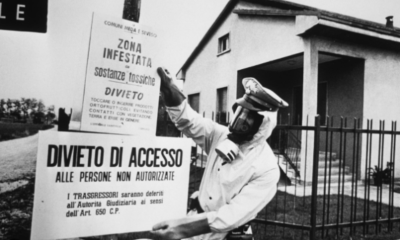
Seveso - 50 years on: EU strengthens its commitment to industrial safety in a changing landscape of risk
-
 Employment5 days ago
Why young jobseekers struggle to find roles abroad that fit their expertise
-
 European Commission5 days ago
Commission opens formal investigation into possible gun jumping in XXXLutz's acquisition of Porta