EU
Commission to propose Directive on working time of inland waterway workers


On 7 July, the Commission will propose a Directive on working time for inland waterway workers. The proposed Directive would implement an agreement reached by EU-level representatives of employers and employees in this sector, which is adapted to the distinctive working conditions on inland waterways. It would facilitate the application of the maximum working time rules on passenger and cargo transport ships and barges on inland waterways throughout the EU. These rules would therefore contribute to improving the working conditions of 31,000 shipboard personnel and to fairer competitive conditions for the 9,645 enterprises active in this sector. The proposed Directive would complement the general working time Directive (2003/88/EC), which does not cover inland waterway workers.
The proposal will be forwarded to the EU's Council of Ministers and the European Parliament for adoption.
Background
Workers on inland waterway transport have specific irregular work patterns compared to workers on land. They often work long hours in a short period of time, live at their workplace, and usually take longer rest periods at the end of the season.
Since over 75% of the inland waterway transport in the EU takes place across more than one Member State, companies and workers would benefit from EU level coordination of rules on maximum working time.
EU-level representatives of employers and employees concluded this agreement on 15 February 2012 and asked the Commission to submit it to the Council for implementation as a Directive, in accordance with Article 155 of the Treaty. The Commission has examined closely the content and impact of this agreement from the angles of legality, representativeness and economic and social effects.
Link to the agreement (all language versions)
Link to other sectoral working time rules
Share this article:
EU Reporter publishes articles from a variety of outside sources which express a wide range of viewpoints. The positions taken in these articles are not necessarily those of EU Reporter. Please see EU Reporter’s full Terms and Conditions of publication for more information EU Reporter embraces artificial intelligence as a tool to enhance journalistic quality, efficiency, and accessibility, while maintaining strict human editorial oversight, ethical standards, and transparency in all AI-assisted content. Please see EU Reporter’s full A.I. Policy for more information.



Burnham as PM? 'Wait and see'

Kazakhstan: Central Election Committee reviews the results of the nomination of candidates for the deputies of Kurultai
The South Caucasus at a historic turning point: Between lasting peace and renewed confrontation

Setting a new benchmark in premium travel

The security environment of the South Caucasus amid changing geopolitical realities

Rule of law report strengthens EU democracy and fundamental rights

Survey on an EU Blueprint for intellectual property licensing and spinoff creation

Ban on destruction of unsold clothes and shoes enters into application

JoinCare Explores Scientific Exchange During Visit toJapan’s National Institute of Infectious Diseases

New episode – DGT podcast: Languages and Technology

Become a European Commission trainee – applications are now open

Commission outlines measures to strengthen Europe's banking sector and support growth

British political shifts and the future of UK-China ties
The South Caucasus at a historic turning point: Between lasting peace and renewed confrontation

As Ireland chairs the EU Presidency, what impact has over fifty years of EU membership had on Ireland

The Digital Markets Act Is Hurting Europeans. It’s Time to Put Progress, Free Markets, and Competition First

Kazakhstan reforms under scrutiny at Brussels Press Club round table

Japan should face up to history and contribute more to regional peace

Ambassador calls for 'speeding up' of co-operation between EU and Kazakhstan

Timur Turlov at Smart Moves Summit 2025: How chess can transform global education

Shevtsova’s case: Out-of-court sanctions dismantling trust in Ukrainian cause

The future of European transport

Trump Vs Trueman

US 'no longer' an 'unconditional ally' for Europe - MEP
-
 Labour5 days ago
Burnham as PM? 'Wait and see'
-
 Kazakhstan5 days ago
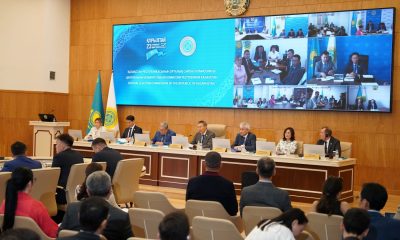
Kazakhstan: Central Election Committee reviews the results of the nomination of candidates for the deputies of Kurultai
-
South Caucasus16 hours ago
The South Caucasus at a historic turning point: Between lasting peace and renewed confrontation
-
 Aviation/airlines5 days ago
Setting a new benchmark in premium travel