EU
Novel foods: Parliament sends clear signals on food from clones and nanomaterials in food say Greens


The European Parliament's environment committee today (25 November) voted on proposals to revise EU rules on novel foods, foods or foodstuffs that only recently started being consumed (1).
The Greens hailed the outcome of the vote, which included very strong provisions on food from clones and the use of nanomaterials in food. After the vote, Green food safety spokesperson Bart Staes said: "Parliament has today sent strong signals on how the EU and its institutions should deal with novel foods. There are legitimate concerns about the impacts of these new types of foods - whether on human health, the environment or animal welfare - and it behoves the EU institutions to act responsibly and apply the precautionary principle (2), rather than rushing gung-ho ahead with new foods.
"MEPs have voted to send the Commission back to the drawing board with its flawed proposals on food from clones. The vote also called for all food from clones and their descendants to be clearly labelled until there is specific legislation dealing with clone food. There are real concerns with clone food, whether as regards about the impact on genetic diversity or animal welfare and it is grossly irresponsible to just ignore these.
"The committee also voted for a moratorium on 'nano-foods' until there are specific risk assessment methods in place enabling the European Food Safety Authority to assess the use of nanomaterials in food. The vote also called on the Commission to address the use of nanomaterials in food packaging and ensure only approved substances can be used in packaging. We cannot push blindly ahead with this technology without properly assessing the risks for human health."
(1) The EU regulates novel foods - foods that do not have a history of significant consumption prior to 1997 - with specific legislation.
(2) The European Commission has been committed to applying the precautionary principle to EU policy on the environment, animal and plant health.
Share this article:
EU Reporter publishes articles from a variety of outside sources which express a wide range of viewpoints. The positions taken in these articles are not necessarily those of EU Reporter. Please see EU Reporter’s full Terms and Conditions of publication for more information EU Reporter embraces artificial intelligence as a tool to enhance journalistic quality, efficiency, and accessibility, while maintaining strict human editorial oversight, ethical standards, and transparency in all AI-assisted content. Please see EU Reporter’s full A.I. Policy for more information.



The security environment of the South Caucasus amid changing geopolitical realities

Survey on an EU Blueprint for intellectual property licensing and spinoff creation

Burnham as PM? 'Wait and see'
The South Caucasus at a historic turning point: Between lasting peace and renewed confrontation

Kazakhstan: Central Election Committee reviews the results of the nomination of candidates for the deputies of Kurultai

Setting a new benchmark in premium travel

Rule of law report strengthens EU democracy and fundamental rights

Ban on destruction of unsold clothes and shoes enters into application

JoinCare Explores Scientific Exchange During Visit toJapan’s National Institute of Infectious Diseases

New episode – DGT podcast: Languages and Technology

Become a European Commission trainee – applications are now open

Commission outlines measures to strengthen Europe's banking sector and support growth

British political shifts and the future of UK-China ties
The South Caucasus at a historic turning point: Between lasting peace and renewed confrontation

As Ireland chairs the EU Presidency, what impact has over fifty years of EU membership had on Ireland

The Digital Markets Act Is Hurting Europeans. It’s Time to Put Progress, Free Markets, and Competition First

Kazakhstan reforms under scrutiny at Brussels Press Club round table

Japan should face up to history and contribute more to regional peace

Ambassador calls for 'speeding up' of co-operation between EU and Kazakhstan

Timur Turlov at Smart Moves Summit 2025: How chess can transform global education

Shevtsova’s case: Out-of-court sanctions dismantling trust in Ukrainian cause

The future of European transport

Trump Vs Trueman

US 'no longer' an 'unconditional ally' for Europe - MEP
-
 South Caucasus1 day ago
The security environment of the South Caucasus amid changing geopolitical realities
-
 Intellectual Property Rights4 days ago
Survey on an EU Blueprint for intellectual property licensing and spinoff creation
-
 Labour4 days ago
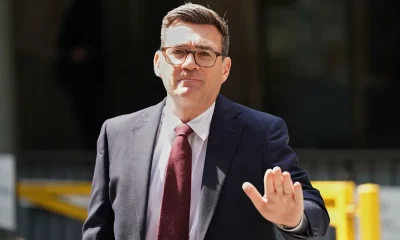
Burnham as PM? 'Wait and see'
-
South Caucasus12 hours ago
The South Caucasus at a historic turning point: Between lasting peace and renewed confrontation