Conference of Peripheral Maritime Regions of Europe (CPMR)
Oceana urges fisheries ministers to end overfishing in 2015


The Agriculture and Fisheries Council (AGRI-FISH) met in Brussels on 15-16 December 2014 to decide the catch limits of the main commercial fish species in the North-East Atlantic for 2015. Oceana reminds EU member states of their obligation to maintain sustainable catch levels in the framework of Common Fisheries Policy, and urges them to close the gap between agreed catch limits and scientific advice.
The fishing opportunities for 2015 will be the first to be legally adopted under the new Common Fisheries Policy. This includes sustainable exploitation of fisheries resources based on maximum sustainable yield (MSY), a target that will revamp the condition of fish stocks and will bring better revenues for fishermen. Unfortunately, despite the fact that the MSY objective should be achieved by 2015 for all stocks where possible, and by 2020 at the latest, currently, only 27 stocks are known to be fished at MSY levels.
“Ministers can and must stop overfishing in EU waters. With the actual 41% of stocks depleted and overfished, the situation is far from positive, and its consequences are detrimental to the status of fish populations and the viability of the fishing industry,” said Oceana Europe Executive Director Lasse Gustavsson. “Setting catch limits in line with scientific advice and the legal obligation to maintain fish stocks biomass above MSY rates, will enable the recovery of North-East Atlantic stocks.”
The marine conservation organization also draws attention to the increased disparity between established catch limits and sustainable catch limits during recent years. Based on official data from the European Commission, this difference dropped to its lowest rate of 11% in 2012, but increased significantly during 2013 and 2014, and now stands at 35%. According to Oceana, this situation shows a worrying trend and an evident step back in the management of fish resources.
“Fishing opportunities cannot exceed catch limits recommended by scientists without leading to overexploitation. This gap must be closed and fishing opportunities should undeniably follow scientific advice to guarantee the sustainability of the fishing activity,” added Javier Lopez, marine scientist at Oceana. “We urge fisheries ministers to give up the short term approach and instead, focus their efforts on restoring the productivity of fish stocks in 2015.”
Learn more: Oceana fishing opportunities recommendations for 2015
Share this article:
EU Reporter publishes articles from a variety of outside sources which express a wide range of viewpoints. The positions taken in these articles are not necessarily those of EU Reporter. Please see EU Reporter’s full Terms and Conditions of publication for more information EU Reporter embraces artificial intelligence as a tool to enhance journalistic quality, efficiency, and accessibility, while maintaining strict human editorial oversight, ethical standards, and transparency in all AI-assisted content. Please see EU Reporter’s full A.I. Policy for more information.



Burnham as PM? 'Wait and see'

Survey on an EU Blueprint for intellectual property licensing and spinoff creation

Kazakhstan: Central Election Committee reviews the results of the nomination of candidates for the deputies of Kurultai
The South Caucasus at a historic turning point: Between lasting peace and renewed confrontation

Setting a new benchmark in premium travel

The security environment of the South Caucasus amid changing geopolitical realities

Rule of law report strengthens EU democracy and fundamental rights

Ban on destruction of unsold clothes and shoes enters into application

JoinCare Explores Scientific Exchange During Visit toJapan’s National Institute of Infectious Diseases

New episode – DGT podcast: Languages and Technology

Become a European Commission trainee – applications are now open

Commission outlines measures to strengthen Europe's banking sector and support growth

British political shifts and the future of UK-China ties
The South Caucasus at a historic turning point: Between lasting peace and renewed confrontation

As Ireland chairs the EU Presidency, what impact has over fifty years of EU membership had on Ireland

The Digital Markets Act Is Hurting Europeans. It’s Time to Put Progress, Free Markets, and Competition First

Kazakhstan reforms under scrutiny at Brussels Press Club round table

Japan should face up to history and contribute more to regional peace

Ambassador calls for 'speeding up' of co-operation between EU and Kazakhstan

Timur Turlov at Smart Moves Summit 2025: How chess can transform global education

Shevtsova’s case: Out-of-court sanctions dismantling trust in Ukrainian cause

The future of European transport

Trump Vs Trueman

US 'no longer' an 'unconditional ally' for Europe - MEP
-
 Labour5 days ago
Burnham as PM? 'Wait and see'
-
 Intellectual Property Rights5 days ago
Survey on an EU Blueprint for intellectual property licensing and spinoff creation
-
 Kazakhstan5 days ago
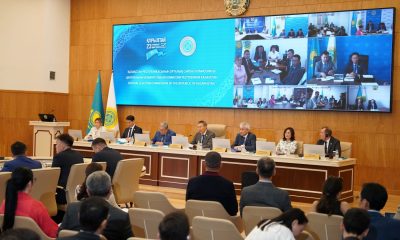
Kazakhstan: Central Election Committee reviews the results of the nomination of candidates for the deputies of Kurultai
-
South Caucasus16 hours ago
The South Caucasus at a historic turning point: Between lasting peace and renewed confrontation