Business
EBU welcomes EU net neutrality compromise and calls for staunch implementation

 The European Broadcasting Union believes that the adoption today (27 October) by the European Parliament of a single, identical set of rules for net neutrality in Europe is a step in the right direction for the Digital Single Market. The final compromise on the Single Telecoms Market regulation, the result of almost 2 years of intense negotiations at EU level, offers a workable solution.
EBU Head of European Affairs Nicola Frank said: “If you look at the big picture, this compromise is a step forward; the text adopted today contains a basic and robust set of rules safeguarding net neutrality for over half a billion people.”
“Many observers have pointed out that there are still many grey zones in the final Regulation” she added. “A lot now will depend on how the rules are implemented in practice by National Regulatory Authorities. Key issues such as media pluralism on the Internet and innovation in the digital economy are at stake. It is important that the National Regulatory Authorities take their responsibilities with a consistent and firm application of the rules, and that network operators are fully transparent towards the authorities as well as towards consumers.”
EBU net neutrality principles
From the beginning, the EBU has supported the adoption of strong and clear net neutrality rules at the EU level which should be duly reflected with five principles:
- Prevent undue blocking or discrimination of internet traffic;
- define the specific cases in which network operators can manage internet traffic;
- ensure that equivalent types of traffic are treated equally;
- ensure that the development of specialized services does not impair the quality and availability of the open internet access services, and;
- ensure clear transparency requirements on ISPs to reinforce users’ trust in the open internet.
Once the Single telecoms Market Regulation enters into force, National Regulatory Authorities (NRA) will have the responsibility to closely monitor compliance with the rules and promote the continued availability of non-discriminatory internet access, at quality levels which reflect advances in technology. The Body of European Regulators of Electronic Communications (BEREC), whose role is to assist the European Commission implement telecoms rules, will determine guidelines for implementing NRAs' obligations in the field of enforcement and transparency in the course of 2016.
Share this article:
EU Reporter publishes articles from a variety of outside sources which express a wide range of viewpoints. The positions taken in these articles are not necessarily those of EU Reporter. Please see EU Reporter’s full Terms and Conditions of publication for more information EU Reporter embraces artificial intelligence as a tool to enhance journalistic quality, efficiency, and accessibility, while maintaining strict human editorial oversight, ethical standards, and transparency in all AI-assisted content. Please see EU Reporter’s full A.I. Policy for more information.



EU and South Africa kick off intergovernmental dialogue on Clean Trade and Investment Partnership

Seveso - 50 years on: EU strengthens its commitment to industrial safety in a changing landscape of risk

Why young jobseekers struggle to find roles abroad that fit their expertise

Commission opens formal investigation into possible gun jumping in XXXLutz's acquisition of Porta

Shared commitment to advance EOSC through new EOSC Nodes and EOSC projects

Farmers, fair markets and consumers: new report highlights the role of EU competition rules in agriculture

Falling in love with the Maldives

ECR MEPs question the European Commission on cardiovascular health and diet promoting the Mediterranean diet as an alternative to ultra-processed foods as key to tackling obesity

STATEMENT by the Ministry of Foreign Affairs of the Republic of Kazakhstan

Kazakhstan seeks regional AI leadership as economic partnership with China enters new phase

Starmer’s problem? 'He is not a politician'

Why a Brussels–Nicosia–Eastern Mediterranean strategic affairs platform would benefit the European Union

Albania's Vlora airport standoff tests investor confidence as EU accession clock ticks
ECR MEPs question the European Commission on cardiovascular health and diet promoting the Mediterranean diet as an alternative to ultra-processed foods as key to tackling obesity

Kazakhstan's fixed capital investment tops 9.5 trillion tenge in H1 2026

Commission adopts simpler rules for EU agri-food promotion policy

Kazakhstan reforms under scrutiny at Brussels Press Club round table

Japan should face up to history and contribute more to regional peace

Ambassador calls for 'speeding up' of co-operation between EU and Kazakhstan

Timur Turlov at Smart Moves Summit 2025: How chess can transform global education

Shevtsova’s case: Out-of-court sanctions dismantling trust in Ukrainian cause

The future of European transport

Trump Vs Trueman

US 'no longer' an 'unconditional ally' for Europe - MEP
-
 South Africa5 days ago
EU and South Africa kick off intergovernmental dialogue on Clean Trade and Investment Partnership
-
 Disasters5 days ago
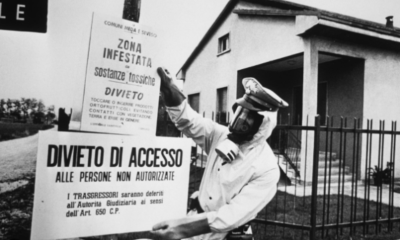
Seveso - 50 years on: EU strengthens its commitment to industrial safety in a changing landscape of risk
-
 Employment5 days ago
Why young jobseekers struggle to find roles abroad that fit their expertise
-
 European Commission5 days ago
Commission opens formal investigation into possible gun jumping in XXXLutz's acquisition of Porta