EU
#Lithuania Lithuania chooses priorities


By Adomas Abromaitis
In December representatives of the most peaceful profession - teachers - went on warning strikes in Lithuania twice. As was related by Lithuanian mass media, some or all of the teachers at hundreds of schools and kindergartens did not give their first classes and kindergarten teachers did not work for several hours.
Teachers demanded higher wages, smaller classes and groups and a larger compensation fund for retiring teachers. People on the streets were full of resentment.
"We are pushed to the corner," Ruta Osipaviciute, a teacher at one of Vilnius schools, told journalists during the strike. "I think the government has made so many promises to the educational society that we think we need to seek their fulfillment." Once again, they remained unheard.
The ministry promises wages of lowest-earning teachers will be increased by 7% next year. Young new teachers will see their wages rise by 5%, and wages for the remaining teachers will increase by 3%. No wonder, despite the planned increases, teachers' trade unions say they are not sufficient.
Lithuania's authorities agreed to satisfy only some of teachers' demands and will give them an additional €10 million instead of the €100m needed. It is indisputable that there are some issues that should remain among the government's priorities in any event. Namely the medical, educational, social and military spheres. But increasing in financing of one of them shouldn't be done to the detriment of others.
Obviously, this time the Ministry of National Defence laboured harder than the Ministry of Education and Science to make sure that the new budget work to their employers' benefit. It is known that Lithuania's parliament made a decision to increase the country's defence budget for 2016 to €575.2m, up to 35.3% compared with the previous year.
A statement indicated that the rise in military expenditures will allow the ministry "to plan further modernization of weaponry and to ensure the commitments to NATO allies". Most Lithuanians are great patriots, including teachers, and they support the government in its desire to modernize the army, but some of the recently announced plans have nothing in common with the previously announced aims.
It should be noted that Lithuanians are very politically educated and the government can rely on their consciousness concerning national security. Probably, this is not the case. While teachers try to persuade the authorities to improve their living standards, the Ministry of Defence some days ago revealed their plans to buy more than 50 cars at a cost of €1.6m.
Let's compare: after the teachers striked, the government agreed to increase the retirement fund for teachers by €1.5m next year. Does it mean that all retiring teachers deserve the same amount of money as 60 generals and colonels who will use the new cars? While the dreams of Lithuanian commanding officers of comfortable new cars have come true, the teachers' desires of better labour conditions will not change noticeably in the foreseeable future.
In this situation, the worst is that Lithuanian authorities unwittingly customize Lithuanians against the army. No one will understand why buying new cars for military chiefs is an urgent need while teachers' salaries are of secondary importance. Such procurements look more than strange and injudicious. There is nothing good in setting the military against other citizens - in case of war, they will have to trench together!
Share this article:
EU Reporter publishes articles from a variety of outside sources which express a wide range of viewpoints. The positions taken in these articles are not necessarily those of EU Reporter. Please see EU Reporter’s full Terms and Conditions of publication for more information EU Reporter embraces artificial intelligence as a tool to enhance journalistic quality, efficiency, and accessibility, while maintaining strict human editorial oversight, ethical standards, and transparency in all AI-assisted content. Please see EU Reporter’s full A.I. Policy for more information.



Bangladeshis waking up to reality of Yunus government

What the latest data reveals about labour market imbalances across Europe

From imitation to leadership: The production-based rise of Japan and China

Copernicus: Europe’s air quality improves despite persistent pollution episodes

Commission approves €402 million Spanish state aid for road transport companies facing increased fuel prices

Ensuring fairness and safety: €3 customs duty for low-value parcels

EU delivers emergency aid and organises a humanitarian flight in response to earthquakes in Venezuela

High Representative Kallas with Commissioners Kos and Brunner in Türkiye to advance bilateral cooperation

Kyrgyzstan launches Tamchy SFIT: a new international jurisdiction as a gateway to Eurasia

Kazakhstan’s dombyra: the two-stringed instrument that carries the soul of the steppe

Europe must double down on nuclear progress to achieve its long-term ambitions

Solana Company Partners with Kazakhstan on $6B Alatau Crypto Megacity

Astana's congress of world religions: A global platform for dialogue in an age of division

How Schuman lost Its way

Rating of American Express casino sites in the UK

PMI defends AI consultation tool as scrutiny grows over EU tobacco rules review

Kazakhstan reforms under scrutiny at Brussels Press Club round table

Japan should face up to history and contribute more to regional peace

Ambassador calls for 'speeding up' of co-operation between EU and Kazakhstan

Timur Turlov at Smart Moves Summit 2025: How chess can transform global education

Shevtsova’s case: Out-of-court sanctions dismantling trust in Ukrainian cause

The future of European transport

Trump Vs Trueman

US 'no longer' an 'unconditional ally' for Europe - MEP
-
 Bangladesh4 days ago
Bangladeshis waking up to reality of Yunus government
-
 Employment4 days ago
What the latest data reveals about labour market imbalances across Europe
-
 China4 days ago
From imitation to leadership: The production-based rise of Japan and China
-
 Air quality4 days ago
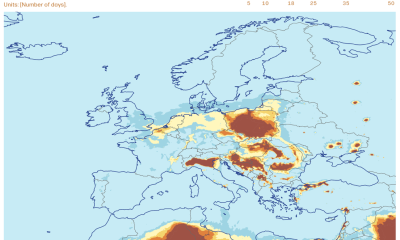
Copernicus: Europe’s air quality improves despite persistent pollution episodes