EU
#Greece Technical assistance should focus on 'sustainable reforms', say EU Auditors


Technical assistance to help countries in crisis such as Greece should focus on sustainable reforms and on helping business continuity by strengthening national administrations, according to the European Court of Auditors.
In a new report on the Task Force for Greece set up in 2011 by the European Commission, the auditors recommend that, in future, such bodies should be based on a strategy with well-defined objectives, while the assistance should be prioritised and focused.
The Task Force focused on reforming public administration in Greece, improving the tax system and bringing about a return to growth by fostering its business environment. The auditors examined whether it had fulfilled its mandate and whether the assistance had made an effective contribution to reform. They obtained evidence from the Commission, service providers, Greek government departments and other stakeholders.
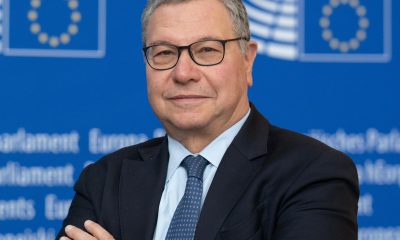
"Although the Task Force proved itself as a mechanism for delivering complex technical assistance, there were weaknesses in the design of some projects and only mixed results in terms of influence on the progress of reform," said Baudilio Tomé Muguruza, the Member of the European Court of Auditors responsible for the report.
Technical assistance was delivered to the Greek authorities in accordance with the mandate, but it did not always advance the reforms sufficiently, say the auditors, while noting that their assessment has to be seen in the context of the volatile political situation in Greece. The need for urgency meant that the Task Force was set up very rapidly, without a full analysis of other options or a dedicated budget. It had no single comprehensive strategic document for delivering assistance or for deciding priorities.
The delivery of assistance was relevant and broadly in line with the programme requirements, and the Task Force developed a flexible and diversified system for delivery. However, there were weaknesses at project level: procedures to select service providers were not always based on a thorough analysis of the available alternatives, and some long-term assistance contracts did not clearly state what they were expected to deliver.
The system for monitoring progress was effective, but the breadth of checks on external providers was highly variable, say the auditors. Moreover, it did not systematically monitor how the Greek authorities followed up recommendations or the broader impacts of the assistance.
The impact on the progress of reform was mixed, since implementation was beyond the Task Force’s control and subject to external factors. Progress on structural spending was good, but only partially effective in public administration and taxation reform.
Share this article:
EU Reporter publishes articles from a variety of outside sources which express a wide range of viewpoints. The positions taken in these articles are not necessarily those of EU Reporter. Please see EU Reporter’s full Terms and Conditions of publication for more information EU Reporter embraces artificial intelligence as a tool to enhance journalistic quality, efficiency, and accessibility, while maintaining strict human editorial oversight, ethical standards, and transparency in all AI-assisted content. Please see EU Reporter’s full A.I. Policy for more information.



ECR MEPs question the European Commission on cardiovascular health and diet promoting the Mediterranean diet as an alternative to ultra-processed foods as key to tackling obesity

Falling in love with the Maldives

Kurmuk gold project highlights Africa’s changing investment landscape

Chinese “leadership and coordination”

Britain’s leadership crisis is a symptom, not the disease

EU steps up international support for Palestinians with major initiative for Gaza's early recovery and stronger international coordination

Commission adds exemptions to rules on removability of portable batteries

Albania's Vlora airport standoff tests investor confidence as EU accession clock ticks

Burnham as PM? 'Wait and see'

Ban on destruction of unsold clothes and shoes enters into application

Survey on an EU Blueprint for intellectual property licensing and spinoff creation

Rule of law report strengthens EU democracy and fundamental rights

EU launches Ukraine defence industrial partnership, Drone Deal and disburses €1 billion for drones *

Setting a new benchmark in premium travel

Kazakhstan: Central Election Committee reviews the results of the nomination of candidates for the deputies of Kurultai

Statement by the Ministry of Foreign Affairs of the Republic of Kazakhstan

Kazakhstan reforms under scrutiny at Brussels Press Club round table

Japan should face up to history and contribute more to regional peace

Ambassador calls for 'speeding up' of co-operation between EU and Kazakhstan

Timur Turlov at Smart Moves Summit 2025: How chess can transform global education

Shevtsova’s case: Out-of-court sanctions dismantling trust in Ukrainian cause

The future of European transport

Trump Vs Trueman

US 'no longer' an 'unconditional ally' for Europe - MEP
-
 Italy3 days ago
ECR MEPs question the European Commission on cardiovascular health and diet promoting the Mediterranean diet as an alternative to ultra-processed foods as key to tackling obesity
-
 Tourism4 days ago
Falling in love with the Maldives
-
 China4 days ago
Kurmuk gold project highlights Africa’s changing investment landscape
-
 China-EU5 days ago
Chinese “leadership and coordination”