EU
Ethics of the Commission: Goldman Sachs lobbyist #JoséManuelBarroso must be strictly scrutinized


EU Ombudswoman Emily O' Reilly (pictured) has published her recommendations to the EU-Commission to reopen the revolving door case of José Manuel Barroso. The former president of the Commission is currently employee of Goldman Sachs. He committed not to lobby the Commission, of which he is the former president, during a first review of his new role by the Commission's Ethics Committee. However, it has now become known that Barroso has met with Commission Vice President Jyrki Katainen.
The Commission's new ethics rules came into force at the beginning of February. The Commission had adopted weaker rules than requested by the Parliament. Sven Giegold, the European Parliament's rapporteur for 'Transparency, accountability and integrity in the EU institutions', said: "Commission's ethics guardians must now scrutinise rigorously whether Barroso has broken his own commitment. The committee now has a chance to restore the credibility of the rules against the revolving door. The revolving door between former Commissioners and lobbying jobs must be closed. We need clear and verifiable conditions for the new employment of ex-Commissioners. If rules have been broken, the Commission must impose sanctions to restore people's confidence. Following the recent reform of the ethics rules, the Commission must demonstrate whether it is at least ready to exhaust all existing possibilities. The Ombudswoman's recommendations for a next reform of the ethics rules - including the call for more members for the Ethics Committee - should be implemented jointly by Commission and Parliament. The best way to remedy the existing lack of independence in the ethics system is for the EU institutions to send representatives to a joint ethics committee investigating cases and recommending sanctions. This ethics committee should be able to initiate investigations and publish its decisions."
Press release of the EU Ombudswoman
Inquiry and recommendations by the EU Ombudswoman
New ethics rules of the EU Commission
Article 245 of the Treaty on the Functioning of the European Union
The members of the Commission shall refrain from any action incompatible with their duties. Member states shall respect their independence and shall not seek to influence them in the performance of their tasks. Members of the Commission may not, during their term of office, engage in any other occupation, whether gainful or not. When entering upon their duties they shall give a solemn undertaking that, both during and after their term of office, they will respect the obligations arising therefrom and in particular their duty to behave with integrity and discretion as regards the acceptance, after they have ceased to hold office, of certain appointments or benefits. In the event of any breach of these obligations, the Court of Justice may, on application by the Council acting by a simple majority or the Commission, rule that the member concerned be, according to the circumstances, either compulsorily retired in accordance with Article 247 or deprived of his right to a pension or other benefits in its stead.
Share this article:
EU Reporter publishes articles from a variety of outside sources which express a wide range of viewpoints. The positions taken in these articles are not necessarily those of EU Reporter. Please see EU Reporter’s full Terms and Conditions of publication for more information EU Reporter embraces artificial intelligence as a tool to enhance journalistic quality, efficiency, and accessibility, while maintaining strict human editorial oversight, ethical standards, and transparency in all AI-assisted content. Please see EU Reporter’s full A.I. Policy for more information.



Burnham as PM? 'Wait and see'

Kazakhstan: Central Election Committee reviews the results of the nomination of candidates for the deputies of Kurultai
The South Caucasus at a historic turning point: Between lasting peace and renewed confrontation

Setting a new benchmark in premium travel

The security environment of the South Caucasus amid changing geopolitical realities

Rule of law report strengthens EU democracy and fundamental rights

Survey on an EU Blueprint for intellectual property licensing and spinoff creation

Ban on destruction of unsold clothes and shoes enters into application

JoinCare Explores Scientific Exchange During Visit toJapan’s National Institute of Infectious Diseases

New episode – DGT podcast: Languages and Technology

Become a European Commission trainee – applications are now open

Commission outlines measures to strengthen Europe's banking sector and support growth

British political shifts and the future of UK-China ties
The South Caucasus at a historic turning point: Between lasting peace and renewed confrontation

As Ireland chairs the EU Presidency, what impact has over fifty years of EU membership had on Ireland

The Digital Markets Act Is Hurting Europeans. It’s Time to Put Progress, Free Markets, and Competition First

Kazakhstan reforms under scrutiny at Brussels Press Club round table

Japan should face up to history and contribute more to regional peace

Ambassador calls for 'speeding up' of co-operation between EU and Kazakhstan

Timur Turlov at Smart Moves Summit 2025: How chess can transform global education

Shevtsova’s case: Out-of-court sanctions dismantling trust in Ukrainian cause

The future of European transport

Trump Vs Trueman

US 'no longer' an 'unconditional ally' for Europe - MEP
-
 Labour5 days ago
Burnham as PM? 'Wait and see'
-
 Kazakhstan5 days ago
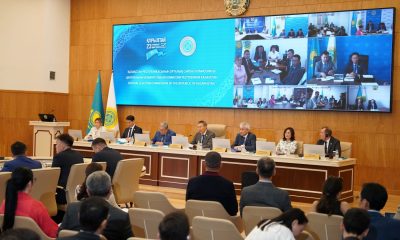
Kazakhstan: Central Election Committee reviews the results of the nomination of candidates for the deputies of Kurultai
-
South Caucasus17 hours ago
The South Caucasus at a historic turning point: Between lasting peace and renewed confrontation
-
 Aviation/airlines5 days ago
Setting a new benchmark in premium travel