EU
French rail unions in showdown with #Macron in rolling strike

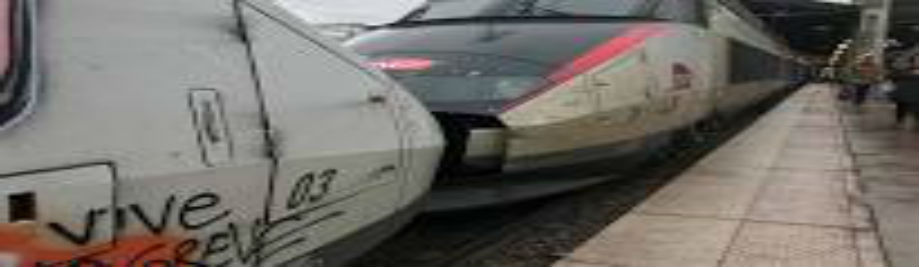
French railway services were decimated on Tuesday, the first day of rolling strikes which are due to run for months in a serious test for President Emmanuel Macron’s resolve to modernize the French economy, writes Leigh Thomas.
The four main rail unions have called two days of strikes in every five days for the next three months to protest against a shake-up of the national SNCF rail monopoly before it is opened up to competition as required by EU law.
The last time a French president squared off against rail unions over workers’ benefits it ended badly. The strikes of 1995 paralysed France and forced prime minister Alain Juppe to pull the reforms - a defeat which ultimately prompted Juppe to quit.
The unions are somewhat weaker than in 1995 and divided in their response to Macron’s social and economic reforms. More than half of French people view the strikes as unjustified, according to an Ifop poll published on Sunday.
After an Easter holiday weekend, the SNCF was faced with one of the biggest strikes in years, with nearly one in two staff off work.
Commuter lines into Paris were slashed and only one in eight high-speed TGVs were scheduled, the SNCF said. Bus services into the capital were overwhelmed, with BFM TV reporting that police were called to remove people who overcrowded one bus.
SNCF boss Guillaume Pepy, who backs the reforms, has warned of widespread disruption.
“I want to be very clear ... the strike action will no doubt be widely adhered to and his going to make the lives of a lot of people very difficult,” he said in a radio interview.
Macron wants to transform heavily indebted SNCF into a profit-maker. Unions say he is paving the way for privatization.
If Macron triumphs over the unions, it will set the tone for other key reform plans including revamping the education system and overhauling pensions. He has already stared them down over easing labour laws.
Borne has sought to ease tensions with assurances that current SNCF employees that have to move to a competitor in the future would keep most of their advantages.
The Communist-rooted CGT wants the strike to spread beyond the rail sector. Energy sector workers plan to join the strike action from April 3 to June 28, to protest against the planned liberalisation of the power sector.
The CGT has called for public and private sector workers nationwide to strike on April 19, but in a sign of union division, private sector unions have so far declined.
Share this article:
EU Reporter publishes articles from a variety of outside sources which express a wide range of viewpoints. The positions taken in these articles are not necessarily those of EU Reporter. Please see EU Reporter’s full Terms and Conditions of publication for more information EU Reporter embraces artificial intelligence as a tool to enhance journalistic quality, efficiency, and accessibility, while maintaining strict human editorial oversight, ethical standards, and transparency in all AI-assisted content. Please see EU Reporter’s full A.I. Policy for more information.



Burnham as PM? 'Wait and see'

Kazakhstan: Central Election Committee reviews the results of the nomination of candidates for the deputies of Kurultai
The South Caucasus at a historic turning point: Between lasting peace and renewed confrontation

Setting a new benchmark in premium travel

The security environment of the South Caucasus amid changing geopolitical realities

Rule of law report strengthens EU democracy and fundamental rights

Survey on an EU Blueprint for intellectual property licensing and spinoff creation

Ban on destruction of unsold clothes and shoes enters into application

JoinCare Explores Scientific Exchange During Visit toJapan’s National Institute of Infectious Diseases

New episode – DGT podcast: Languages and Technology

Become a European Commission trainee – applications are now open

Commission outlines measures to strengthen Europe's banking sector and support growth

British political shifts and the future of UK-China ties
The South Caucasus at a historic turning point: Between lasting peace and renewed confrontation

As Ireland chairs the EU Presidency, what impact has over fifty years of EU membership had on Ireland

The Digital Markets Act Is Hurting Europeans. It’s Time to Put Progress, Free Markets, and Competition First

Kazakhstan reforms under scrutiny at Brussels Press Club round table

Japan should face up to history and contribute more to regional peace

Ambassador calls for 'speeding up' of co-operation between EU and Kazakhstan

Timur Turlov at Smart Moves Summit 2025: How chess can transform global education

Shevtsova’s case: Out-of-court sanctions dismantling trust in Ukrainian cause

The future of European transport

Trump Vs Trueman

US 'no longer' an 'unconditional ally' for Europe - MEP
-
 Labour5 days ago
Burnham as PM? 'Wait and see'
-
 Kazakhstan5 days ago
Kazakhstan: Central Election Committee reviews the results of the nomination of candidates for the deputies of Kurultai
-
South Caucasus18 hours ago
The South Caucasus at a historic turning point: Between lasting peace and renewed confrontation
-
 Aviation/airlines5 days ago
Setting a new benchmark in premium travel