Albania
Albania, Hungary, Malta and Turkey among key opinions adopted by #VeniceCommission


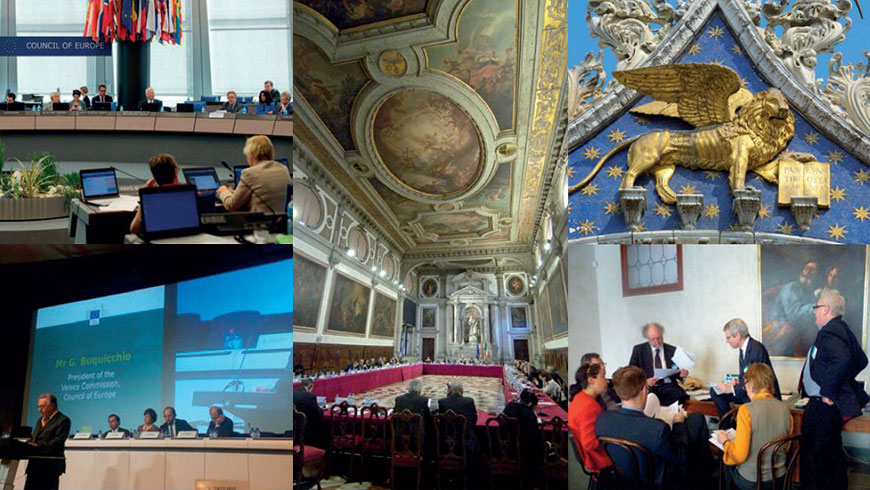
The final plenary session of the year for the Council of Europe’s Venice Commission included several high profile opinions, including for Albania, Hungary, Malta and Turkey.
The Venice Commission legal experts find that the power of the prime minister in Malta widely overshadows that of other government bodies, including the president, parliament, cabinet of ministers, judiciary and ombudsman. Although the experts praise recent judicial reform as a “step in the right direction”, too many remaining imbalances risk the proper rule of law in Malta.
A joint OSCE-Council of Europe Venice Commission opinion determines that because a special immigration tax of Act XLI in Hungarian law violates free expression and association, it should be repealed.
In addition, the Venice Commission finds that a draft opinion on draft constitutional amendments of Albania to enable the vetting of politicians fails to provide sufficient guidance and safeguards and may lead to abuse of power. While acknowledging the legitimate aim to remove offenders and their influence from governance and political life, the Venice Commission expresses concern that the lack of legal clarity and certainty concerning the scope and implementation of the proposed vetting procedure could lead to severe implications for the rights of those subject to it.
Finally, another joint Venice Commission and OSCE opinion criticizes late changes to election laws in Turkey. Changing key parts of voting legislation in Turkey – just a few weeks before elections in June, and in a hasty and non-inclusive way – was problematic and contrary to international standards, according to the opinion.
Share this article:
EU Reporter publishes articles from a variety of outside sources which express a wide range of viewpoints. The positions taken in these articles are not necessarily those of EU Reporter. Please see EU Reporter’s full Terms and Conditions of publication for more information EU Reporter embraces artificial intelligence as a tool to enhance journalistic quality, efficiency, and accessibility, while maintaining strict human editorial oversight, ethical standards, and transparency in all AI-assisted content. Please see EU Reporter’s full A.I. Policy for more information.






European Commission proposes landmark tax simplification package to streamline compliance and boost competitiveness

More EU financial aid for war-torn Ukraine

France reports first case of Ebola and WHO launches its first trials

MEPs adopt cardiovascular strategy, prioritising early detection and risk reduction

New cultural programme to celebrate Ireland's incoming EU presidency

Top airline offers soaraway summer specials

Commission simplifies and makes energy and tyre labelling rules more accessible to European consumers

UK building long-term economic strategy in Kyrgyzstan

EMA recommends three new medicines and an orphan treatment for rare Rett Syndrome

The Commission takes stock of situation on oil markets amid developments in the Middle East

Better enforcement of passenger rights: New EU agreement strengthens protection across all modes of transport

EU steps up support for Ukraine's defence, recovery and reconstruction at the Ukraine Recovery Conference 2026

EU deploys emergency assistance to Venezuela following earthquakes

Dismantling 'high walls' for a shared European-Asian future

Security realignment inevitable in Middle East after Netanyahu-Trump's war

Shen Yun - The Abuses and Human Rights Violations

Kazakhstan reforms under scrutiny at Brussels Press Club round table

Japan should face up to history and contribute more to regional peace

Ambassador calls for 'speeding up' of co-operation between EU and Kazakhstan

Timur Turlov at Smart Moves Summit 2025: How chess can transform global education

Shevtsova’s case: Out-of-court sanctions dismantling trust in Ukrainian cause

The future of European transport

Trump Vs Trueman

US 'no longer' an 'unconditional ally' for Europe - MEP
-
 Economy5 days ago
European Commission proposes landmark tax simplification package to streamline compliance and boost competitiveness
-
 Ukraine3 days ago
More EU financial aid for war-torn Ukraine
-
 Ebola5 days ago
France reports first case of Ebola and WHO launches its first trials
-
 Health5 days ago
MEPs adopt cardiovascular strategy, prioritising early detection and risk reduction