Brexit
#Brexit bedlam: Parliament votes down May's EU divorce deal by 230 votes

 Prime Minister Theresa May's Brexit deal was rejected by 230 votes on 15 January - the largest defeat for a sitting government in history, write William James and Kylie MacLellan.
The vote is set to trigger political upheaval that could lead to a disorderly exit from the EU or even to a reversal of the 2016 decision to leave.
Parliament voted 432-202 against her deal, the worst parliamentary defeat for a government in recent British history. Scores of her own MPs - both Brexiteers and supporters of EU membership - joined forces to vote down the deal.
With the clock ticking down to March 29, the date set in law for Brexit, the United Kingdom is now ensnared in the deepest political crisis in half a century as it grapples with how, or even whether, to exit the European project that it joined in 1973.
May’s crushing loss, the first British parliamentary defeat of a treaty since 1864, marks the collapse of her two-year strategy of forging an amicable divorce with close ties to the EU after the March 29 exit.
“The Brexit deal is basically dead,” said Anand Menon, professor of European politics and foreign affairs at King’s College London.
“The EU and British lawmakers will consider the deal dead, so the UK will have no Brexit policy and no viable alternative to the Brexit policy,” Menon said.
After repeatedly refusing to resign or to countenance another referendum, May will make a statement shortly. Her options include setting course for a no-deal exit, brinkmanship to try to secure concessions from the EU, a delay to Brexit, resignation, an election or a referendum.
Ever since Britain voted by 52-48% to leave the EU in a referendum in June 2016, the political class has been debating how to leave the European project forged by France and Germany after the devastation of World War Two.
While the country is divided over EU membership, most agree that the world’s fifth largest economy is at a crossroads and that its choices over Brexit will shape the prosperity of future generations.
Before the vote, May had warned pro-Brexit MPs that if her plan was rejected, it was more likely that Britain would not leave the EU at all than that it would leave without a deal.
She has also warned fellow Conservatives not to let the opposition Labour Party seize control of Brexit. Labour leader Jeremy Corbyn, hoping to force an election, is expected to call a parliamentary vote of no confidence in May’s government.
Supporters of EU membership cast Brexit as a gigantic mistake that will undermine the West, smash Britain’s reputation as a stable destination for investment and slowly weaken London’s position as a global capital.
Share this article:

EU Reporter publishes articles from a variety of outside sources which express a wide range of viewpoints. The positions taken in these articles are not necessarily those of EU Reporter. Please see EU Reporter’s full Terms and Conditions of publication for more information EU Reporter embraces artificial intelligence as a tool to enhance journalistic quality, efficiency, and accessibility, while maintaining strict human editorial oversight, ethical standards, and transparency in all AI-assisted content. Please see EU Reporter’s full A.I. Policy for more information.





The South Caucasus at a historic turning point: Between lasting peace and renewed confrontation
The security environment of the South Caucasus amid changing geopolitical realities

Commission registers two European Citizens' Initiatives on education and housing

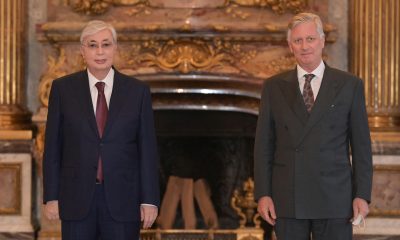
Kazakhstan and Belgium: Building a Partnership for the Future

Commission sends Statements of Objections to several companies and trade associations in suspected construction chemicals cartel

Why the US is losing its legitimacy as a global superpower and the trust of the comity of nations

Commission endorses Latvia’s €617 million Social Climate Plan to support vulnerable households and transport users in the clean transition

Rome–Washington Axis: Italian Diplomat Zanardi Landi to Help Save Bosnia

JoinCare explores scientific exchange during visit to Japan’s National Institute of Infectious Diseases

New episode – DGT podcast: Languages and Technology

Become a European Commission trainee – applications are now open

Commission outlines measures to strengthen Europe's banking sector and support growth

British political shifts and the future of UK-China ties
The South Caucasus at a historic turning point: Between lasting peace and renewed confrontation

As Ireland chairs the EU Presidency, what impact has over fifty years of EU membership had on Ireland

The Digital Markets Act Is Hurting Europeans. It’s Time to Put Progress, Free Markets, and Competition First

Kazakhstan reforms under scrutiny at Brussels Press Club round table

Japan should face up to history and contribute more to regional peace

Ambassador calls for 'speeding up' of co-operation between EU and Kazakhstan

Timur Turlov at Smart Moves Summit 2025: How chess can transform global education

Shevtsova’s case: Out-of-court sanctions dismantling trust in Ukrainian cause

The future of European transport

Trump Vs Trueman

US 'no longer' an 'unconditional ally' for Europe - MEP
-
 South Caucasus1 day ago
The South Caucasus at a historic turning point: Between lasting peace and renewed confrontation
-
South Caucasus2 days ago
The security environment of the South Caucasus amid changing geopolitical realities
-
 European Citizens' Initiative4 days ago
Commission registers two European Citizens' Initiatives on education and housing
-
 Belgium5 days ago
Kazakhstan and Belgium: Building a Partnership for the Future