EU
Cheap #CrossBorderPayments - Sharing the benefits of the #Euro

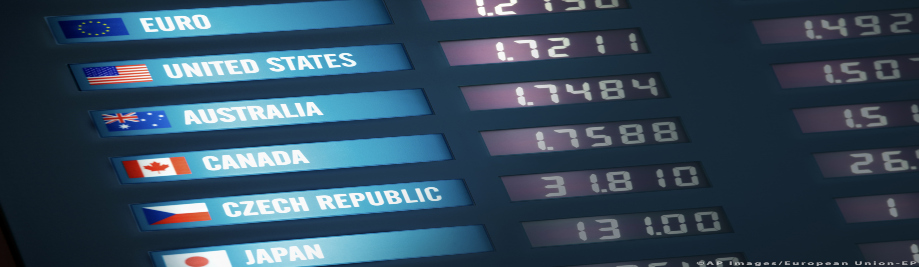
 Buying products from other EU countries could soon become cheaper ©AP images/European Union-EP
 Euro payments within the euro area cost close to nothing. People from elsewhere in the EU will now also get to benefit from low-cost payment fees.
On 14 February MEPs will vote on plans to ensure lower charges on euro payments across the EU and increase transparency on currency conversion fees when a payment involves different currencies.
Lower payment charges for countries outside the euro zone
Existing rules already provide for low payment costs between eurozone countries. For example, if you live in Finland and you buy a pair of shoes from Italy, the fee charged for the payment will be the same as for a domestic payment, which in many cases is zero.
However, if you live in Bulgaria, which is not part of the euro area, and you want to order that same pair of shoes, a euro payment to Italy may set you back as much as €24, according to a European Commission study.
The changes to EU legislation would align the fees charged for sending or receiving euro payments by banks and other payment service providers in non-euro area countries with the fees charged for payments in their national currency. That will make euro payments more affordable, boost incentives for consumers to buy from other EU countries, as well as reduce trade costs for businesses.
After striking a provisional agreement with the Council in December, Bulgarian EPP member Eva Maydell, the MEP in charge of steering the plans through Parliament, said this represented a step forward for the EU’s single market.
“By reducing the unjustified high charges for money transfers, European institutions show that by working together we deliver for our citizens,” she said in a tweet.
Currency conversion charges: informed choice for customers
The legislation also seeks to provide more transparency on the fees charged when one currency is converted into another in a payment transaction.
Imagine a German would like to make a card payment in a restaurant in Poland and is asked whether he prefers to make the payment in euros or in the local currency, the zloty. If he chooses a payment in zloty, the currency conversion will be done by his own bank; if he chooses a payment in euros, the service will be provided by the merchant’s bank.
In the two cases, the charges will be different, but if the client is not given clear and comparable information, he may end up paying more.
The amended rules require that the user is given all currency conversion options, showing the total costs in a clear and neutral manner before the transaction is carried out. Increased transparency should lead to more competition between service providers and lower charges for the service over time.
MEPs will discuss the topic on Wednesday 13 February, and will vote on it the following day.
Share this article:
EU Reporter publishes articles from a variety of outside sources which express a wide range of viewpoints. The positions taken in these articles are not necessarily those of EU Reporter. Please see EU Reporter’s full Terms and Conditions of publication for more information EU Reporter embraces artificial intelligence as a tool to enhance journalistic quality, efficiency, and accessibility, while maintaining strict human editorial oversight, ethical standards, and transparency in all AI-assisted content. Please see EU Reporter’s full A.I. Policy for more information.







The South Caucasus at a historic turning point: Between lasting peace and renewed confrontation
The security environment of the South Caucasus amid changing geopolitical realities

Commission sends Statements of Objections to several companies and trade associations in suspected construction chemicals cartel

Commission fines AliExpress €550 million for breaching the Digital Services Act

Commission endorses Latvia’s €617 million Social Climate Plan to support vulnerable households and transport users in the clean transition

As Ireland chairs the EU Presidency, what impact has over fifty years of EU membership had on Ireland

British political shifts and the future of UK-China ties

Why the US is losing its legitimacy as a global superpower and the trust of the comity of nations

Tokayev urges Putin to 'freeze' Ukraine war in rare public appeal for peace

JoinCare explores scientific exchange during visit to Japan’s National Institute of Infectious Diseases

New episode – DGT podcast: Languages and Technology

Become a European Commission trainee – applications are now open

Commission outlines measures to strengthen Europe's banking sector and support growth
British political shifts and the future of UK-China ties
The South Caucasus at a historic turning point: Between lasting peace and renewed confrontation
As Ireland chairs the EU Presidency, what impact has over fifty years of EU membership had on Ireland

Kazakhstan reforms under scrutiny at Brussels Press Club round table

Japan should face up to history and contribute more to regional peace

Ambassador calls for 'speeding up' of co-operation between EU and Kazakhstan

Timur Turlov at Smart Moves Summit 2025: How chess can transform global education

Shevtsova’s case: Out-of-court sanctions dismantling trust in Ukrainian cause

The future of European transport

Trump Vs Trueman

US 'no longer' an 'unconditional ally' for Europe - MEP
-
 South Caucasus3 days ago
The South Caucasus at a historic turning point: Between lasting peace and renewed confrontation
-
South Caucasus4 days ago
The security environment of the South Caucasus amid changing geopolitical realities
-
 European Commission4 days ago
Commission sends Statements of Objections to several companies and trade associations in suspected construction chemicals cartel
-
 Digital Services Act4 days ago
Commission fines AliExpress €550 million for breaching the Digital Services Act