China
#Huawei 'plans to recruit hundreds of genuises from around the world'


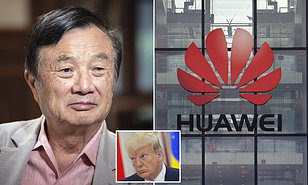
The company's founder and CEO Ren Zhengfei reportedly plans to recruit 20 to 30 'genius youngsters' from around the world this year and 200 to 300 of them next year to help Huawei become 'the most advanced' firm on earth despite the trade restrictions.
'In the next three to five years, [I] believe our company will have a brand new outlook and composition. [We] must win the "war",' Mr Ren, 74, was quoted saying.
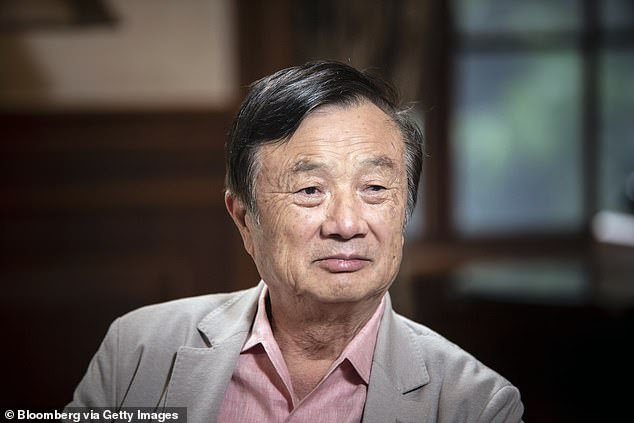
!['In the next three to five years, [I] believe our company will have a brand new outlook and composition. [We] must win the "war",' Mr Ren, 74, was quoted saying by Chinese media](https://ci6.googleusercontent.com/proxy/yzNbem30vOKgYYbVr8fdAUhXm1Je_Qn60ofzLbpWeKUc1OjFKoVYLVUI4sp3FhuQsGX_d_zbAG0BCU7Wwi3bwy4ToDj8Jw2OkBztqewxuSDHLMOdvVAvtw4ffSvDfmfXZAoeKVqunXKPqOw=s0-d-e1-ft#https://i.dailymail.co.uk/1s/2019/06/28/14/15376470-7192349-image-a-10_1561727602460.jpg)
Mr Ren's remarks were revealed in an email sent to all Huawei employees from the company's President's Office yesterday, reported financial media .
The Chinese businessman, worth , is said to have delivered the speech to his executive management team on June 20.
The alleged email also said: 'Huawei should drag the world forward in the future and create its own standard.
'So long as [we] become the most advanced [company] in the world, we will become the standard and the other will draw close to use.'
Mr Ren reportedly said that the 'genius youngsters' would be able to penetrate the company's structure like 'eels' and ignite the teams.
Huawei is at the centre of a trade war between China and the United States.
Washington claimed that Huawei's gear could be used by Beijing to spy on Americans - allegations Huawei has repeatedly denied.
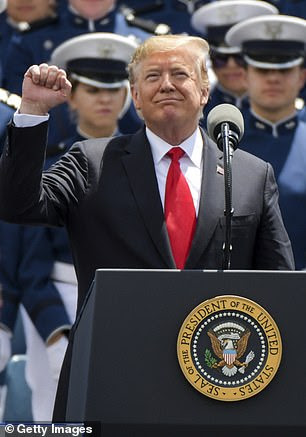
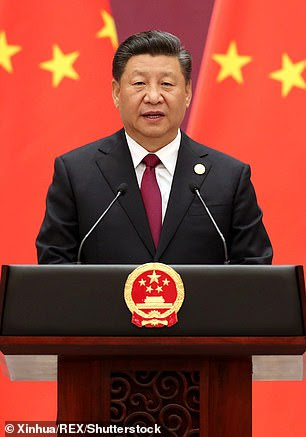
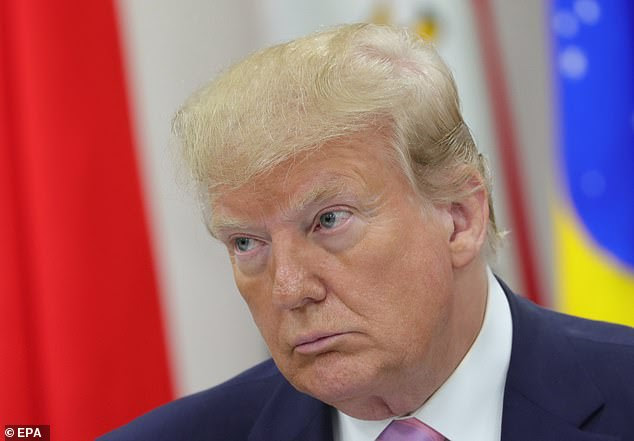
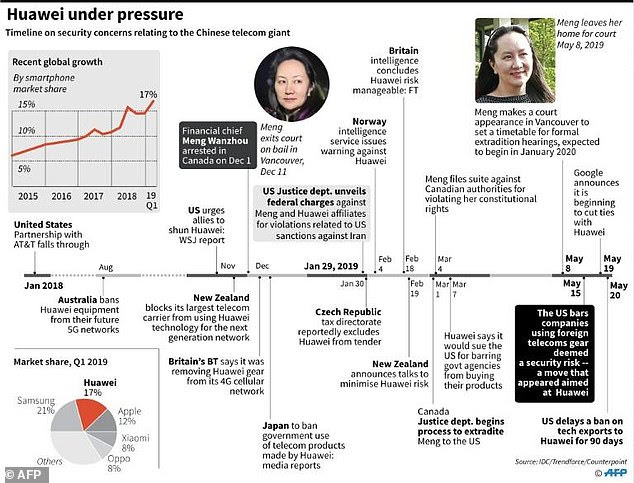
In May, the Trump Administration barred Huawei from US networks on grounds of national security.
It also put Huawei and its 68 worldwide affiliates on a US trade blacklist, banning them from buying parts and components - such as microchips - from American companies unless it has special approval. Huawei later received a 90-day reprieve.
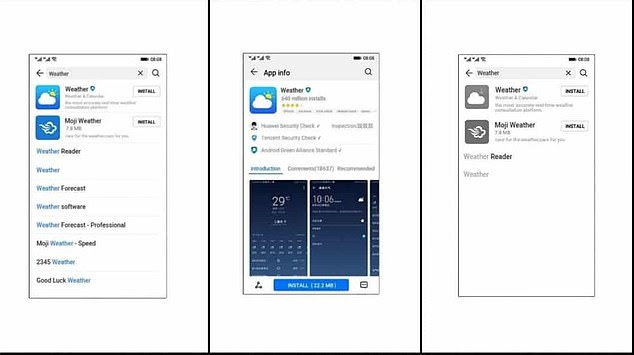
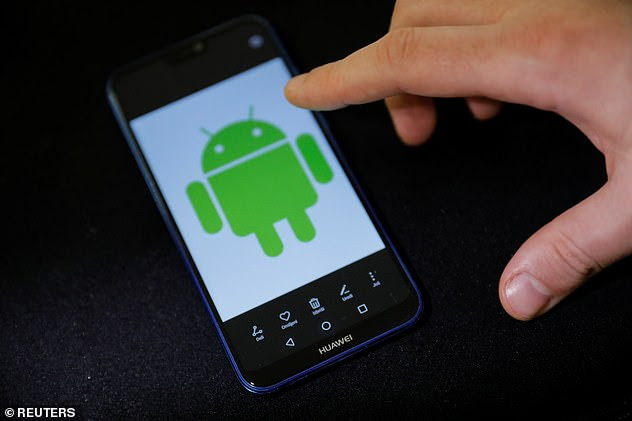
Google then said it would stop providing Huawei with its license to use Android, the operating system that powers all smartphones made by the Chinese firm and its sub-brand Honor.
In addition, Ren's daughter Meng Wanzhou, the CFO of Huawei, was arrested in Canada in December and is facing criminal charges in the US.
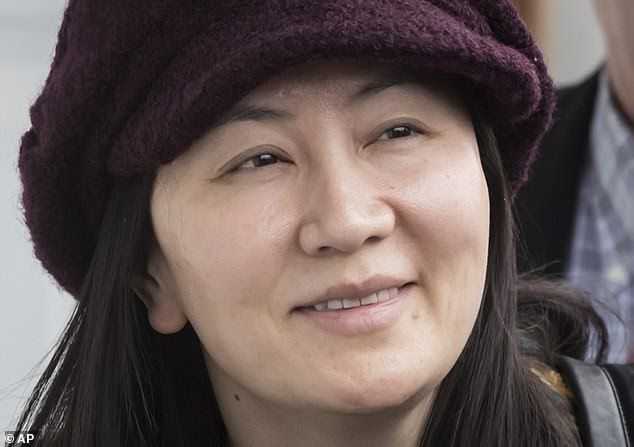
Meng Wanzhou is suing Canadian government, border agency and police
Meng, widely considered as Ren's heiress, is accused of using a Hong Kong shell company to sell equipment to Iran in violation of US sanctions. Huawei has denied the accusation.
How DO you pronounce Huawei's name?
Huawei, the Chinese telecom giant at the centre of the trade war between Beijing and Washington, also has one of the most mispronounced brand names in the West.
The name consists of two characters in Chinese, Hua (华) and Wei (为), and is written in pin yin, the standard spelling system in China to romanise Mandarin.
To pronounce Huawei correctly, try reading 'Who-are-way' really quickly but with two rising tones - one on 'who are' and one on 'way'.
Ren previously told reporters that the US had underestimated his company's capabilities and that Huawei was fully prepared to face the ban from Washington.
He said Huawei had its own backup supply of microchips and was capable of producing chips similar to those by American firms.
The Chinese firm is also rumoured to have been developing and testing its own operation system known as 'Hongmeng' in China and 'Ark' overseas.
A report from this week revealed that U.S. firms were still selling millions of dollars worth of electronics to Huawei after finding ways around Trump's sanctions on the telecoms giant.
Chip industry powerhouses Intel and Micron have reportedly found ways to avoid labeling their processors as American-made by producing them overseas.
And around three weeks ago the American chips being made overseas started flowing back to Huawei, sources told the newspaper.
Huawei founder says smartphone sales have slumped 40%
US President Donald Trump and Chinese President Xi Jinping met on Saturday (29 June) during the G20 summit in Osaka, Japan.
The two leaders are expected to discuss their trade war and Huawei could be on the agenda.
Trump said on Wednesday that a trade deal with China was possible this weekend, but he was also prepared to 'take in billions and billions of dollars' from Chinese goods with a potential tariff hike if the two countries continue to disagree.
Xi is reportedly preparing to present Trump with a list of demands for ending the US-China tariff battle.
One of China's key demands is for the U.S. to pull back the trade ban on Huawei, according to , citing Chinese officials.
Huawei was founded in 1987 by Ren, who had served in the Chinese military before becoming a businessman.
The company has beaten Apple to become the world's second largest smartphone maker after South Korea's Samsung.
Last year, Huawei's revenue exceeded 100$ billion for the first time. The company reported 721bn yuan ($105bn) in worldwide sales income, a 19.5% increase on the previous year.
Share this article:
EU Reporter publishes articles from a variety of outside sources which express a wide range of viewpoints. The positions taken in these articles are not necessarily those of EU Reporter. Please see EU Reporter’s full Terms and Conditions of publication for more information EU Reporter embraces artificial intelligence as a tool to enhance journalistic quality, efficiency, and accessibility, while maintaining strict human editorial oversight, ethical standards, and transparency in all AI-assisted content. Please see EU Reporter’s full A.I. Policy for more information.




Bangladeshis waking up to reality of Yunus government

What the latest data reveals about labour market imbalances across Europe

From imitation to leadership: The production-based rise of Japan and China

Copernicus: Europe’s air quality improves despite persistent pollution episodes

Commission approves €402 million Spanish state aid for road transport companies facing increased fuel prices

EMA recommends three new medicines and an orphan treatment for rare Rett Syndrome

Ensuring fairness and safety: €3 customs duty for low-value parcels

EU delivers emergency aid and organises a humanitarian flight in response to earthquakes in Venezuela

Kyrgyzstan launches Tamchy SFIT: a new international jurisdiction as a gateway to Eurasia

Kazakhstan’s dombyra: the two-stringed instrument that carries the soul of the steppe

Europe must double down on nuclear progress to achieve its long-term ambitions

Solana Company Partners with Kazakhstan on $6B Alatau Crypto Megacity

Astana's congress of world religions: A global platform for dialogue in an age of division

How Schuman lost Its way

Rating of American Express casino sites in the UK

PMI defends AI consultation tool as scrutiny grows over EU tobacco rules review

Kazakhstan reforms under scrutiny at Brussels Press Club round table

Japan should face up to history and contribute more to regional peace

Ambassador calls for 'speeding up' of co-operation between EU and Kazakhstan

Timur Turlov at Smart Moves Summit 2025: How chess can transform global education

Shevtsova’s case: Out-of-court sanctions dismantling trust in Ukrainian cause

The future of European transport

Trump Vs Trueman

US 'no longer' an 'unconditional ally' for Europe - MEP
-
 Bangladesh4 days ago
Bangladeshis waking up to reality of Yunus government
-
 Employment4 days ago
What the latest data reveals about labour market imbalances across Europe
-
 China4 days ago
From imitation to leadership: The production-based rise of Japan and China
-
 Air quality4 days ago
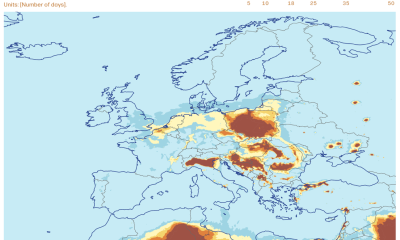
Copernicus: Europe’s air quality improves despite persistent pollution episodes