EU
How to close the #EUGenderPayGap


Ahead of International Women’s Day on 8 March, find out how the European Parliament is working to reduce the gender pay gap.
Although gender equality is one of the EU’s founding principles and the equal pay for equal work principle was introduced more than 60 years ago, women in the EU are still paid almost 15% less on average per hour than men.
The European Parliament wants to change that: in a resolution adopted on 30 January, MEPs call on the European Commission to come up with an ambitious gender equality strategy, including measures to tackle the gender pay gap.
The Commission is expected to present a gender equality strategy in March. It has said equal pay for equal work will be the strategy's cornerstone.
Solutions for equal pay: Binding targets and transparency measures
Parliament wants binding provisions on the gender pay gap and pay transparency, applying to the public and private sectors, strong enforcement, clear targets and monitoring to measure progress.
MEPs also want the Gender Pay Gap Action Plan to be revised by the end of 2020 and for it to include clear targets for EU countries to reduce the gap over the next five years.
Addressing root causes of unequal pay
In order to tackle a lack of female participation in the labour market, which is one of the reasons behind the gender pay gap, MEPs are calling for greater investment in early education, care services and more family-friendly working arrangements.
They also want to encourage women into taking up better paid jobs through a series of measures, starting with the promotion of science and technology subjects for girls at school, encouraging female entrepreneurs and the possibility of lifelong learning
Reducing differences in pensions
To tackle the gender pension gap, which is on average two times higher than the gender pay gap in the EU, MEPs suggest measures including the introduction of credits for care and minimum pensions.
Share this article:
EU Reporter publishes articles from a variety of outside sources which express a wide range of viewpoints. The positions taken in these articles are not necessarily those of EU Reporter. Please see EU Reporter’s full Terms and Conditions of publication for more information EU Reporter embraces artificial intelligence as a tool to enhance journalistic quality, efficiency, and accessibility, while maintaining strict human editorial oversight, ethical standards, and transparency in all AI-assisted content. Please see EU Reporter’s full A.I. Policy for more information.





The South Caucasus at a historic turning point: Between lasting peace and renewed confrontation
The security environment of the South Caucasus amid changing geopolitical realities

Commission endorses Latvia’s €617 million Social Climate Plan to support vulnerable households and transport users in the clean transition

Commission sends Statements of Objections to several companies and trade associations in suspected construction chemicals cartel

As Ireland chairs the EU Presidency, what impact has over fifty years of EU membership had on Ireland

Astana Hub unveils infrastructure to support AI innovation in health care

Commission fines AliExpress €550 million for breaching the Digital Services Act

EU and Portugal team up to keep brightest tech talents at home

Tokayev urges Putin to 'freeze' Ukraine war in rare public appeal for peace

JoinCare explores scientific exchange during visit to Japan’s National Institute of Infectious Diseases

New episode – DGT podcast: Languages and Technology

Become a European Commission trainee – applications are now open

Commission outlines measures to strengthen Europe's banking sector and support growth

British political shifts and the future of UK-China ties
The South Caucasus at a historic turning point: Between lasting peace and renewed confrontation
As Ireland chairs the EU Presidency, what impact has over fifty years of EU membership had on Ireland

Kazakhstan reforms under scrutiny at Brussels Press Club round table

Japan should face up to history and contribute more to regional peace

Ambassador calls for 'speeding up' of co-operation between EU and Kazakhstan

Timur Turlov at Smart Moves Summit 2025: How chess can transform global education

Shevtsova’s case: Out-of-court sanctions dismantling trust in Ukrainian cause

The future of European transport

Trump Vs Trueman

US 'no longer' an 'unconditional ally' for Europe - MEP
-
 South Caucasus2 days ago
The South Caucasus at a historic turning point: Between lasting peace and renewed confrontation
-
South Caucasus3 days ago
The security environment of the South Caucasus amid changing geopolitical realities
-
 European Commission3 days ago
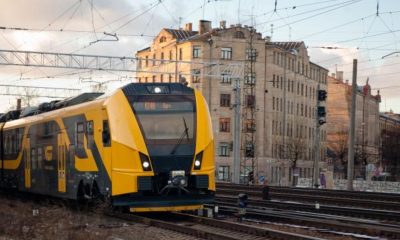
Commission endorses Latvia’s €617 million Social Climate Plan to support vulnerable households and transport users in the clean transition
-
 European Commission3 days ago
Commission sends Statements of Objections to several companies and trade associations in suspected construction chemicals cartel