Alcohol
Comment: Opening the door to alcohol industry lobbying - what’s wrong with the new WHO policy proposals


The World Health Organization (WHO) has published a draft proposal for a set Framework and set of policies to address its engagement with Non Sate Actors. Member states are being invited to discuss these proposals at WHO’s HQ in Geneva on 27th and 28th March. Public interest NGOs are not invited.
WHO should have health as priority for all its actions. European Alcohol Policy Alliance (Eurocare) supports International Baby Food Action Network (IBFAN) and fears that the new framework would compromise WHO’s integrity, independence and its ability to fulfil its mandate. If the new proposals were to be adopted, the corporate influence would increase, despite the many statements of WHO’s Director General Margaret Chan that WHO’s policies, norms and standards setting processes should be protected from commercial influence. Last year Dr Margaret Chan underlined that “the alcohol industry has no role in the formulation of alcohol policies, which must be protected from distortion by commercial or vested interests”.
In particular, the proposals introduce a new risky element, allowing official relations status, with all its related privileges, for international business associations. Up to now, if businesses wanted to attend governing body meetings in order to lobby member states delegations, they could wear a public badge, or, if they wanted to speak, inveigle their way onto government delegations. Some, over the years have slipped through WHO’s admission procedures, pretending to be NGOs.
The new proposals open the door wide to participation by any business member of these Associations, except tobacco or arms companies. This would, in effect, legitimize businesses lobbying role at WHO’s global policy-setting meetings - the very thing that WHO alleges that it is trying to avoid. In addition to turning WHO governing bodies meetings into multi-stakeholder public-private gatherings, the proposals would also allow businesses greater engagement at programme level, through agreed 3-year plans with WHO.
Eurocare Secretary General Mariann Skar said: “We urge WHO not to adopt the policy proposals, since it is crucial that the industry is not regarded as a 'partner in improving health'. WHO have to support member states in promoting better regulation and 'best buy' policies; like regulating advertising, increasing the price of unhealthy products and limiting their availability.”
Share this article:
EU Reporter publishes articles from a variety of outside sources which express a wide range of viewpoints. The positions taken in these articles are not necessarily those of EU Reporter. Please see EU Reporter’s full Terms and Conditions of publication for more information EU Reporter embraces artificial intelligence as a tool to enhance journalistic quality, efficiency, and accessibility, while maintaining strict human editorial oversight, ethical standards, and transparency in all AI-assisted content. Please see EU Reporter’s full A.I. Policy for more information.



Bangladeshis waking up to reality of Yunus government

What the latest data reveals about labour market imbalances across Europe

From imitation to leadership: The production-based rise of Japan and China

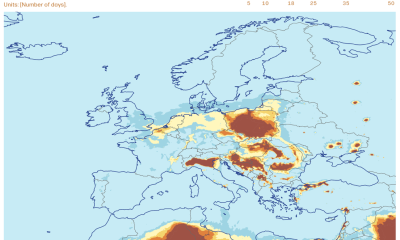
Copernicus: Europe’s air quality improves despite persistent pollution episodes

Commission approves €402 million Spanish state aid for road transport companies facing increased fuel prices

EMA recommends three new medicines and an orphan treatment for rare Rett Syndrome

Ensuring fairness and safety: €3 customs duty for low-value parcels

EU delivers emergency aid and organises a humanitarian flight in response to earthquakes in Venezuela

Kyrgyzstan launches Tamchy SFIT: a new international jurisdiction as a gateway to Eurasia

Kazakhstan’s dombyra: the two-stringed instrument that carries the soul of the steppe

Europe must double down on nuclear progress to achieve its long-term ambitions

Solana Company Partners with Kazakhstan on $6B Alatau Crypto Megacity

Astana's congress of world religions: A global platform for dialogue in an age of division

How Schuman lost Its way

Rating of American Express casino sites in the UK

PMI defends AI consultation tool as scrutiny grows over EU tobacco rules review

Kazakhstan reforms under scrutiny at Brussels Press Club round table

Japan should face up to history and contribute more to regional peace

Ambassador calls for 'speeding up' of co-operation between EU and Kazakhstan

Timur Turlov at Smart Moves Summit 2025: How chess can transform global education

Shevtsova’s case: Out-of-court sanctions dismantling trust in Ukrainian cause

The future of European transport

Trump Vs Trueman

US 'no longer' an 'unconditional ally' for Europe - MEP
-
 Bangladesh4 days ago
Bangladeshis waking up to reality of Yunus government
-
 Employment4 days ago
What the latest data reveals about labour market imbalances across Europe
-
 China4 days ago
From imitation to leadership: The production-based rise of Japan and China
-
 Air quality4 days ago
Copernicus: Europe’s air quality improves despite persistent pollution episodes