EU
#EAPM - Ursula who? German defence minister nominated for Commission top job and Health Committee on the move...


 It’s not often that the EU springs a genuine and huge surprise, but that certainly happened yesterday (Tuesday 2 July) with the Council’s nomination of Ursula von der Leyen as successor to outgoing European Commission President Jean-Claude Juncker, writes European Alliance for Personalised Medicine (EAPM) Executive Director Denis Horgan.
Currently Germany’s defence minister, the nominee (who must be approved by the European Parliament) came out of nowhere as other candidates, such as Manfred Weber and Frans Timmermans, fell by the wayside. Chancellor Angela Merkel had fought hard for first one, then the other, and abstained over Ursula von der Leyen in a vote that was otherwise unanimous. Her reason? The president-elect is from Merkel’s own CDU party and her coalition partners in the SPD were not best pleased with the selection.
Weber had been the EPP group’s Spitzenkandidat, but has lost out on everything - including a consolation prize of two-and-a-half years as president of the European Parliament, a post for which he will not stand - although he has pledged to stay on as EPP group leader.
“Macron and Orbán killed the Spitzenkandidat process,” h
As for von der Leven, she’s trilingual (German, French and English) and Belgian-born (she moved to Germany aged 13). Of particular interest to those of us in the health-care arena, she graduated from the Hanover Medical School and acquired her medical license.
After that, she worked as an assistant physician at the Women's Clinic of the Hanover Medical Schooland graduated as a Doctor of Medicine in 1991. She later taught at the same school and earned a Master of Public Health degree there in 2001.
With that background, we can only hope that she shows a little more interest in health care than her predecessor in the Berlaymont, Mr Juncker, did.
What about the other top jobs?
As this update was being finalized, Belgian Prime Minister Charles Michel is in line to head up theEuropean Council, Spanish Foreign Minister Josep Borrell will take over ashigh representative for foreign policy,and International Monetary Fund chief Christine Lagarde (France) will switch to theEuropean Central Bank.
Whatever some may think of the laborious and often fractious political trading that goes on during these five-yearly occasions, the nomination of glass-ceiling breaking women for two of the highest ranking EU posts is to be welcomed.
The Spitzenkandidaten process may have gone to the wall, but the gender balance cannot be argued with.
And so to Parliament…
Eagle-eyed observers will have noted that, with the exception of relatively small Belgium, big-hitting countries got all the top jobs - Germany, France and Spain.
Missing are, of course, the UK (for obvious Brexit-related reasons) and Italy, but Rome looks set to be offered a consolation prize as it seems likely that today (Wednesday 3), the European Parliament will chose David-Maria Sassoli(S&D group) as one of the two parliamentary presidents who will serve two-and-a-half years each during this mandate.
The other candidates are Ska Keller(Germany, Greens), Sira Rego(Spain, GUE/NGL) and Jan Zahradil(Czech Republic, ECR).
For her part, Keller has told the Council to keep its hands off what happens today in the Parliamentary vote. As the EU’s “only directly elected institution…it’s for the Parliament to decide its own president, and not the Council,” she said.
Of course, the spread of political views and the shifted, broader balance in the parliament is to be warmly welcomed - as the Greens’ leader says, they are all directly elected by the EU citizenry - and this represents what is surely the essence of politics: to finda balance between all views and priorities and thus a similar balance in the adequateallocation of resources.
ENVI committee preview
Yesterday was the first gathering of the new parliament - three seats short at 748, due to Spanish laws disbarring three Catalan members- and much of the first real work will be finalized by tonight (3 July), including confirmation of the next committee on the Environment, Public Health and Food Safety.
According to the agenda in Strasbourg, we should know the composition by 20h, but there will be no surprise if we see stalwarts (and friends of EAPM) such Peter Liese and Cristian-Silviu Bușoi back in seats that are probably still warm, given the recent weather.
Former Spanish health minister Dolors Monserrat and former Polish Prime Minister Ewa Kopaczare also expected to be among the 76-strong ENVI committee, and the smart money is on it being chaired by Pascal Canfin, who hails from Emmanuel Macron’s La Republique en Marcheand and is a member of the Renew Europe group.
A former environmental journalist, Canfinhas been an MEP since 2009 and, among other roles, has worked as director-general of the World Wide Fund for Nature.
Whoever ends up leading, and on, the influential ENVI committee, EAPM will ensure that the STEPs Groups of MEPs will continue to function in the institution, highlighting the growth and importance of personalised medicine and the need to have it embedded in Europe’s health-care systems.
Rabble-rousing on day one
Well, Nigel Farage is back in Strasbourg and, to nobody’s surprise whatsoever, he and his Brexit Party felt the need to make a bit of a scene.
Whatever you may think of Ludwig van Beethoven’s Ode to Joy, the EU ‘anthem’, turning one’s back on the musicians playing it and the rest of your hemicycle colleagues during its recital is schoolboy playground behaviour, very rude and, ultimately, shockingly ‘un-British’.
Lest we forget, Farage et al represent the UK, and not merely their own interests, although it could be argued that Britain turned its back on the EU in the referendum - well, 52% of it.
Regardless, outgoing President Antonio Tajani was spitting feathers after the incident and said: “You stand for the anthem of another country.” That’s probably not the best comment he could have made given the views of Farage’s lot regarding EU federalism, but we take Tajani’s point.
Meanwhile, as the UK hurtles towards a regrettable no-deal departure, London has decided to enlist help from a private company to train civil servants in diplomatic relations with the EU.
According to the government’s contract tender, what’s desired is a private firm hired to give a monthly day of training on how the EU works and how to influence it.
Three years too late, anyone?
Hopefully, whichever company is finally chosen will resist the temptation to bring the likes of David Davis on board as consultants.
It all seems a long time ago now, but many readers will recall that Davis served as Secretary of State for Exiting the European Union which - to understate the case somewhat - is not viewed by anyone anywhere as his finest posting.
Share this article:
EU Reporter publishes articles from a variety of outside sources which express a wide range of viewpoints. The positions taken in these articles are not necessarily those of EU Reporter. Please see EU Reporter’s full Terms and Conditions of publication for more information EU Reporter embraces artificial intelligence as a tool to enhance journalistic quality, efficiency, and accessibility, while maintaining strict human editorial oversight, ethical standards, and transparency in all AI-assisted content. Please see EU Reporter’s full A.I. Policy for more information.




Security realignment inevitable in Middle East after Netanyahu-Trump's war

Better enforcement of passenger rights: New EU agreement strengthens protection across all modes of transport

EU deploys emergency assistance to Venezuela following earthquakes

EU steps up support for Ukraine's defence, recovery and reconstruction at the Ukraine Recovery Conference 2026

Dismantling 'high walls' for a shared European-Asian future

Bangladeshis waking up to reality of Yunus government

Copernicus: Europe’s air quality improves despite persistent pollution episodes

What the latest data reveals about labour market imbalances across Europe

Europe must double down on nuclear progress to achieve its long-term ambitions

Solana Company Partners with Kazakhstan on $6B Alatau Crypto Megacity

Astana's congress of world religions: A global platform for dialogue in an age of division

How Schuman lost Its way

Rating of American Express casino sites in the UK

PMI defends AI consultation tool as scrutiny grows over EU tobacco rules review

Civil society from across the EU gathers in Cork to reinforce Europe’s sustainability agenda

The Iran war changed Pakistan's strategic value, not its political trajectory

Kazakhstan reforms under scrutiny at Brussels Press Club round table

Japan should face up to history and contribute more to regional peace

Ambassador calls for 'speeding up' of co-operation between EU and Kazakhstan

Timur Turlov at Smart Moves Summit 2025: How chess can transform global education

Shevtsova’s case: Out-of-court sanctions dismantling trust in Ukrainian cause

The future of European transport

Trump Vs Trueman

US 'no longer' an 'unconditional ally' for Europe - MEP
-
 Middle East5 days ago
Security realignment inevitable in Middle East after Netanyahu-Trump's war
-
 Transport5 days ago
Better enforcement of passenger rights: New EU agreement strengthens protection across all modes of transport
-
 Earthquake5 days ago
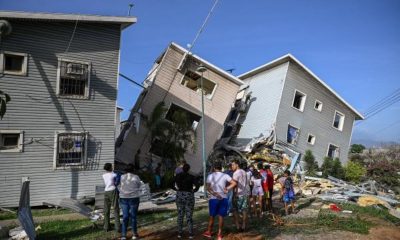
EU deploys emergency assistance to Venezuela following earthquakes
-
 Ukraine5 days ago
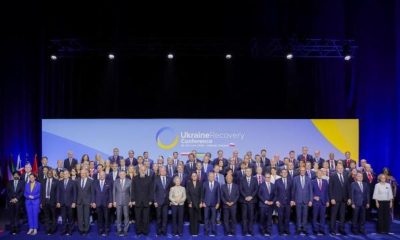
EU steps up support for Ukraine's defence, recovery and reconstruction at the Ukraine Recovery Conference 2026