
Last night, on the advice of my doctor, I went into hospital for some routine tests as I’m still experiencing coronavirus symptoms. I’m in good spirits and keeping in touch with my team, as we work together to fight this virus and keep everyone safe.
coronavirus
#Coronavirus - Boris Johnson moved to intensive care as symptoms worsen
SHARE:


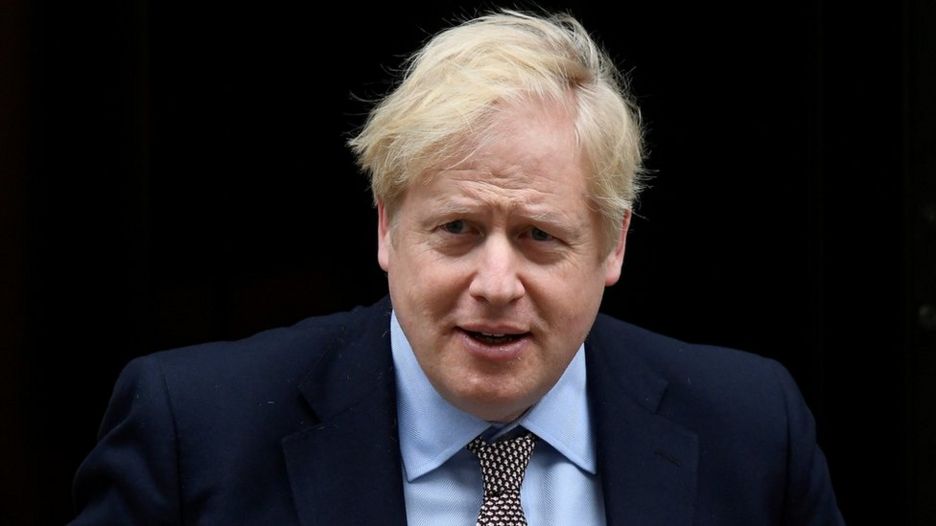
Prime Minister Boris Johnson has been moved to intensive care in hospital after his coronavirus symptoms "worsened", Downing Street has said, writes the BBC.
A spokesman said he was moved on the advice of his medical team and was receiving "excellent care".
Johnson has asked Foreign Secretary Dominic Raab to deputize "where necessary", the spokesman added.
The prime minister, 55, was admitted to hospital in London with "persistent symptoms" on Sunday evening.
The Queen has been kept informed about Mr Johnson's health by No 10, according to Buckingham Palace.
BBC political correspondent Chris Mason said the prime minister was given oxygen late on Monday afternoon, before being taken to intensive care.
A No 10 statement read: "The prime minister has been under the care of doctors at St Thomas' Hospital, in London, after being admitted with persistent symptoms of coronavirus.
"Over the course of [Monday] afternoon, the condition of the prime minister has worsened and, on the advice of his medical team, he has been moved to the intensive care unit at the hospital."
It continued: "The PM is receiving excellent care, and thanks all NHS staff for their hard work and dedication."
- Laura Kuenssberg: Power is no protection from harm
- How are coronavirus patients treated in intensive care?
- When do people go to hospital with coronavirus?
Raab said there was an "incredibly strong team spirit" behind the prime minister.
He added that he and his colleagues were making sure they implemented plans Mr Johnson had instructed them to deliver "as soon as possible".
"That's the way we'll bring the whole country through the coronavirus challenge," he said.
Labour leader Sir Keir Starmer described it as "terribly sad news".
"All the country's thoughts are with the prime minister and his family during this incredibly difficult time," he added.
Johnson was initially taken to hospital for routine tests after testing positive for coronavirus 10 days ago. His symptoms included a high temperature and a cough.
Earlier todayy (6 April), he tweeted that he was in "good spirits".
Boris Johnson #StayHomeSaveLives
✔@BorisJohnson

After very, very little information was shared today, the prime minister was taken into intensive care at around 19:00 BST.
We've been told he is still conscious, but his condition has worsened over the course of the afternoon.
And he has been moved to intensive care as a precaution in case he needs ventilation to get through this illness.
The statement from Downing Street makes clear he is receiving excellent care and he wants to thank all of the NHS staff.
But something important has changed, and he has felt it necessary to ask his foreign secretary to deputise for him where needs be.
That is a completely different message from what we have heard over the past 18 hours or so, where it was continually "the prime minister is in touch" and "he is in charge" - almost like everything is business as usual.
But clearly being in intensive care changes everything.
Last month, the prime minister's spokesman said if Johnson was unwell and unable to work, Raab, as the first secretary of state, would stand in.
It comes as the number of coronavirus hospital deaths in the UK reached 5,373 - an increase of 439 in a day.
The Department of Health and Social Care said there were now 51,608 confirmed coronavirus cases.
Prime Minister Johnson received messages of support from across Europe:
Michel Barnier, the EU's Chief Negotiator on the UK's future relationship with the EU
Wishing @BorisJohnson all the best and a speedy recovery. My thoughts are with you and your family.
— Michel Barnier (@MichelBarnier) April 6, 2020
President of the European Commision, Ursula von der Leyen
My thoughts are with Prime Minister @BorisJohnson and his family this evening. I wish him a speedy and full recovery.
— Ursula von der Leyen (@vonderleyen) April 6, 2020
French President Emmanuel Macron
I send all my support to Boris Johnson, to his family and to the British people at this difficult moment. I wish him a speedy recovery at this testing time.
— Emmanuel Macron (@EmmanuelMacron) April 6, 2020
Dutch Minister President Marc Rutte
On behalf of the Dutch cabinet, I wish @BorisJohnson, his family and the British people lots of strength during this difficult time. I hope to be able to speak to him soon in good health.
— Mark Rutte (@MinPres) April 6, 2020
Share this article:

EU Reporter publishes articles from a variety of outside sources which express a wide range of viewpoints. The positions taken in these articles are not necessarily those of EU Reporter. Please see EU Reporter’s full Terms and Conditions of publication for more information EU Reporter embraces artificial intelligence as a tool to enhance journalistic quality, efficiency, and accessibility, while maintaining strict human editorial oversight, ethical standards, and transparency in all AI-assisted content. Please see EU Reporter’s full A.I. Policy for more information.






Aviation/airlines4 days ago
Setting a new benchmark in premium travel

South Caucasus1 day ago
The security environment of the South Caucasus amid changing geopolitical realities

Intellectual Property Rights4 days ago
Survey on an EU Blueprint for intellectual property licensing and spinoff creation

Labour4 days ago
Burnham as PM? 'Wait and see'

Kazakhstan4 days ago
Kazakhstan: Central Election Committee reviews the results of the nomination of candidates for the deputies of Kurultai
South Caucasus9 hours ago
The South Caucasus at a historic turning point: Between lasting peace and renewed confrontation

EU law4 days ago
Rule of law report strengthens EU democracy and fundamental rights

Recycling4 days ago
Ban on destruction of unsold clothes and shoes enters into application

Japan1 hour ago
JoinCare Explores Scientific Exchange During Visit toJapan’s National Institute of Infectious Diseases

Artificial intelligence7 hours ago
New episode – DGT podcast: Languages and Technology

European Commission7 hours ago
Become a European Commission trainee – applications are now open

Banking8 hours ago
Commission outlines measures to strengthen Europe's banking sector and support growth

China8 hours ago
British political shifts and the future of UK-China ties
South Caucasus9 hours ago
The South Caucasus at a historic turning point: Between lasting peace and renewed confrontation

EU Presidency9 hours ago
As Ireland chairs the EU Presidency, what impact has over fifty years of EU membership had on Ireland

Digital economy21 hours ago
The Digital Markets Act Is Hurting Europeans. It’s Time to Put Progress, Free Markets, and Competition First

Kazakhstan3 months ago
Kazakhstan reforms under scrutiny at Brussels Press Club round table

Japan7 months ago
Japan should face up to history and contribute more to regional peace

Kazakhstan8 months ago
Ambassador calls for 'speeding up' of co-operation between EU and Kazakhstan

World12 months ago
Timur Turlov at Smart Moves Summit 2025: How chess can transform global education

Ukraine1 year ago
Shevtsova’s case: Out-of-court sanctions dismantling trust in Ukrainian cause

Transport1 year ago
The future of European transport

Politics1 year ago
Trump Vs Trueman

US1 year ago
US 'no longer' an 'unconditional ally' for Europe - MEP
-
 Aviation/airlines4 days ago
Setting a new benchmark in premium travel
-
 South Caucasus1 day ago
The security environment of the South Caucasus amid changing geopolitical realities
-
 Intellectual Property Rights4 days ago
Survey on an EU Blueprint for intellectual property licensing and spinoff creation
-
 Labour4 days ago
Burnham as PM? 'Wait and see'