coronavirus
France's COVID-19 hospitalizations inch up before end of lockdown


The three-day steady rise in hospitalisations is also a sequence not seen since mid-November.
Patients in intensive care - the most important measure of a health system’s ability to deal with the pandemic - went up by 35 to 2,906, increasing for the second straight day after a continuous decline since 17 November.
That figure is still within the target level of 2,500 to 3,000 the government had set to decide the end of the lockdown that was put in place on 30 October and was lifted on Tuesday (14 December).
But because the number of daily new infections has failed to fall below the 5,000 threshold - another official target - the government has opted for a less extensive loosening of restrictive measures than initially planned.
People won’t have to show proof they can be outside of their homes when the curfew is not enforced but cinemas, theaters will not reopen on Tuesday as was flagged by authorities when they detailed their unwinding of lockdown plan last month.
Health authorities reported 3,063 new COVID-19 infections over the past 24 hours, sharply down from Sunday’s 11,533, but case numbers generally dip on Mondays as there are fewer tests conducted on Sundays.
The seven-day moving average of new infections, averaging out weekly data reporting irregularities, stood at 12,001, declining for the first time in 10 days, but still higher than the 10,348 low hit 10 days ago.
The number of people in France who have died from COVID-19 infections rose by 371 to 58,282, up from 150 on Sunday (13 December). The cumulative number of cases in France now totals 2,379,915, the fifth highest in the world.
Share this article:
EU Reporter publishes articles from a variety of outside sources which express a wide range of viewpoints. The positions taken in these articles are not necessarily those of EU Reporter. Please see EU Reporter’s full Terms and Conditions of publication for more information EU Reporter embraces artificial intelligence as a tool to enhance journalistic quality, efficiency, and accessibility, while maintaining strict human editorial oversight, ethical standards, and transparency in all AI-assisted content. Please see EU Reporter’s full A.I. Policy for more information.






EU and South Africa kick off intergovernmental dialogue on Clean Trade and Investment Partnership

Why young jobseekers struggle to find roles abroad that fit their expertise

Seveso - 50 years on: EU strengthens its commitment to industrial safety in a changing landscape of risk

Commission opens formal investigation into possible gun jumping in XXXLutz's acquisition of Porta

Shared commitment to advance EOSC through new EOSC Nodes and EOSC projects

Farmers, fair markets and consumers: new report highlights the role of EU competition rules in agriculture

Falling in love with the Maldives

ECR MEPs question the European Commission on cardiovascular health and diet promoting the Mediterranean diet as an alternative to ultra-processed foods as key to tackling obesity

STATEMENT by the Ministry of Foreign Affairs of the Republic of Kazakhstan

Kazakhstan seeks regional AI leadership as economic partnership with China enters new phase

Starmer’s problem? 'He is not a politician'

Why a Brussels–Nicosia–Eastern Mediterranean strategic affairs platform would benefit the European Union

Albania's Vlora airport standoff tests investor confidence as EU accession clock ticks
ECR MEPs question the European Commission on cardiovascular health and diet promoting the Mediterranean diet as an alternative to ultra-processed foods as key to tackling obesity

Kazakhstan's fixed capital investment tops 9.5 trillion tenge in H1 2026

Commission adopts simpler rules for EU agri-food promotion policy

Kazakhstan reforms under scrutiny at Brussels Press Club round table

Japan should face up to history and contribute more to regional peace

Ambassador calls for 'speeding up' of co-operation between EU and Kazakhstan

Timur Turlov at Smart Moves Summit 2025: How chess can transform global education

Shevtsova’s case: Out-of-court sanctions dismantling trust in Ukrainian cause

The future of European transport

Trump Vs Trueman

US 'no longer' an 'unconditional ally' for Europe - MEP
-
 South Africa5 days ago
EU and South Africa kick off intergovernmental dialogue on Clean Trade and Investment Partnership
-
 Employment5 days ago
Why young jobseekers struggle to find roles abroad that fit their expertise
-
 Disasters5 days ago
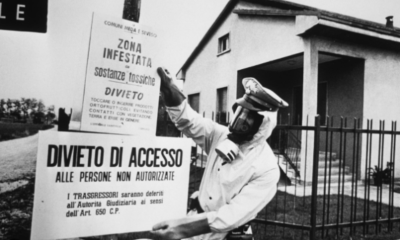
Seveso - 50 years on: EU strengthens its commitment to industrial safety in a changing landscape of risk
-
 European Commission5 days ago
Commission opens formal investigation into possible gun jumping in XXXLutz's acquisition of Porta