Health
The first six EU reference laboratories for public health are now operational


Since 1 January 2025, the first six EU reference laboratories (EURLs) for public health have been operational and will now carry out activities for the next seven years. The EURLs, which bring together consortia of scientific expertise from across the EU, contribute to improving EU preparedness and ensuring a swift detection and response in case of outbreaks. They will thus strengthen the EU's defences in the face of serious cross-border health threats. The six EURLs are covering the following areas: Antimicrobial resistance (AMR) in bacteria Vector-borne viral pathogens Emerging, rodent-borne and zoonotic viral pathogens High-risk, emerging and zoonotic bacterial pathogens Legionella Diphtheria and pertussis The EURLs will support national public health laboratories by ensuring data comparability and capacity strengthening on laboratory methods at the EU level.
This includes efforts to align on diagnostics and testing for surveillance, notification and reporting of diseases. These six EURLs were designated for seven years in March 2024, and are funded under the EU4Health programme. Background information The Regulation 2022/2371 on Serious Cross-Border Threats to Health introduced a legal mandate for the designation and implementation of European reference laboratories in public health. In March 2024, the European Commission adopted an Implementing Regulation that designated the first six EURLs for public health. A further three EURLs were designated by an Implementing Regulation in November 2024. A network of EURLs for public health will be operated and coordinated by the European Centre for Disease Prevention and Control (ECDC).
Useful links
EU reference laboratories for public health
Health security and infectious diseases
Share this article:
EU Reporter publishes articles from a variety of outside sources which express a wide range of viewpoints. The positions taken in these articles are not necessarily those of EU Reporter. Please see EU Reporter’s full Terms and Conditions of publication for more information EU Reporter embraces artificial intelligence as a tool to enhance journalistic quality, efficiency, and accessibility, while maintaining strict human editorial oversight, ethical standards, and transparency in all AI-assisted content. Please see EU Reporter’s full A.I. Policy for more information.





EU and South Africa kick off intergovernmental dialogue on Clean Trade and Investment Partnership

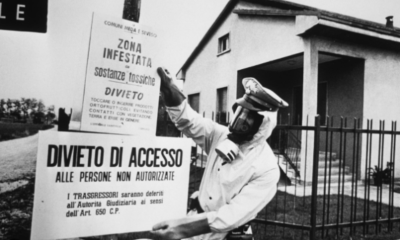
Seveso - 50 years on: EU strengthens its commitment to industrial safety in a changing landscape of risk

Why young jobseekers struggle to find roles abroad that fit their expertise

Commission opens formal investigation into possible gun jumping in XXXLutz's acquisition of Porta

Shared commitment to advance EOSC through new EOSC Nodes and EOSC projects

Falling in love with the Maldives

Farmers, fair markets and consumers: new report highlights the role of EU competition rules in agriculture

ECR MEPs question the European Commission on cardiovascular health and diet promoting the Mediterranean diet as an alternative to ultra-processed foods as key to tackling obesity

STATEMENT by the Ministry of Foreign Affairs of the Republic of Kazakhstan

Kazakhstan seeks regional AI leadership as economic partnership with China enters new phase

Starmer’s problem? 'He is not a politician'

Why a Brussels–Nicosia–Eastern Mediterranean strategic affairs platform would benefit the European Union

Albania's Vlora airport standoff tests investor confidence as EU accession clock ticks
ECR MEPs question the European Commission on cardiovascular health and diet promoting the Mediterranean diet as an alternative to ultra-processed foods as key to tackling obesity

Kazakhstan's fixed capital investment tops 9.5 trillion tenge in H1 2026

Commission adopts simpler rules for EU agri-food promotion policy

Kazakhstan reforms under scrutiny at Brussels Press Club round table

Japan should face up to history and contribute more to regional peace

Ambassador calls for 'speeding up' of co-operation between EU and Kazakhstan

Timur Turlov at Smart Moves Summit 2025: How chess can transform global education

Shevtsova’s case: Out-of-court sanctions dismantling trust in Ukrainian cause

The future of European transport

Trump Vs Trueman

US 'no longer' an 'unconditional ally' for Europe - MEP
-
 South Africa5 days ago
EU and South Africa kick off intergovernmental dialogue on Clean Trade and Investment Partnership
-
 Disasters5 days ago
Seveso - 50 years on: EU strengthens its commitment to industrial safety in a changing landscape of risk
-
 Employment5 days ago
Why young jobseekers struggle to find roles abroad that fit their expertise
-
 European Commission5 days ago
Commission opens formal investigation into possible gun jumping in XXXLutz's acquisition of Porta