Cancer
Screening saves lives: Pink October


"When you receive an invitation to a breast cancer screening, trust it. Don’t be scared to follow it up," says Silvia Deandrea, director of the Lombardy region breast cancer screening programme in Pavia, Italy. “It’s most likely your results won’t be serious.”
Under her many job hats, Silvia runs a multidisciplinary team of nurses, community health nurses, statisticians and health professionals that coordinate clinical cancer care in local hospitals. “There’s no doubt we see that screening significantly reduces mortality, as well as the need for invasive interventions,” says Silvia.
The benefits of early detection of breast cancer through screening are highlighted in this year’s ongoing Breast Cancer Awareness Month. It’s an opportunity to reconfirm a global commitment to equitable access to care and improved survival for all. Screening remains a year-round concern: currently, breast cancer is the most commonly diagnosed cancer among women worldwide.
Under its Europe’s Beating Cancer Plan, the EU launched a new push in 2022 to increase the number of screenings, covering more target groups and more cancers. For breast cancer, the Commission will support EU countries to increase screenings to 90% of those concerned by the end of this year.
EU research has shown that the uptake of screening in EU countries is uneven, with some countries tending to show lower participation. “Financial and economic issues play a factor in this,” says Silvia. “The cultural context also needs to be taken into consideration.”
Public breast cancer screening programmes like Silvia’s in Pavia are increasingly widespread. “Public health officers set up these programmes based on EU guidelines. For us they are the Bible to which we refer. They are based on the best available evidence and provide a single place for standards.”
If you would like to arrange a screening, talk to your doctor or call the local breast screening service to ask for an appointment.
For more information
Cancer screening, diagnosis and care
Share this article:
EU Reporter publishes articles from a variety of outside sources which express a wide range of viewpoints. The positions taken in these articles are not necessarily those of EU Reporter. Please see EU Reporter’s full Terms and Conditions of publication for more information EU Reporter embraces artificial intelligence as a tool to enhance journalistic quality, efficiency, and accessibility, while maintaining strict human editorial oversight, ethical standards, and transparency in all AI-assisted content. Please see EU Reporter’s full A.I. Policy for more information.



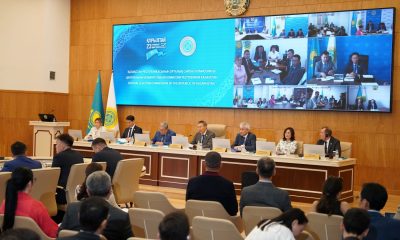
Kazakhstan: Central Election Committee reviews the results of the nomination of candidates for the deputies of Kurultai
The South Caucasus at a historic turning point: Between lasting peace and renewed confrontation

Setting a new benchmark in premium travel

The security environment of the South Caucasus amid changing geopolitical realities

Survey on an EU Blueprint for intellectual property licensing and spinoff creation

Burnham as PM? 'Wait and see'

Rule of law report strengthens EU democracy and fundamental rights

Ban on destruction of unsold clothes and shoes enters into application

JoinCare Explores Scientific Exchange During Visit toJapan’s National Institute of Infectious Diseases

New episode – DGT podcast: Languages and Technology

Become a European Commission trainee – applications are now open

Commission outlines measures to strengthen Europe's banking sector and support growth

British political shifts and the future of UK-China ties
The South Caucasus at a historic turning point: Between lasting peace and renewed confrontation

As Ireland chairs the EU Presidency, what impact has over fifty years of EU membership had on Ireland

The Digital Markets Act Is Hurting Europeans. It’s Time to Put Progress, Free Markets, and Competition First

Kazakhstan reforms under scrutiny at Brussels Press Club round table

Japan should face up to history and contribute more to regional peace

Ambassador calls for 'speeding up' of co-operation between EU and Kazakhstan

Timur Turlov at Smart Moves Summit 2025: How chess can transform global education

Shevtsova’s case: Out-of-court sanctions dismantling trust in Ukrainian cause

The future of European transport

Trump Vs Trueman

US 'no longer' an 'unconditional ally' for Europe - MEP
-
 Kazakhstan4 days ago
Kazakhstan: Central Election Committee reviews the results of the nomination of candidates for the deputies of Kurultai
-
South Caucasus11 hours ago
The South Caucasus at a historic turning point: Between lasting peace and renewed confrontation
-
 Aviation/airlines4 days ago
Setting a new benchmark in premium travel
-
 South Caucasus1 day ago
The security environment of the South Caucasus amid changing geopolitical realities