COVID-19
Belgian court finds AstraZeneca should have used UK production to meet EU contract


Today (18 June) Belgium’s Court of First Instance published its judgement on the case brought against AstraZeneca (AZ) by the European Commission and its member states for interim measures. The court found that AZ failed to meet “best reasonable efforts” outlined in its advance purchase agreement (APA) with the EU, importantly the court found that the Oxford production facility had been monopolized to meet UK commitments despite explicit references to it in the APA.
AZ’s actions triggered the European Union to enact very carefully circumscribed trade restrictions that were targeted at addressing this problem.
AstraZeneca will need to deliver 80.2 million doses by the end of September or incur a cost of €10 for every dose it fails to deliver. This is a long way from the European Commission’s request for 120 million vaccine doses by the end of June 2021, and a total of 300 million doses by the end of September 2021. Our reading of the judgement suggests that with the acknowledgement that the UK production should be used to meet the EU’s requirements and other production in other non-EU countries coming online these doses are probably now within reach.
The decision has been welcomed by AstraZeneca and the European Commission, but costs were allocated on a 7:3 basis with AZ covering 70%.
In its press release AstraZeneca General Counsel, Jeffrey Pott, said: “We are pleased with the Court’s order. AstraZeneca has fully complied with its agreement with the European Commission and we will continue to focus on the urgent task of supplying an effective vaccine.”
However, in its statement the European Commission welcomes the judges finding that AstraZeneca committed a serious breach (‘faute lourde') of its contractual obligations with the EU.
The President of the European Commission, Ursula von der Leyen said: “This decision confirms the position of the Commission: AstraZeneca did not live up to the commitments it made in the contract.” The Commission also says that the Commission’s “sound legal basis” - that some had brought into question - had been vindicated.
In their press release AstraZeneca stated: “The Court found that the European Commission has no exclusivity or right of priority over all other contracting parties.” However, this wasn’t at issue, the court called for proportionality when there are conflicting contracts.
Share this article:
EU Reporter publishes articles from a variety of outside sources which express a wide range of viewpoints. The positions taken in these articles are not necessarily those of EU Reporter. Please see EU Reporter’s full Terms and Conditions of publication for more information EU Reporter embraces artificial intelligence as a tool to enhance journalistic quality, efficiency, and accessibility, while maintaining strict human editorial oversight, ethical standards, and transparency in all AI-assisted content. Please see EU Reporter’s full A.I. Policy for more information.



Burnham as PM? 'Wait and see'

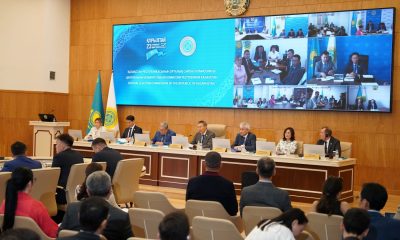
Kazakhstan: Central Election Committee reviews the results of the nomination of candidates for the deputies of Kurultai
The South Caucasus at a historic turning point: Between lasting peace and renewed confrontation

Setting a new benchmark in premium travel

The security environment of the South Caucasus amid changing geopolitical realities

Rule of law report strengthens EU democracy and fundamental rights

Survey on an EU Blueprint for intellectual property licensing and spinoff creation

Ban on destruction of unsold clothes and shoes enters into application

JoinCare Explores Scientific Exchange During Visit toJapan’s National Institute of Infectious Diseases

New episode – DGT podcast: Languages and Technology

Become a European Commission trainee – applications are now open

Commission outlines measures to strengthen Europe's banking sector and support growth

British political shifts and the future of UK-China ties
The South Caucasus at a historic turning point: Between lasting peace and renewed confrontation

As Ireland chairs the EU Presidency, what impact has over fifty years of EU membership had on Ireland

The Digital Markets Act Is Hurting Europeans. It’s Time to Put Progress, Free Markets, and Competition First

Kazakhstan reforms under scrutiny at Brussels Press Club round table

Japan should face up to history and contribute more to regional peace

Ambassador calls for 'speeding up' of co-operation between EU and Kazakhstan

Timur Turlov at Smart Moves Summit 2025: How chess can transform global education

Shevtsova’s case: Out-of-court sanctions dismantling trust in Ukrainian cause

The future of European transport

Trump Vs Trueman

US 'no longer' an 'unconditional ally' for Europe - MEP
-
 Labour5 days ago
Burnham as PM? 'Wait and see'
-
 Kazakhstan5 days ago
Kazakhstan: Central Election Committee reviews the results of the nomination of candidates for the deputies of Kurultai
-
South Caucasus23 hours ago
The South Caucasus at a historic turning point: Between lasting peace and renewed confrontation
-
 Aviation/airlines5 days ago
Setting a new benchmark in premium travel