European Alliance for Personalised Medicine
EAPM: The blood is the life – key work on blood cancers needed with respect to the upcoming European Beating Cancer Plan

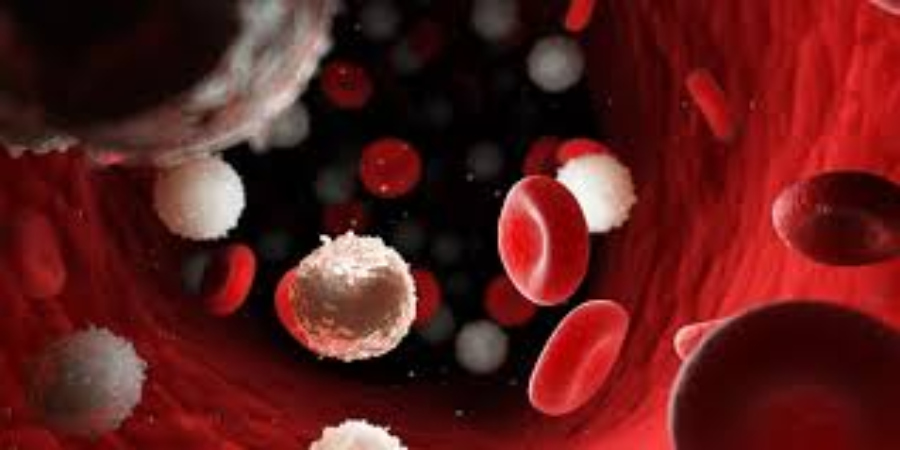
Good afternoon, and welcome to the second update of the week from the European Alliance for Personalised Medicine (EAPM). With the upcoming Europe’s Beating Cancer Plan (scheduled for its formal launch on 3 or 4 February, depending on whether DG SANTE or the Commission are correct in their predictions), health discussions will inevitably turn to how the noble aim of the campaign is likely to be achieved, and EAPM Executive Director Dr. Denis Horgan turns his particular attention to cancers of the blood.
Beating blood cancers
Over the years, the EAPM has worked extensively with its members, particularly the European Haematology Association as well as the relevant patient organizations focus on the need for continual work towards reducing and combating the prevalence of blood cancer Such cancers (hematological malignancies (HMs) to give them their correct moniker) are frequently overlooked and, following recent discussions, it is understood that that may not be as prominently covered as they should be.
HMs are a heterogeneous group of diseases of diverse incidence, and prognosis, and comparison of HM incidence across regions and over time is complicated by the existence of different disease classification systems. Obviously, incidence is one of the biggest and best measures of burden in a population, serving as a vital guide to the allocation of resources.
Statistics suggest that health-care costs for each patient with blood cancer reach twice the figure compared to average cancer costs. The total cost of blood disorders to the European economy was in the region of €23 billion in 2012 and is only increasing.
Blood cancers are in the top ten of the most common forms of cancer and are responsible for approximately 100,000 deaths in Europe every year. Some of the most critical cancers are Multiple Myeloma, Acute Myeloid Leukemia, Acute Lymphoblastic Leukemia, Chronic Lymphocytic Leukemia, Non-Hodgkin’s Lymphoma, Myelodysplastic Syndrome, and Pediatric Hematological Malignancies.
These cancers present a serious medical and financial challenge and account for abround 40% of cancer cases in children and one third of overall cancer deaths. However, it has been suggested that the upcoming Europe’s Beating Cancer Plan is not as yet paying as much attention to blood cancers as it should.
EAPM and its key stakeholders believe that this is a gap that should be urgently addressed in the upcoming EU Beating Cancer Plan, as blood disorders are not only a burden for patients, but also for society as a whole, with around 80 million people having either malignant or non-malignant haematological disorders. We need to urgently step up how Europe tackles this and the European Beating Cancer Plan can support this common EU effort.
Transforming lung cancer care
Europe's approach to lung cancer (LC) needs a transformation in national care pathways as well as local and country policies. LC care receives high priority within only a few national health strategies. But it is largely up to the member states – incentivized by the European Union – to recognize that reorganization and reallocation of health-care resources are justified by the current massive costs to individuals and to society of the growing incidence of this type of cancer.
Improvements in outcomes are within reach but depend heavily on:
-
A more uniform approach to national risk-based screening programmes to identify patients early and decrease the rate of patients diagnosed in advanced/metastatic stages;
-
early access to comprehensive genomic profiling;
-
the identification of most appropriate treatment pathways based on the patient’s tumour genetics through multi-disciplinary molecular tumour boards;
-
fast and broad access to most beneficial treatment options;
-
adequate monitoring of patients including patient reported outcomes that will allow for targeted interventions, and;
-
the integration of patient data to gain further insights for research, validity of clinical treatment pathways and cost-efficiency of comprehensive diagnostics and targeted medicines.
These are key issues that should be taken into account as highlighted by the multistakeholder engagement that EAPM has undertaken.
Stop finger-pointing over vaccination and get to work, says Commission
“We are racing against time, not against each other,” Health Commissioner Stella Kyriakides said on Tuesday (19 January). “On the contrary, it is a race that we in the EU are running together, as a team and in unity. As a team, it is important to set clear and ambitious targets.”
And the Commission has set vaccination goals for March and the summer, and backed a bare-bones vaccine certificate. Vice President Margaritis Schinas left the door open to using them later for travel.
Leaders consider travel bans and faster vaccine rollout
Ursula von der Leyen and European Council President Charles Michel concluded a virtual meeting of EU leaders on Thursday (21 January). European leaders, struggling with a slow vaccination effort and fearful that highly contagious coronavirus variants could rapidly overwhelm their medical systems, moved to begin reimposing border restrictions and to speed the distribution of vaccines — even those not yet approved for use.
“We are increasingly concerned about different variants of the virus,” von der Leyen told reporters after a virtual summit of European Union leaders, saying that although the bloc intends to keep borders open for trade, it may restrict nonessential travel. The leaders held back from endorsing a specific plan for borders.
But Germany — which as the richest and most populous EU member often drives its discussions — proposed strict, temporary bans on travel to the EU from countries where mutated forms of the coronavirus are already prevalent, including Britain. The proposal would restrict EU citizens from returning to their home countries if they are currently in an affected country, and would therefore be more stringent than previous border measures.
The coronavirus situation is deteriorating so badly in some member states that EU leaders have agreed to create a new “dark red” zone indicating the virus is spreading at a “very high level”, Commission President Ursula von der Leyen announced Thursday night (21 January). People traveling from a dark red to another zone could be required to get a test before leaving and might need to quarantine upon arrival.
France to impose COVID testing on EU travellers
France’s President Emmanuel Macron has announced new coronavirus rules for travellers from the EU, with the country requiring European visitors as well as those from outside the bloc to have a negative Covid-19 test performed less than three days before they enter the country.
The new restrictive measures, to come into effect from Sunday morning (24 January), were announced by the Elysée Palace late on Thursday and follow an EU summit by videoconference at which leaders discussed measures to control the pandemic with continuing vaccination programmes and controls on free movement. Until now, Macron had sought to maintain freedom of movement within Europe, but pressure on hospitals and the spread of new, more infectious variants of the virus have convinced him of the need to extend testing to almost all those crossing national borders.
Hungary first in EU to approve Russian vaccine
Hungary has become the first country in the European Union to give preliminary approval to the Russian coronavirus vaccine, Sputnik V. On Thursday, Prime Minister Viktor Orban's chief of staff confirmed both the Russian jab and the Oxford-AstraZeneca vaccine had been given the green light by the health authorities. Foreign Minister Peter Szijjarto is travelling to Moscow for further talks, where he is expected to discuss a shipment and distribution deal.
And that is all from EAPM for this week – have an excellent, safe weekend, stay well, and see you next week.
Share this article:
EU Reporter publishes articles from a variety of outside sources which express a wide range of viewpoints. The positions taken in these articles are not necessarily those of EU Reporter. Please see EU Reporter’s full Terms and Conditions of publication for more information EU Reporter embraces artificial intelligence as a tool to enhance journalistic quality, efficiency, and accessibility, while maintaining strict human editorial oversight, ethical standards, and transparency in all AI-assisted content. Please see EU Reporter’s full A.I. Policy for more information.



European Inventor Award 2026 winners announced: Honouring the innovators shaping tomorrow

EU delivers emergency aid and organises a humanitarian flight in response to earthquakes in Venezuela

President von der Leyen travels to Azerbaijan and Armenia

High Representative Kallas with Commissioners Kos and Brunner in Türkiye to advance bilateral cooperation

Commission approves new geographical indication from Slovakia

Open letter to president of the European Commission on the Schengen Entry/Exit System (EES)

Region Trade Bank strengthens international governance as Iraq's banking sector deepens global engagement

The Iran war changed Pakistan's strategic value, not its political trajectory

Kyrgyzstan launches Tamchy SFIT: A new international jurisdiction as a gateway to Eurasia

Kazakhstan’s dombyra: The two-stringed instrument that carries the soul of the steppe

How Schuman lost Its way

Rating of American Express casino sites in the UK

PMI defends AI consultation tool as scrutiny grows over EU tobacco rules review

Civil society from across the EU gathers in Cork to reinforce Europe’s sustainability agenda
The Iran war changed Pakistan's strategic value, not its political trajectory

Democracy cannot be selective: Why Europe must apply the same standards abroad that it demands at home

Kazakhstan reforms under scrutiny at Brussels Press Club round table

Japan should face up to history and contribute more to regional peace

Ambassador calls for 'speeding up' of co-operation between EU and Kazakhstan

Timur Turlov at Smart Moves Summit 2025: How chess can transform global education

Shevtsova’s case: Out-of-court sanctions dismantling trust in Ukrainian cause

The future of European transport

Trump Vs Trueman

US 'no longer' an 'unconditional ally' for Europe - MEP
-
 Science3 days ago
European Inventor Award 2026 winners announced: Honouring the innovators shaping tomorrow
-
 Venezuela4 days ago
EU delivers emergency aid and organises a humanitarian flight in response to earthquakes in Venezuela
-
 Armenia4 days ago
President von der Leyen travels to Azerbaijan and Armenia
-
 European Commission4 days ago
High Representative Kallas with Commissioners Kos and Brunner in Türkiye to advance bilateral cooperation