EU
Social investment: Key to growth, jobs and social justice in EU


The European Economic and Social Committee (EESC) welcomes the recent 'paradigm shift' proposed by the Commission with its proposal of a social investment package. The shift consists of no longer regarding social investment purely as a cost, but rather as an investment in the future. This approach would reduce pressure on public finances, would be comprehensive and would complement EU fiscal union.
Well-planned, effective and efficient social investment in the welfare state not only brings social progress, but is also worthwhile in economic terms. The EESC strongly agrees that, particularly in times of crisis, the consistent and successful implementation of a broad-based social investment package is absolutely essential to counter the rising poverty in Europe.
Wolfgang Greif, rapporteur for the EESC Opinion on The impact of social investment on employment and public budgets, highlighted the need for a proper macro-economic framework to enhance the potential of social investment and to develop suitable tools to measure its positive economic and non-economic effects. Greif concluded that "the Commission should put forward a far more ambitious and long-term roadmap, running until at least 2020, to implement the social investment package and to quantify its positive effects on all sectors".
Failure to invest in the social sphere comes at a cost, and the long-term cost of inaction is actually much higher. In this opinion, the EESC showcases a number of examples of social investment. However, without secure financing raised through public and private investment alike, this project will not succeed.
Although social investment entails short-term costs, in the medium to long term it brings gains for society in terms of welfare and also generates savings. The benefits of social investment for employment and for national budgets are indisputable, but this approach also requires abandoning the one-sided austerity principle.
Share this article:
EU Reporter publishes articles from a variety of outside sources which express a wide range of viewpoints. The positions taken in these articles are not necessarily those of EU Reporter. Please see EU Reporter’s full Terms and Conditions of publication for more information EU Reporter embraces artificial intelligence as a tool to enhance journalistic quality, efficiency, and accessibility, while maintaining strict human editorial oversight, ethical standards, and transparency in all AI-assisted content. Please see EU Reporter’s full A.I. Policy for more information.



European Inventor Award 2026 winners announced: Honouring the innovators shaping tomorrow

Open letter to president of the European Commission on the Schengen Entry/Exit System (EES)

EU policy toward Azerbaijan: Why Brussels must move beyond political dialogue

The Iran war changed Pakistan's strategic value, not its political trajectory

New rules to protect EU steel industry from damaging impacts of global overcapacity enter into application

PMI defends AI consultation tool as scrutiny grows over EU tobacco rules review

EU and Canada conclude the Energy Security Business Roundtable to deepen transatlantic business relations

Democracy cannot be selective: Why Europe must apply the same standards abroad that it demands at home

The ancient myths that tourism boards (and slot designers) can't stop selling

Europe must double down on nuclear progress to achieve its long-term ambitions

Solana company partners with Kazakhstan on $6B Alatau Crypto Megacity

Astana's congress of world religions: A global platform for dialogue in an age of division

International Plastic Bag Free Day – from single use to reuse

Protect children from online sexual abuse: Call for urgent negotiations and permanent solution

Will the Gulf monarchies rise above internecine disputes in the interest of collective security?

MEPs supportive of draft Biotech report, but divisions over incentives remain

Kazakhstan reforms under scrutiny at Brussels Press Club round table

Japan should face up to history and contribute more to regional peace

Ambassador calls for 'speeding up' of co-operation between EU and Kazakhstan

Timur Turlov at Smart Moves Summit 2025: How chess can transform global education

Shevtsova’s case: Out-of-court sanctions dismantling trust in Ukrainian cause

The future of European transport

Trump Vs Trueman

US 'no longer' an 'unconditional ally' for Europe - MEP
-
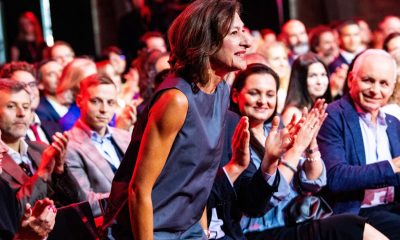 Science5 days ago
European Inventor Award 2026 winners announced: Honouring the innovators shaping tomorrow
-
 Schengen4 days ago
Open letter to president of the European Commission on the Schengen Entry/Exit System (EES)
-
 Azerbaijan4 days ago
EU policy toward Azerbaijan: Why Brussels must move beyond political dialogue
-
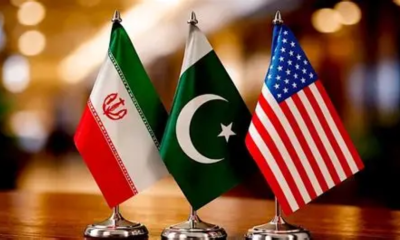 Iran3 days ago
The Iran war changed Pakistan's strategic value, not its political trajectory