European Parliament
Political ads: Internal Market MEPs to start discussions on draft law on 10 January

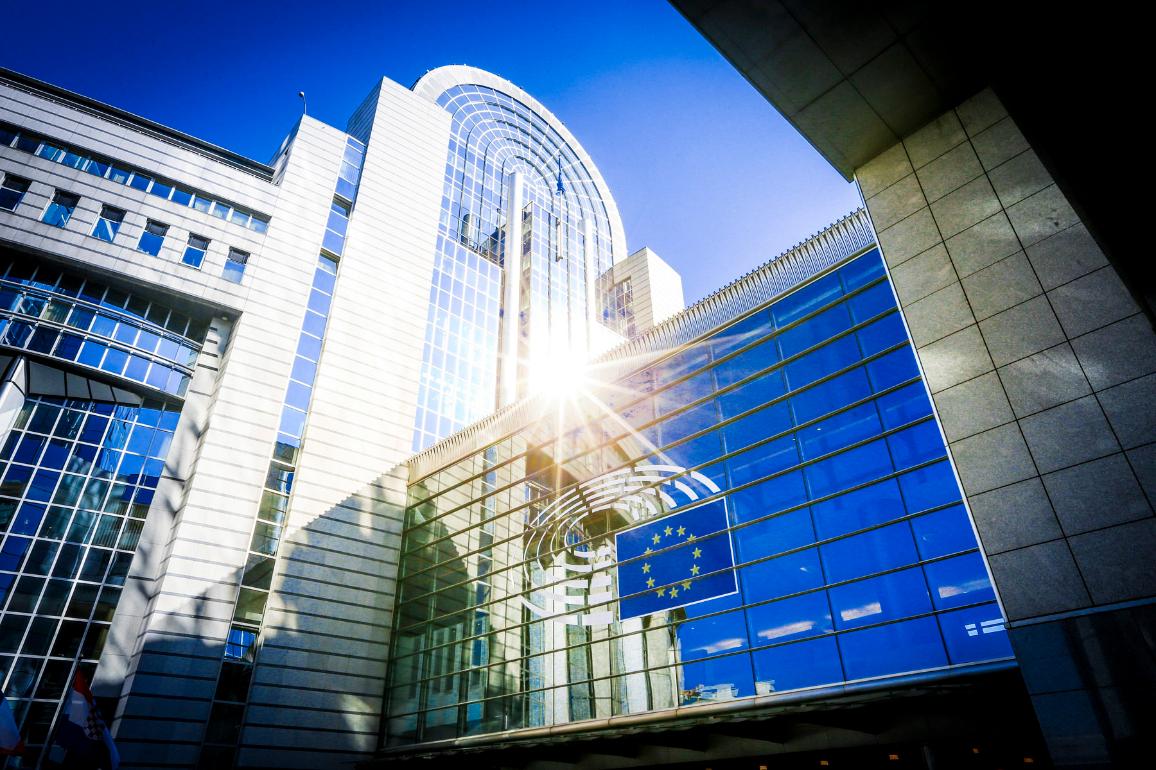
The Commission will present its proposal on political advertising to MEPs in the lead Internal Market and Consumer Protection Committee today (10 January), IMCO.
A legislative proposal on the transparency and targeting of political advertising, tabled by the Commission on 25 November 2021, would require any political advert to be clearly labelled as such and include information such as who paid for it and how much. The proposed rules will create a more secure environment for consumers, as they also include measures concerning the use of amplification techniques.
Under these rules, it would be mandatory to include into the advertisements clear information on what basis a person is targeted. It would also become mandatory to publish which groups of individuals were targeted, on the basis of which criteria, and with what amplification tools or methods. This proposal complements the Digital Services Act (DSA) as it establishes specific rules for political advertising, building on the general horizontal rules set out in the DSA.
A Eurobarometer survey published in March 2021 showed that nearly four in ten Europeans were exposed to content that they could not easily determine as being a political advertisement.
The European Parliament - where the Internal Market and Consumer Protection Committee is in the lead, with rapporteur Sandro Gozi (Renew, FR) – will formulate its position on the proposal before entering negotiations with the Council to reach a final agreement. The aim is for the new rules to enter into force before the next European elections in 2024.
Presentation of the proposal on political advertising to Parliament’s lead committee
When: Monday, 10 January 2022, from around 14.30
Where: Brussels, European Parliament, ANTALL building, room 2Q2 (with remote participation of Members)
Live streaming on Parliament’s Multimedia Centre.
EU Digital COVID Certificate to enter Parliament
As of 3 November, all people entering Parliament’s buildings are requested to present a valid EU Digital COVID Certificate, including journalists. The EU Digital COVID Certificate proves that a person is either fully vaccinated, has immunity after having recovered from COVID-19 or can show a recent negative PCR test result. Both digital and paper formats of the EU Digital COVID Certificate or of a recognised equivalent certificate will be accepted.
A proof of a negative result of a PCR test carried out within the last 72 hours in Belgium, Luxembourg or France will also be accepted. Please note that the existing precautionary measures, including the compulsory wearing of a medical face mask and temperature checks at entrances, remain in place.
More information
Share this article:
EU Reporter publishes articles from a variety of outside sources which express a wide range of viewpoints. The positions taken in these articles are not necessarily those of EU Reporter. Please see EU Reporter’s full Terms and Conditions of publication for more information EU Reporter embraces artificial intelligence as a tool to enhance journalistic quality, efficiency, and accessibility, while maintaining strict human editorial oversight, ethical standards, and transparency in all AI-assisted content. Please see EU Reporter’s full A.I. Policy for more information.




The South Caucasus at a historic turning point: Between lasting peace and renewed confrontation
The security environment of the South Caucasus amid changing geopolitical realities

Commission registers two European Citizens' Initiatives on education and housing

Commission sends Statements of Objections to several companies and trade associations in suspected construction chemicals cartel

Kazakhstan and Belgium: Building a Partnership for the Future

Why the US is losing its legitimacy as a global superpower and the trust of the comity of nations

Commission endorses Latvia’s €617 million Social Climate Plan to support vulnerable households and transport users in the clean transition

Commission outlines measures to strengthen Europe's banking sector and support growth

JoinCare explores scientific exchange during visit to Japan’s National Institute of Infectious Diseases

New episode – DGT podcast: Languages and Technology

Become a European Commission trainee – applications are now open

Commission outlines measures to strengthen Europe's banking sector and support growth

British political shifts and the future of UK-China ties
The South Caucasus at a historic turning point: Between lasting peace and renewed confrontation

As Ireland chairs the EU Presidency, what impact has over fifty years of EU membership had on Ireland

The Digital Markets Act Is Hurting Europeans. It’s Time to Put Progress, Free Markets, and Competition First

Kazakhstan reforms under scrutiny at Brussels Press Club round table

Japan should face up to history and contribute more to regional peace

Ambassador calls for 'speeding up' of co-operation between EU and Kazakhstan

Timur Turlov at Smart Moves Summit 2025: How chess can transform global education

Shevtsova’s case: Out-of-court sanctions dismantling trust in Ukrainian cause

The future of European transport

Trump Vs Trueman

US 'no longer' an 'unconditional ally' for Europe - MEP
-
 South Caucasus1 day ago
The South Caucasus at a historic turning point: Between lasting peace and renewed confrontation
-
South Caucasus2 days ago
The security environment of the South Caucasus amid changing geopolitical realities
-
 European Citizens' Initiative4 days ago
Commission registers two European Citizens' Initiatives on education and housing
-
 European Commission2 days ago
Commission sends Statements of Objections to several companies and trade associations in suspected construction chemicals cartel