Justice and Home Affairs
Weathering the Storm: Can the International Court of Justice remain a defender of reason and justice during the current climate of global unrest?

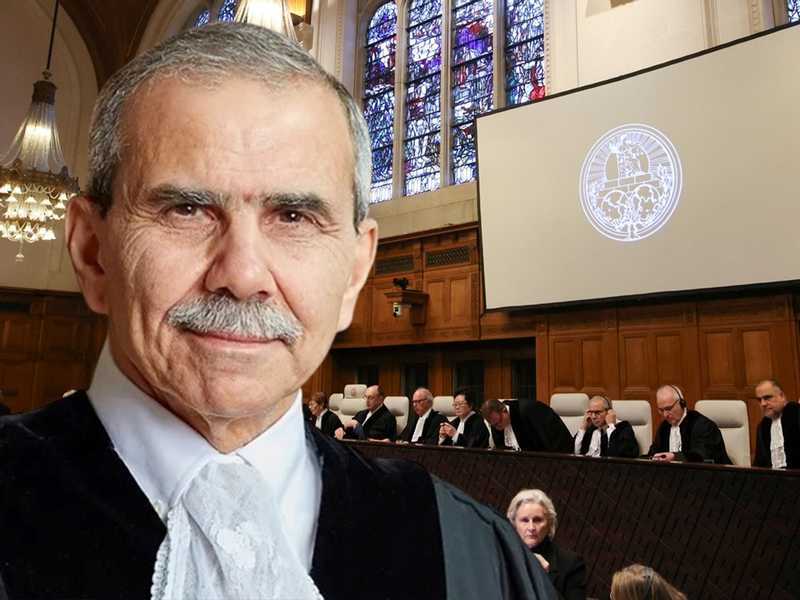
Not since the Second World War has the world faced so much division, uncertainty, and outrage. Putin’s war continues to rage in Ukraine; Israeli forces, under the leadership of Benjamin Netanyahu, confirm the death of Hamas leader Yahya Sinwar threatening further escalation in the region, and the threat of further annihilation hangs over the Far East as President Xi’s China continues to conduct military exercises off the coast of Taiwan.
As destruction reigns at the conflicts’ epicentres, the aftermath of civilian deaths and atrocities committed reverberates around the globe – with opinion heavily divided amongst populations about who is right, who is wrong, and who is to blame.
As restless emotions further take hold, it becomes ever more important to have unbiased and unpartisan arbiters to serve as an anchor of reason in the swelling seas of global chaos. The principles upheld by international law serve as a vital point of order on the road back to peace.
To this end, one of the key institutions that exists is the International Court of Justice, which for close to 80 years has been the only international court to adjudicate general disputes between nations and will certainly serve as one of the main points of resolution to the conflicts in both the Middle East and Ukraine.
However, the legitimacy of the court – especially when considering the case of Israel – has been thrown into question. In February 2024, Nawaf Salam (pictured) was appointed as president of the ICJ – Salam, a Lebanese judge who previously served as head of the country’s ambassador to the UN. As the conflict in the Middle East continues to spiral across his country’s border – his (and the court’s) judicial impartiality will be further tested. His resume brings a number of concerns that he will have to quell as various cases in relation to armed conflicts move forward.
Salam's appointment as president of the ICJ brought with it a certain pride for the Arab community, as it is the second time that the UN's legal body has seen a judge from an Arab country. It has taken three decades, since the appointment of Algerian judge Mohamed Bedjaoui in 1994, for the Arab population to feel represented.
There is also constancy, even an alignment between the positions of the two judges. Bedjaoui, who later became Algeria’s Minister of Foreign Affairs, declared after the Hamas takeover of power in the Gaza Strip in 2007, that the Palestinian movement should be judged on its merits. Now Salam finds himself having to rule on the very same merits again, 17 years later.
Salem inherits a Court whose image has been tarnished by Bedjaoui’s tenure, and he has a hard task ahead of him to redeem the failures of his predecessor.
Bedjaoui who had previously shown leniency towards Hamas (a movement defined as terrorist by the EU and USA), was also caught in a clear conflict of interest by advising Bolivia against Chile while already serving as an ad hoc judge in another ICJ arbitration, which is contrary to the Court's regulations.
In his native Algeria, Bedjaoui was convicted to five years detention for corruption, whilst French publication newspaper Libération revealed in January 2023 a complaint for corruption and money laundering filed with the National Financial Prosecutor's Office in Paris. As well as championing Arab participation in the ICJ, Salem will have to define his leadership as separate to, and free from, the scandals and bias that plagued his predecessor.
This will stand to be a defining test of Salem’s presidency and the ICJ’s continued commitment to impartiality. During his tenure as Lebanon's ambassador to the UN, Salam voted to condemn Israel 210 times and made several statements critical of Israeli policies. Though since taking up the mantle as head of the ICJ, there is yet to have been a wholesale shift in the court’s approach, as evidenced by the ICJ rejecting Nicaragua's request to order Germany to halt military and other aid to Israel.
There is a question of whether this course will be maintained now that the war has spilled over into Lebanon—Salem’s homeland—with bombs falling as deep as its capital, Beirut. As emotional responses to conflict continue to dominate the political landscape, pushed by populist politicians such as Donald Trump in the US and Viktor Obran in Hungary; stability and reason within in the halls of international courts becomes more important than ever.
The decisions soon to be decided under Salem’s watch could have long-lasting and far reaching implications for the state of the world for years to come and could come to save countless innocent civilians from further death and destruction.
Share this article:
EU Reporter publishes articles from a variety of outside sources which express a wide range of viewpoints. The positions taken in these articles are not necessarily those of EU Reporter. Please see EU Reporter’s full Terms and Conditions of publication for more information EU Reporter embraces artificial intelligence as a tool to enhance journalistic quality, efficiency, and accessibility, while maintaining strict human editorial oversight, ethical standards, and transparency in all AI-assisted content. Please see EU Reporter’s full A.I. Policy for more information.



The South Caucasus at a historic turning point: Between lasting peace and renewed confrontation
The security environment of the South Caucasus amid changing geopolitical realities

Commission registers two European Citizens' Initiatives on education and housing

Commission sends Statements of Objections to several companies and trade associations in suspected construction chemicals cartel

Kazakhstan and Belgium: Building a Partnership for the Future

Commission endorses Latvia’s €617 million Social Climate Plan to support vulnerable households and transport users in the clean transition

Why the US is losing its legitimacy as a global superpower and the trust of the comity of nations

Commission fines AliExpress €550 million for breaching the Digital Services Act

JoinCare explores scientific exchange during visit to Japan’s National Institute of Infectious Diseases

New episode – DGT podcast: Languages and Technology

Become a European Commission trainee – applications are now open

Commission outlines measures to strengthen Europe's banking sector and support growth

British political shifts and the future of UK-China ties
The South Caucasus at a historic turning point: Between lasting peace and renewed confrontation

As Ireland chairs the EU Presidency, what impact has over fifty years of EU membership had on Ireland

The Digital Markets Act Is Hurting Europeans. It’s Time to Put Progress, Free Markets, and Competition First

Kazakhstan reforms under scrutiny at Brussels Press Club round table

Japan should face up to history and contribute more to regional peace

Ambassador calls for 'speeding up' of co-operation between EU and Kazakhstan

Timur Turlov at Smart Moves Summit 2025: How chess can transform global education

Shevtsova’s case: Out-of-court sanctions dismantling trust in Ukrainian cause

The future of European transport

Trump Vs Trueman

US 'no longer' an 'unconditional ally' for Europe - MEP
-
 South Caucasus1 day ago
The South Caucasus at a historic turning point: Between lasting peace and renewed confrontation
-
South Caucasus2 days ago
The security environment of the South Caucasus amid changing geopolitical realities
-
 European Citizens' Initiative4 days ago
Commission registers two European Citizens' Initiatives on education and housing
-
 European Commission2 days ago
Commission sends Statements of Objections to several companies and trade associations in suspected construction chemicals cartel